When soft metal panels make sense in a local workshop
Soft metal routing usually comes in when a shop needs repeatable cut-outs, trim profiles, fixing holes or light pocketing on aluminium and other non-ferrous sheet. In Johannesburg, Pretoria and Durban, we see this on signage parts, machine covers, access panels, interior fit-outs and furniture components where the finish has to be tidy and the sheet must stay flat. It is not a job for general purpose hand cutting if the pieces need to match every time.
The client situation is often simple: the team has drawings ready, the parts are not overly thick, and the real issue is controlling chips, holding the sheet safely and getting predictable edge quality. If the workshop also handles wood or plastics, one router can often do all three, provided the table, extraction and tooling are set correctly. For humid coastal areas and dusty inland shops alike, the details matter because aluminium chips behave very differently to MDF dust.
- Best suited to sheet parts that need repeatability
- Useful where hand finishing has become too slow
- Works well when one machine must handle mixed workshop jobs
Typical machine set for soft metal work
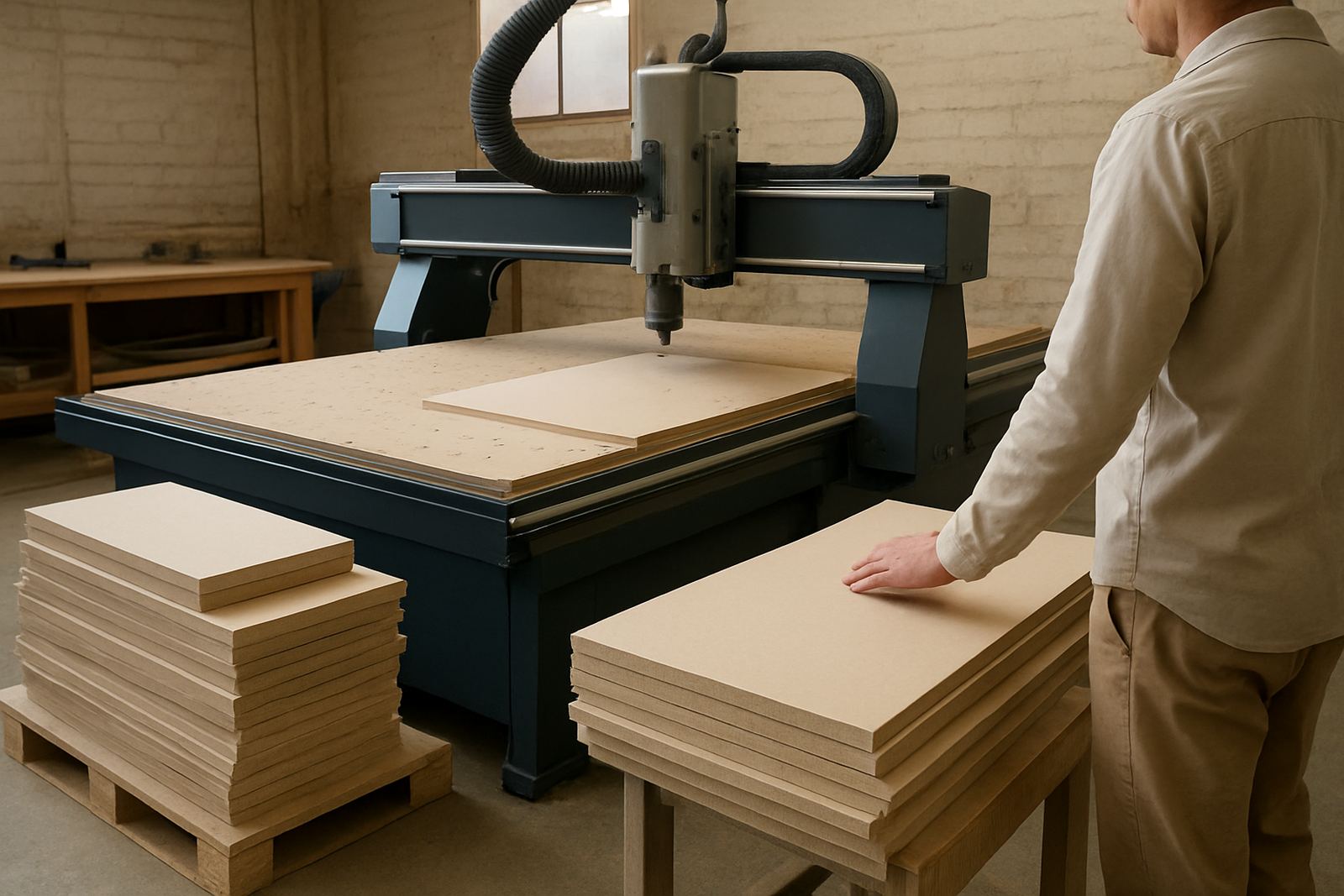
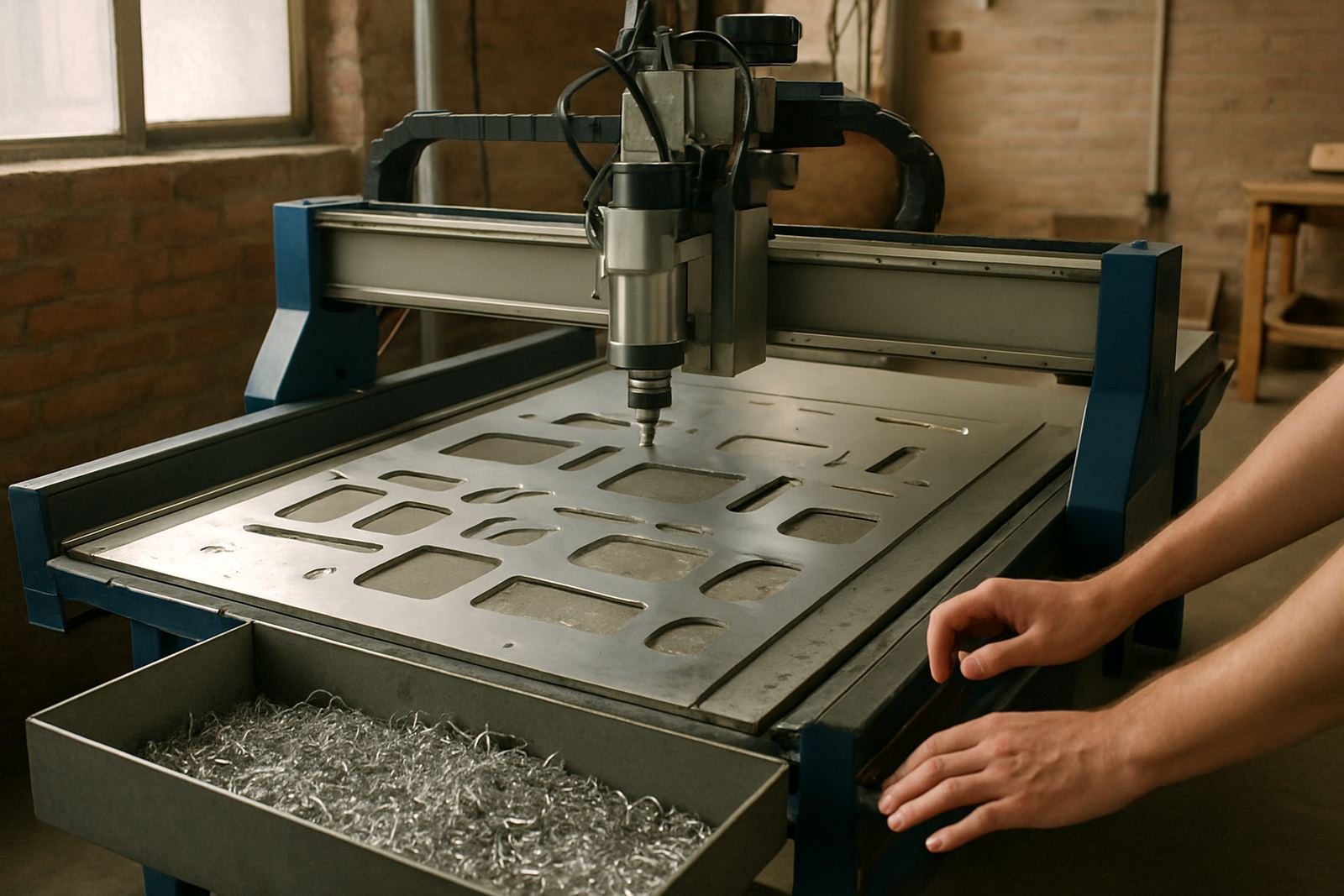
For this use-case, most shops look at a CNC router with a rigid frame, a suitable spindle and a table that can hold thin sheet without chatter. Vacuum tables are common on larger jobs, while spoilboard clamping or pod-style support can suit smaller batch work. The important point is not to overspec the machine blindly. You need enough rigidity for the material thickness and the feed rate you plan to run, not a showpiece that is hard to keep tuned.
Tooling matters as much as the machine. Single flute cutters, proper chip clearance and sensible step-downs help keep the cut cool. If the workshop is running long shifts or dealing with load-shedding, a clean controller backup and an orderly restart routine save time after interruptions. A steady extractor and well balanced dust system are also important because soft metal swarf should not be left to build up around guides, rails or electrical cabinets.
- Rigid CNC router with a suitable spindle speed range
- Vacuum table, clamping system or a mixed holding setup
- Chip extraction and swarf management for clean working
- Controller backup and restart procedure for power interruptions
Layout and planning before the first panel goes on the bed
The best soft metal jobs start with layout. If the drawings are arranged to suit the sheet size, you reduce waste and keep cut paths shorter. That also helps when material costs are rising and the client wants pricing locked down early. In many Gauteng workshops, space is tight, so we look carefully at loading access, offcut stacking and where chips will be cleared at the end of each shift.
Planning must also include the operator. If the team is small, the machine needs to be easy to load, easy to zero and easy to check before a run starts. At MultiCAM we often advise on operator friendly setup, not only machine supply. That means practical tooling notes, table options, vacuum leak checks and training that fits the way the workshop actually works. The goal is fewer surprises when the order changes or a rush job comes in at 3 pm.
- Match nesting to stock sheet sizes before quoting
- Leave room for loading, chip clearing and finished part handling
- Plan operator access to tool changes, zeroing and checks
Common mistakes that cost time and Rand
In soft metal panel work, the scrap usually starts with a basic setup mistake. Shops often assume a wood setup will handle soft metal without adjustment, then find chips welding to the cutter or marks appearing on the face. Another common mistake is poor vacuum sealing. If a table leaks, thin sheets lift at the edges and the job starts to wander. On production runs that becomes scrap, not a small nuisance.
We also see machines pushed too fast because the cutter looks clean on the first sheet. That can work for a while, then heat builds up and the finish falls away. The same applies to maintenance. A spindle service left too long or an unchecked controller backup can stop a full day. A proper preventive plan, especially in busy areas like Germiston, Midrand and the Durban North coast, is usually cheaper than emergency call-outs.
- Using wood settings without adjusting feed, speed and chip control
- Ignoring vacuum leaks or poor sheet support
- Running too fast to save time, then paying for scrap
- Skipping backups and routine service until there is a fault
Budget ranges for entry jobs and production cells
Budget depends on sheet size, holding method and how much automation the shop needs. For smaller workshops starting with light aluminium and mixed material work, entry systems can begin around R350 000 to R700 000. Once you add better extraction, proper tooling and training, many clients should budget closer to R500 000 to R900 000 for a practical setup that is not underdone.
For larger production cells, with stronger tables, better vacuum performance and more controlled handling, budgets commonly move into the R1.1 million to R2.5 million range and above. Relocation, commissioning, dust system balancing and operator training are often part of the true cost, not extras. That is why we prefer to talk through the machine selection and the workshop layout before anyone signs off on a number.
- Entry soft metal router setups: about R350 000 to R700 000
- Practical workshop-ready systems: about R500 000 to R900 000
- Production cells and higher output lines: from about R1.1 million upwards
Support across Germiston and the main operating areas
MultiCAM works from Germiston and supports installations across South Africa, with local coverage in Johannesburg East, Midrand Service, Pretoria East, Durban North and Cape Town North. That matters when a workshop needs installation, commissioning, preventive maintenance or a quick call on tooling setup. A soft metal job can be sensitive to small changes, so having a technical team that understands the machine and the material saves time.
Our support covers machine installation, machine relocation, vacuum leak checks, controller backups, spindle service, operator training and dust system balancing. For a shop cutting soft metal panels, the aim is steady output, clear chip handling and a setup that the team can keep running without constant guesswork. Marius Johannes van der Merwe leads the business, with practical support from Lerato Nkosi, Stefan Naude, Lesedi Ntanzi, Farieda Adams, Mpho Mtshali and Chantel Naidoo.