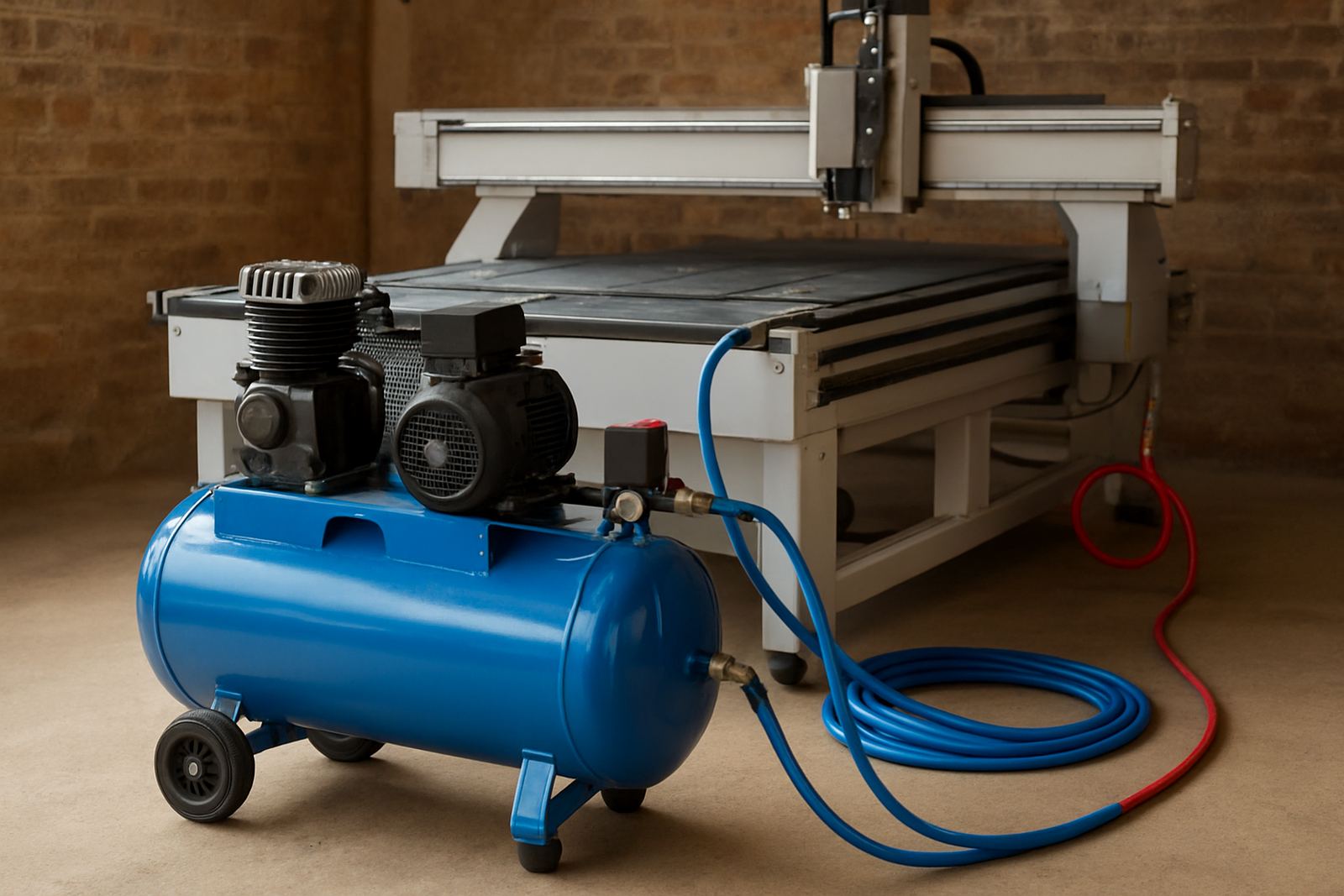
What the Compressor Package Does on a CNC Line
A compressor package supplies compressed air to machine functions that depend on clean, steady pressure. On suitable CNC routers and related workshop systems, that air can support clamping, tool change systems, blow-off functions and other pneumatic controls, depending on the machine configuration. When pressure drops or the supply is inconsistent, operators often see slow response, weak actuation or avoidable downtime.
The aim is not just to make air available, but to match delivery with the machine demand. That means choosing the right tank size, motor capacity and control setup for the actual work rate in the workshop. In practice, a package that is too small works hard all day and still struggles, while an oversized unit may be noisy and costly to run. The right choice gives steadier performance and less strain on the system.
- Supports pneumatic machine functions on compatible configurations
- Helps maintain stable pressure during repeated cycles
- Reduces interruptions caused by undersized air supply
Package Sizes and Common Options
Compressor packages are usually selected by air demand, duty cycle and the type of machine cell in use. A smaller workshop may need a compact set for one router and light pneumatic use, while a production floor may need a larger unit with higher delivery and a bigger receiver. The package can also be set up with filtration and aftercooling where cleaner air is needed for better component life.
For Johannesburg and other inland locations, dust control and heat build-up matter. In coastal areas, moisture control becomes even more important because humid air can carry water into lines and valves. That is why the package can be specified with practical air treatment options rather than a one-size-fits-all layout. If your workshop runs long shifts or works through load-shedding with backup power, the supply arrangement should be checked carefully before ordering.
- Compact workshop package for lighter pneumatic demand
- Mid-size package for regular router use and longer daily shifts
- Higher-capacity package for production cells and multiple air users
- Options for filtration, moisture management and pressure control
Where The Compressor Package Fits In Johannesburg, Durban And Cape Town Shops
This product suits fabricators and makers who need reliable air for CNC-related functions in a practical workshop setting. It is commonly used in signage, furniture production, plastic processing and general cutting jobs where the machine needs air support but the site cannot afford uneven supply. It is also useful where the workshop has more than one machine sharing air and the team needs a simple, controlled setup.
Because many South African workshops work in mixed conditions, the package must be chosen with the site in mind. Floors with limited space, high dust loads, long cable runs and warm rooms all affect how a compressor behaves. On some sites the machine room is separate from the cutting area, which helps with noise and dust. On others, the compressor sits close to the router and needs proper ventilation and easy access for servicing.
- Sign shops running routers for sheet cutting and profiling
- Furniture makers using pneumatic support on compatible machines
- Plastic and light aluminium fabricators with controlled air demand
- Workshops that need a tidy, serviceable air setup rather than loose add-ons
Installation, Power and Site Requirements
Installation should be planned around airflow, electrical supply and maintenance access. A compressor needs enough fresh air around it to cool properly, and it should not be boxed into a tight corner with sawdust and offcuts. In many workshops the best place is a separate corner or plant area with clear access for drain checks, belt inspection and filter changes. If the unit is fixed into a production line, the pipe route should be kept as short and direct as practical.
Power needs depend on the package size and motor type, so the supply should be checked before delivery. A proper isolator, correctly sized breaker and stable cable run are part of a sensible installation. Where backup generation is used, the compressor starting load must be confirmed so the set does not trip or sag under start-up demand. If your site has municipal restrictions or shared premises rules, noise placement and drainage routing should also be considered. One bad install can turn a useful unit into a daily headache.
- Allow space around the compressor for cooling and service access
- Check incoming power, starting load and breaker sizing before installation
- Route air lines to reduce pressure drop and unnecessary bends
- Fit the unit where dust, heat and water are kept under control
Care, Servicing and Air Quality Checks
Compressor care is mostly about regular attention rather than major repairs. Tanks should be drained as needed, filters inspected and any moisture problems dealt with before they reach valves or machine components. In humid areas, water in the line is a common cause of poor pneumatic performance, so simple daily checks can save a lot of time. The same applies where workshops run long shifts and the unit cycles more often than expected.
Scheduled servicing should include belt condition, oil checks where applicable, pressure switch function, drain operation and general leak inspection. If the compressor is feeding a CNC machine, it is worth checking the line pressure at the point of use, not only at the tank. A good reading at the compressor does not always mean the machine is getting enough air. This is where practical maintenance keeps the system honest and avoids surprises during production.
- Drain moisture regularly and watch for water carryover
- Check filters, belts, oils and pressure controls on service intervals
- Inspect lines and fittings for leaks, kinks or pressure loss
- Keep the unit clear of dust build-up and blocked ventilation
What to Confirm Before You Order
Before ordering a compressor package, confirm the machine model, the air functions in use and the expected working hours per day. It also helps to know whether the workshop runs one machine or several, whether there is backup power on site, and how far the compressor will sit from the machine. Those details guide the final sizing and help avoid under-speccing the unit.
You should also confirm whether the site needs moisture control, special filtration or a quieter layout for close working areas. If the machine is being moved to another branch, ask for the new site conditions as well, because a package that worked in Germiston may need adjustments for a coastal branch in Durban North or Cape Town North. The practical step is simple: match the air supply to the actual job, not the guess.
- Machine model and pneumatic functions required
- Daily run time and number of machines on the air line
- Available power supply and any generator or inverter support
- Distance from compressor to machine and space available for install
- Need for filtration, moisture control or lower noise placement
MultiCAM Support for Supply, Setup and Follow-Up
MultiCAM supports compressor package supply as part of a working CNC environment, not as a stand-alone box dropped on site and forgotten. The Germiston base and branch support across Johannesburg East, Midrand Service, Pretoria East, Durban North and Cape Town North make it easier to plan delivery, installation and follow-up servicing where it matters. For sites with changing production needs, the team can also advise on relocation, line checks and practical adjustments.
That support is useful when a workshop expands, adds another machine or needs better air quality after a few months of use. A short review can often show where pressure is being lost, where moisture is entering the line, or where the package needs a cleaner service routine. Good air supply is one of those things that only gets noticed when it fails, so getting the setup right early is worth the effort.
Key facts
| Type | Compressed air supply package for suitable CNC and workshop pneumatic functions |
|---|---|
| Use case | Router cells, sheet cutting, light fabrication and production workshops |
| Configuration options | Compact, mid-size and higher-capacity package options |
| Air treatment | Receiver tank, filtration and moisture control options |
| Installation needs | Ventilation, correct electrical supply, service access and proper air line routing |
| Service items | Drain checks, filter changes, leak checks, belt or drive inspection and pressure verification |