Why small parts shift when the cut starts
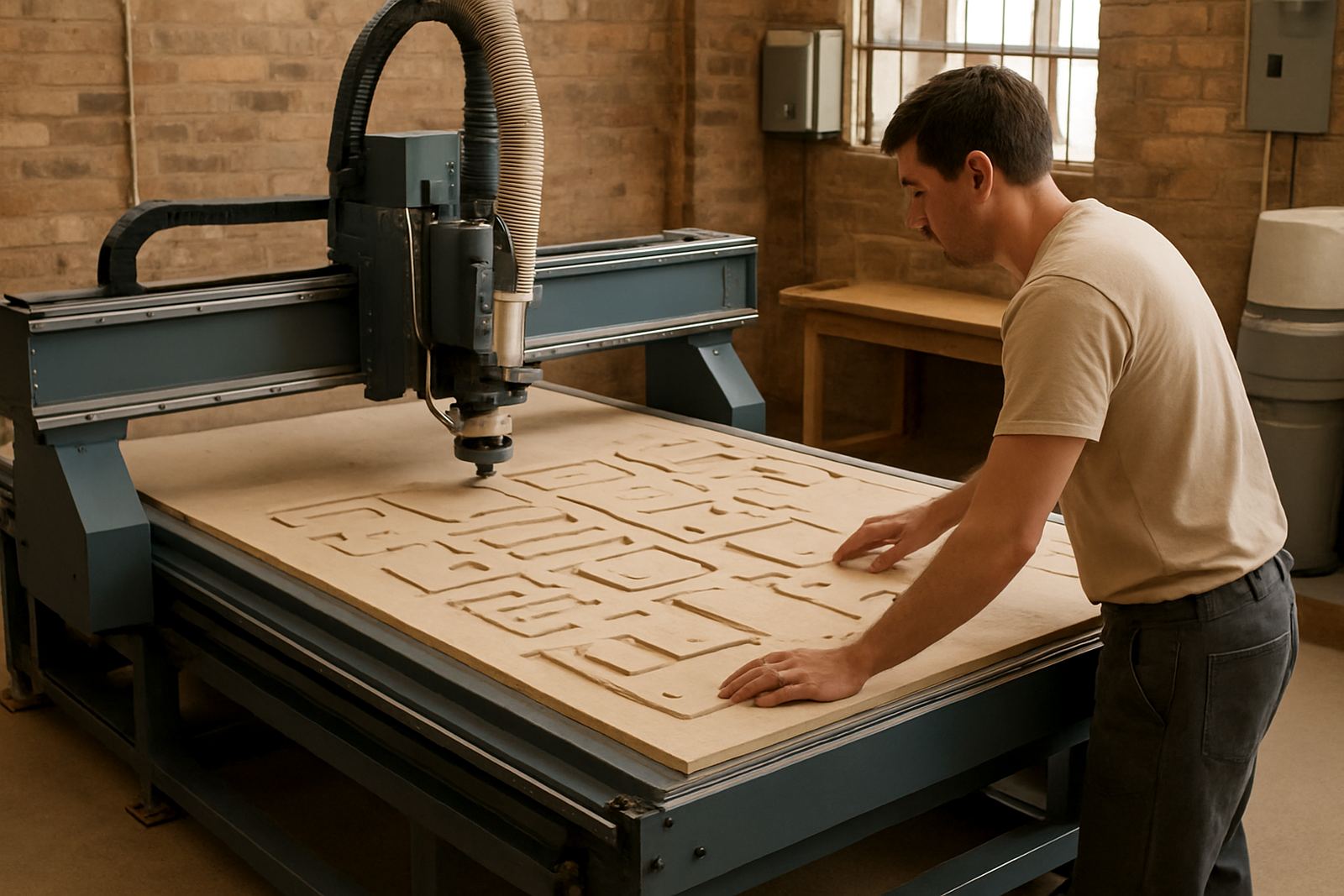
When a part is only a few metres? No, when it is only a few millimetres wide, the cutter can move it before the job is finished. That happens because the offcut has little holding area, less friction and often too few clamps or vacuum contact points. On a CNC router, the machine may be accurate but the part can still lift, move or tip as the last passes come through.
For South African workshops, the problem shows up often on sign components, drawer parts, lettering, brackets and plastic fittings. A summer workshop in Johannesburg can be dusty and warm, while a coastal shop in Durban North may have more humidity and softer sheet behaviour. Both need a plan for the final hold.
Tabs, onion skinning and when to use each one
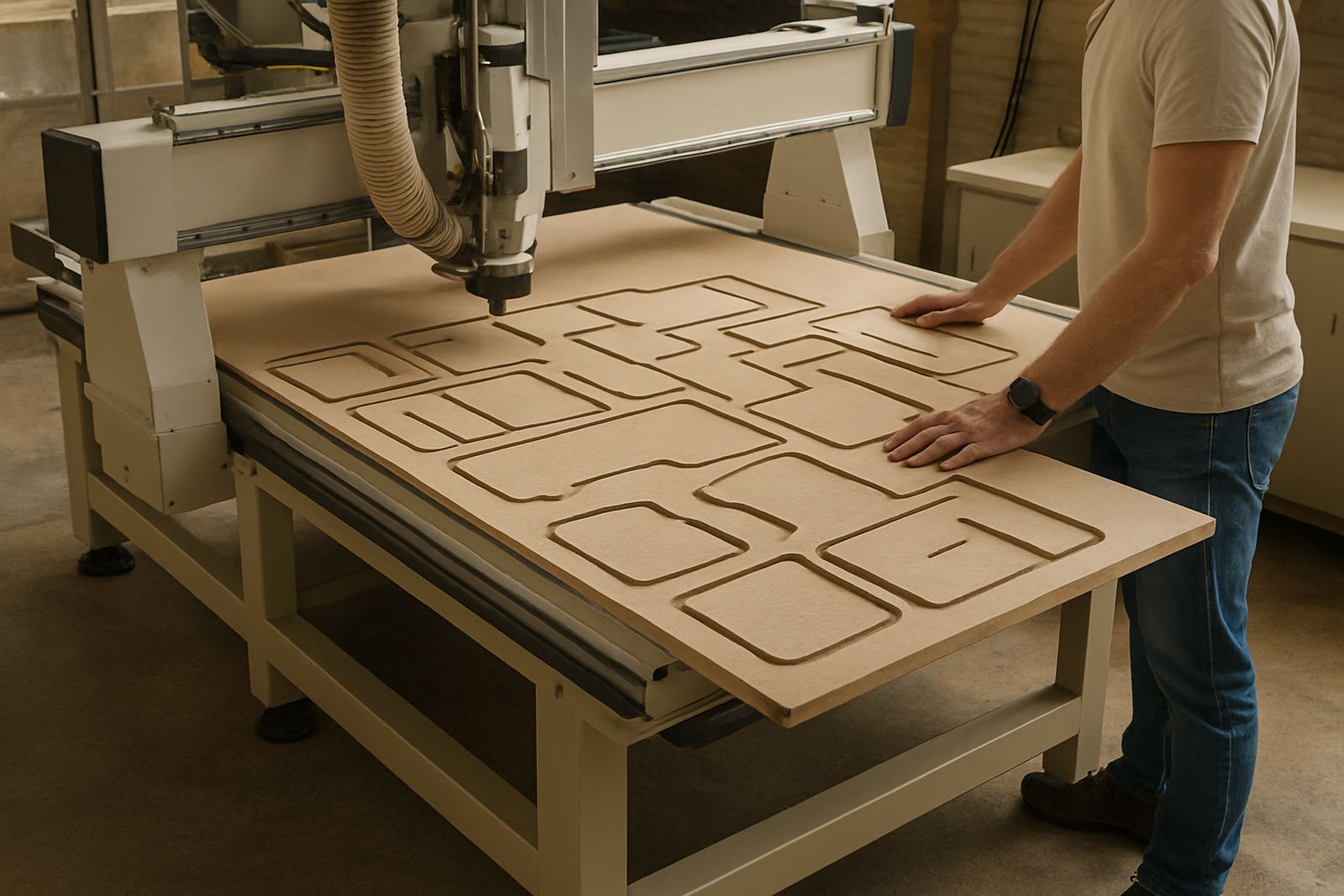
Tabs leave small bridges of material so the part stays connected to the sheet until the operator removes it. Onion skinning leaves a thin layer at the bottom, usually after most of the profile is cut, and the final pass is done later. Each method works, but not for the same job.
Tabs are better where the part needs strong holding through the full cut. Onion skinning suits flat parts that can be separated cleanly after machining. On soft plastics and some wood products, a thin skin can stop movement without leaving heavy marks. The mistake is using too few tabs or leaving the onion skin too thin for the machine and material.
- Use tabs on narrow parts, curved pieces and jobs with long toolpaths.
- Use onion skinning on flat parts that will be cleaned up or sanded.
- Keep tab placement away from finish edges, clips and drilled holes.
- Plan for manual clean-up time, because small parts still need handling.
Nesting for grip, not only for waste saving
Good nesting is not only about using as much sheet as possible. For small parts, the layout should also help the machine hold each piece safely. If two tiny parts sit too close together, the tool can vibrate between them and leave a rough edge. If the grain direction, vacuum zones or clamp positions are ignored, the parts may shift long before the sheet is finished.
A better approach is to group tiny parts into islands with enough space for tool entry, holding and chip clearance. Keep a little air around critical corners. Where a sheet is weak, move the smallest parts closer to the stronger vacuum areas or add temporary holds around the outer waste strip. This often saves more time than chasing one extra part onto the board.
- Leave enough gap for the cutter diameter plus chip clearance.
- Place the smallest parts in the strongest vacuum zone.
- Keep narrow scraps for test cuts, not final jobs.
- Check if the nesting software is overpacking parts into weak areas.
Tool choice matters more on small profiles
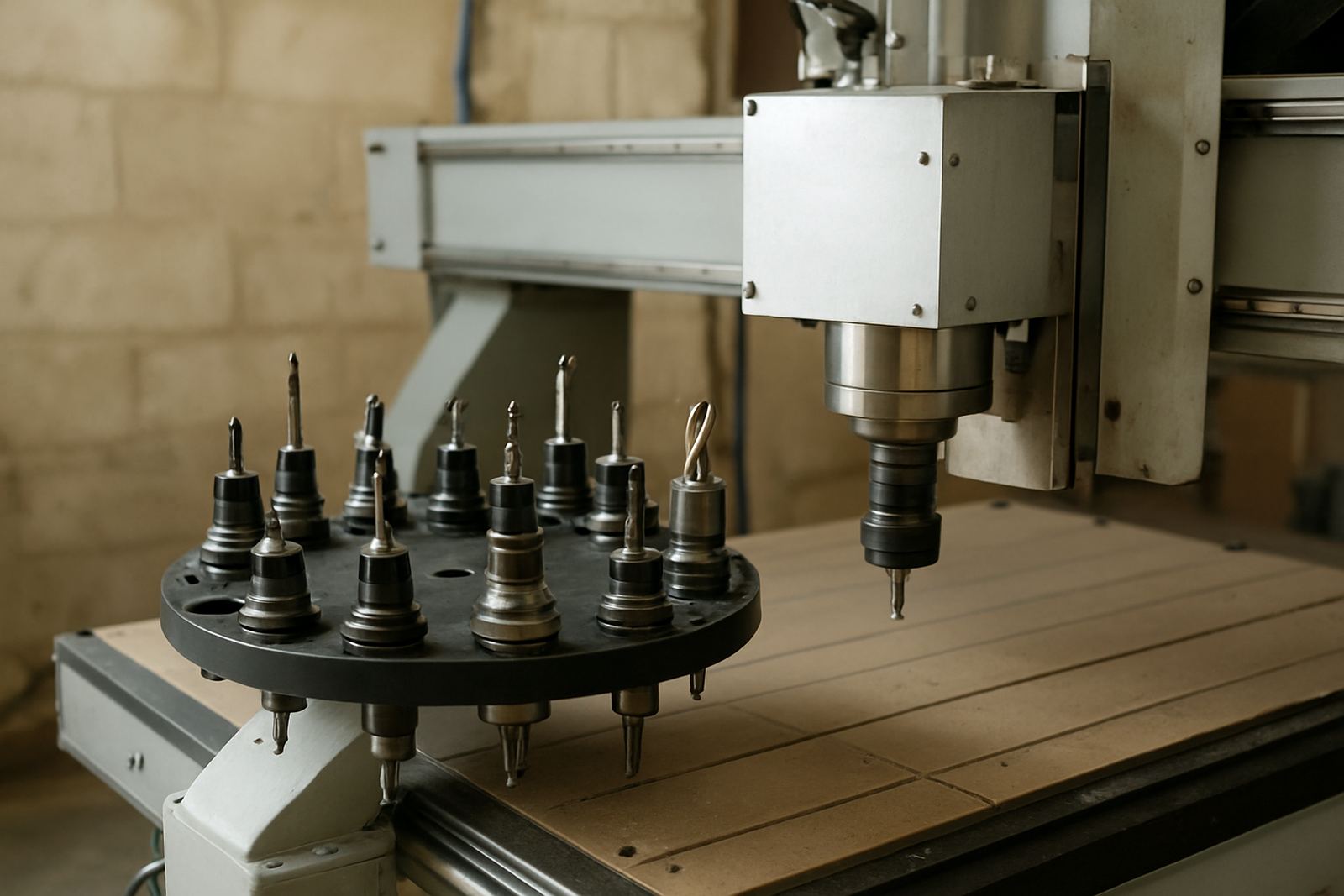
Small parts punish dull tools and poor settings. A rough edge on a large panel may be acceptable, but the same edge on a 30 mm component can make it unusable. Tool diameter, flute style and spindle speed all affect chip load and finish. A clean toolpath with the right feed rate reduces heat, which matters on plastics and soft aluminium where melting or burrs can spoil the part.
In many Germiston workshops, the real issue is not the router itself but a worn tool that keeps cutting because the job looks simple. When the cutter starts to pull fibres or leave a fluffy edge, the risk of part movement goes up. A small change in feed or a new cutter can be the difference between a usable tray of parts and a bin of offcuts.
Vacuum, clamps and spoilboard checks before the run
Small parts need a strong base. Vacuum holding only works properly when the table is sealed, the spoilboard is flat and the zones are matched to the part size. If the surface has leaks or damaged areas, tiny pieces can shift during the last few millimetres of cutting.
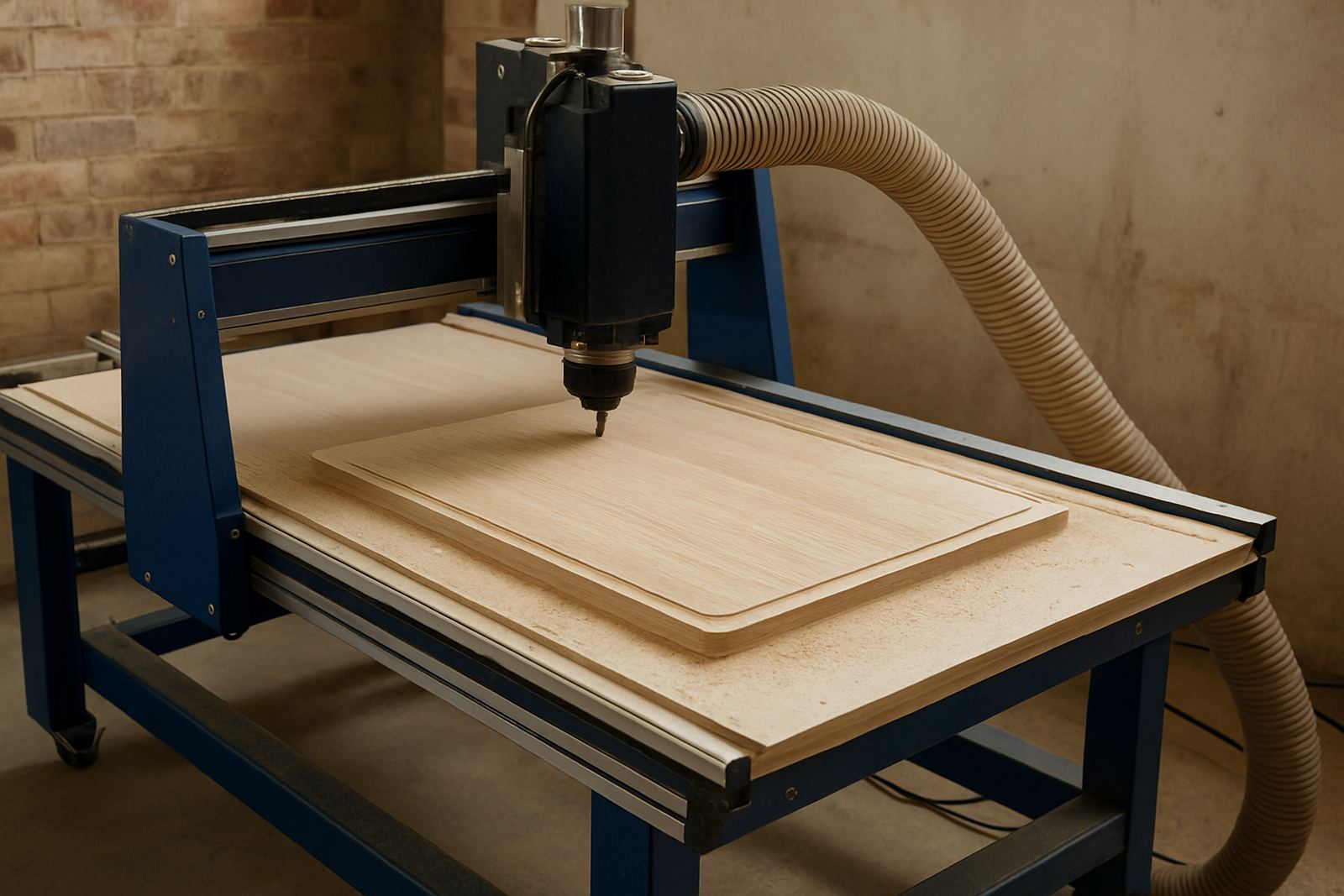
Before the run, check the table surface, pump performance and hose connections. A balanced dust system also helps because chip build-up under small offcuts can lift them. In workshops that cut daily, preventive maintenance and vacuum leak checks often show up directly in better part quality, especially when the machine is running long nesting jobs.
- Inspect spoilboard wear near the most used zones.
- Confirm the vacuum reaches the required holding level before cutting.
- Clear chips between nested rows if the job runs in stages.
- Use clamps only where they will not interfere with the toolpath.
A Germiston example: small parts on a busy production day
A furniture maker in Germiston may cut cabinet components in the morning and small drawer inserts after lunch. If the team uses one setup for everything, the small parts often become the problem job. By changing the nesting so the tiny pieces sit in the strongest vacuum area, adding well placed tabs and slowing the final pass, the run becomes more predictable.
That same workshop also benefits from controller backups and operator training. If the same small-parts job is repeated each week, a saved setup reduces errors and keeps the team from re-learning the process every time. For sites serving Johannesburg East or Midrand Service areas, this kind of repeatable workflow saves hours over a month, especially when load-shedding interrupts the day and a restart has to be clean.
What a good small-parts routine should include
The best small parts strategy is simple enough for the whole team to follow. It should cover the nesting rule, holding method, final pass, tool choice and clean-up step. If one operator relies on memory while another uses a written routine, the results will drift. Consistency matters more than clever tricks.
For many shops, the practical checklist below is enough to improve output without changing the whole production flow:
- Confirm the material, thickness and cutter before loading the sheet.
- Choose tabs or onion skinning based on part size and finish requirements.
- Place the smallest parts in the best vacuum area.
- Check dust extraction and spoilboard sealing before starting.
- Set a clean removal and finishing step after the cut.
When tiny parts are treated as a planning job rather than an afterthought, the machine works better and the finished parts need less rescue work. That is the real gain.