
When foam makes sense in a busy workshop
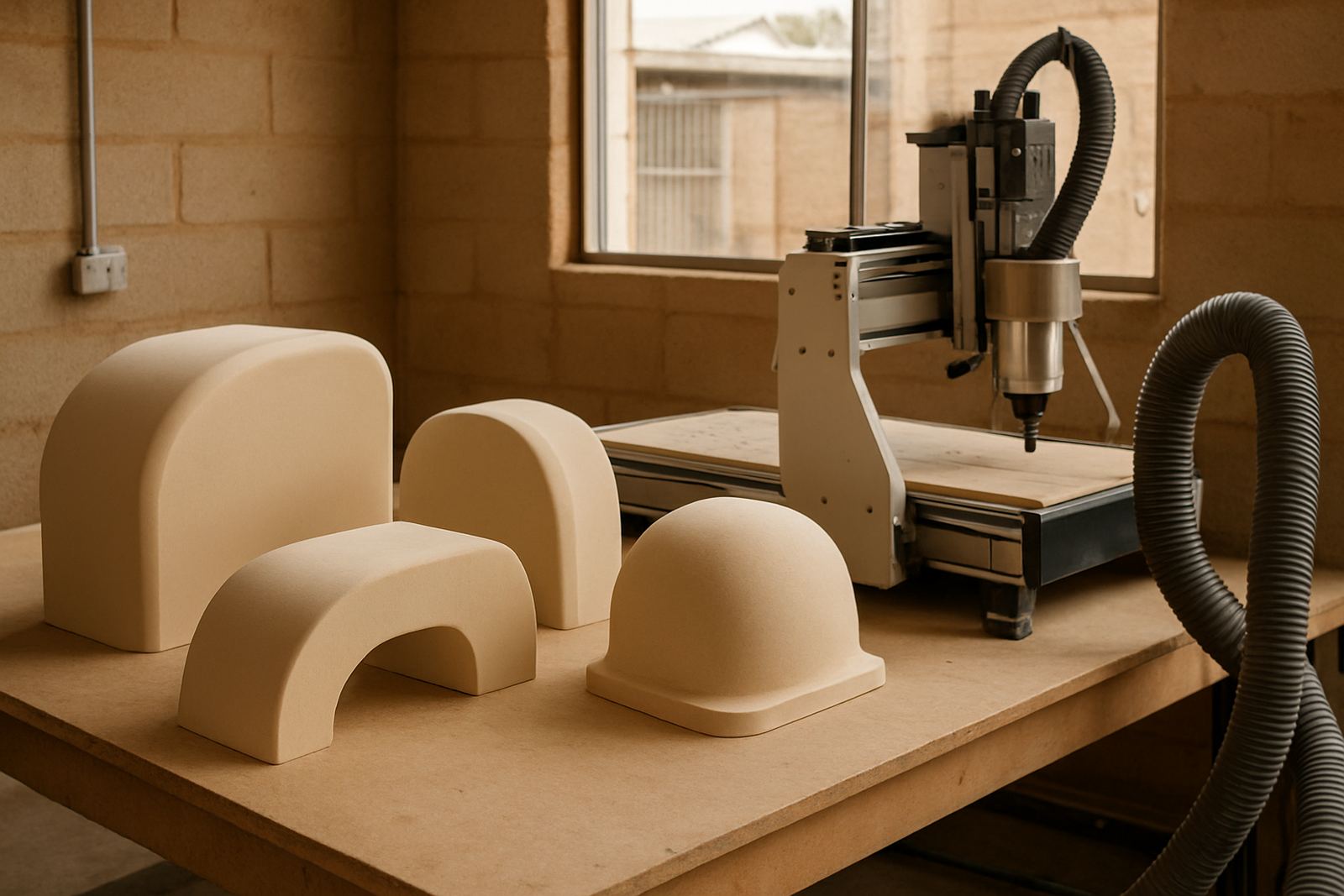
Foam is often the quickest route from sketch to something a client can hold, mark up and approve. In Johannesburg, Durban or Cape Town, that matters when a job must move before the next meeting or before materials arrive. Foam lets you test curves, reveal fit issues, check allowances for trims and create full size patterns without wasting timber or sheet metal.
For sign shops, furniture makers and fabrication teams, the value is simple: a clean foam mock-up can save hours later on the final part. It also helps with show pieces, packaging forms, mould studies and internal checks before a larger run. When the brief is still changing, foam gives the team room to adjust the drawing and get on with it.
Typical equipment set for foam cutting and shaping
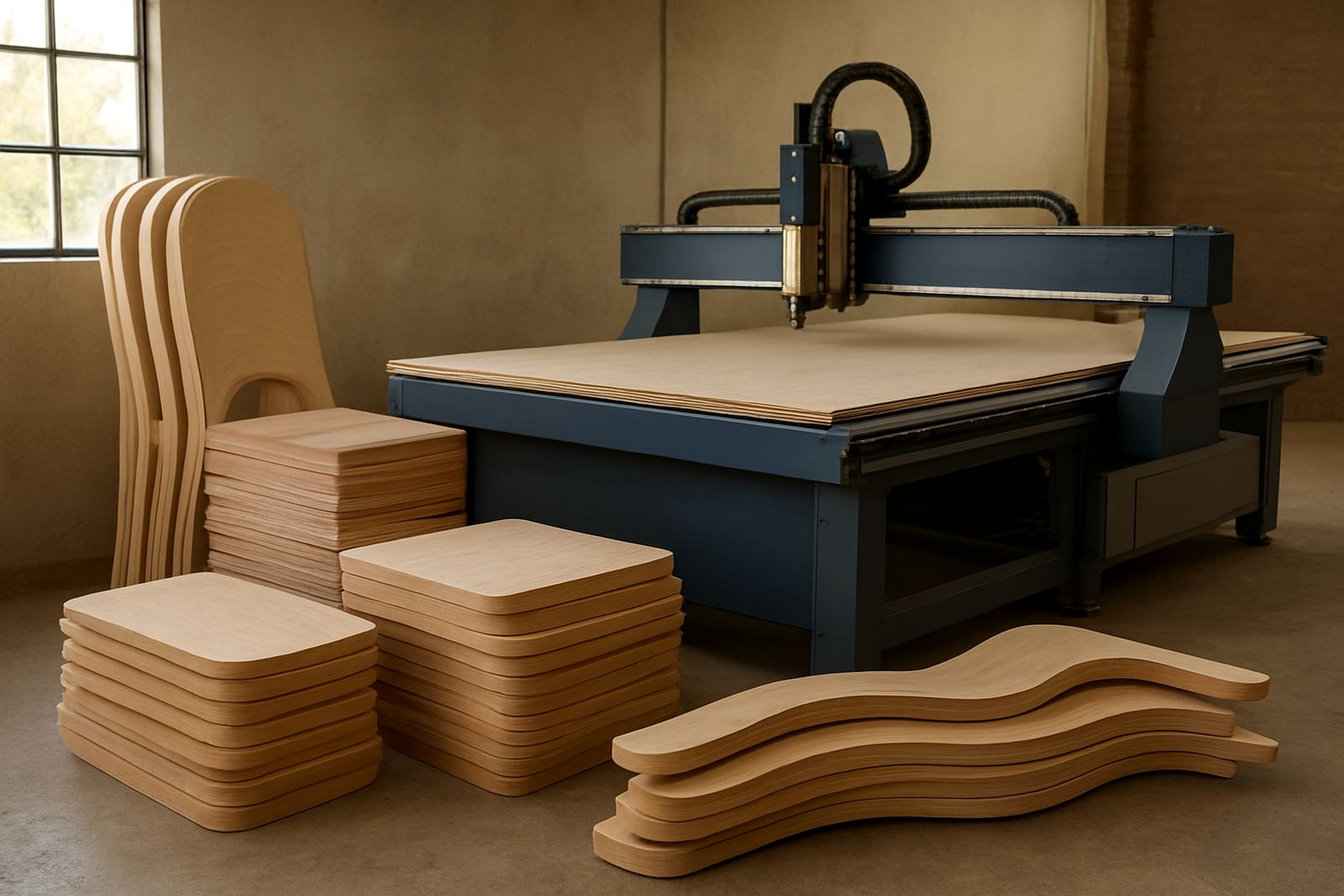
Most foam work starts with a CNC router that has enough travel for the largest pattern you expect to cut. A flat vacuum table is useful for thin sheets, while a spoilboard with screw down points suits thicker blocks and irregular stock. For taller forms, some workshops choose a gantry height that leaves enough clearance for clamps and tool length.
- Entry router for small pattern boards and display parts
- Mid size machine for repeated nesting on foam sheets
- Vacuum table where flat holding is needed on thin material
- Dust extraction matched to foam chips and static control
- Basic controller backup routine so files and offsets are not lost
Tooling is usually straightforward. Straight cutters, ballnose tools and end mills are the common choices, with the exact diameter set by the finish required and the foam density. Speed and feed should suit the material rather than forcing the machine to do all the work. A calm setup often produces a better edge than a fast one.
Layout and planning advice for local conditions
Foam cutting needs more floor sense than many teams expect. In a workshop with fluctuating power, load shedding and dust from other trades, the router should sit where the operator can keep an eye on the job and the extraction line can stay short. If the room is coastal or humid, sealed electrical cabinets and sensible storage for tooling help protect the machine and the material.
Leave space for loading sheets, offcut bins and a staging area for parts that still need trimming. A 3 metre by 2 metre sheet can become awkward if the path to the table is blocked by racks or machines. Keep the computer or control point close enough for easy checks, but not where foam dust gets blown straight into the screen and keyboard. Small layout choices save a lot of time later, trust me, it is worth planning.
- Allow clear access on at least one long side of the table
- Keep foam storage flat and away from direct sun
- Plan for compressed air, extraction and spare cutter storage
- Use labelled folders for jobs, toolpaths and revision notes
Common mistakes that slow foam jobs down
The biggest error is assuming foam is too easy to need proper setup. Poor holding, a blunt cutter or the wrong step-over can leave ragged edges and a lot of hand finishing. Another common issue is underestimating dust and static. Foam chips travel, settle in bearings and can affect switches if the room is not kept tidy.
Teams also get caught by drawing assumptions. A part that looks fine on screen may need extra allowance for sanding, edge sealing or a later skin. On first runs, it helps to cut a sample corner or a short section before committing the full sheet. That small test can show whether the cutter is leaving a clean surface or tearing at the foam.
- Using the wrong cutter for dense or brittle foam
- Skipping a test cut on the actual material batch
- Letting vacuum leaks reduce holding power
- Ignoring extraction until the machine starts clogging
Budget ranges in Rand for different workshop stages
For a small team doing occasional prototype work, a compact router with basic extraction and setup support can start around R280 000 to R450 000. This suits foam sheets, light nesting and pattern making where throughput is modest and the parts are not too tall. It is a useful starting point for sign makers or furniture shops that want in-house trial pieces.
For regular prototype production, a mid range machine with better table support, stronger vacuum and more reliable tooling control often falls between R520 000 and R900 000. When the job includes larger sheets, frequent changes and tighter repeatability, many workshops also budget for operator training, a spare cutter kit and controller backup routines. Those extras are often forgotten in the first quote, then needed in the first month.
Production cells, machine relocation, dust balancing and heavier service plans can move the total above R1 million depending on the table size, extraction, spindle spec and handling needs. The right budget is not just about the machine price. It should also cover power protection, setup time, and enough spares to keep the line moving when a cutter wears out on a Friday afternoon.
How MultiCAM supports foam prototype work
MultiCAM works with fabricators who need practical advice, not vague promises. The focus is on matching the machine to the job, then making sure the table, tooling and operator routine suit the kind of foam being cut. That can include installation, commissioning, preventive maintenance, spindle service, vacuum leak checks, controller backups, operator training, tooling setup, machine relocation and dust system balancing.
From the Germiston base, support reaches Johannesburg East, Midrand, Pretoria East, Durban North and Cape Town North, with installs across South Africa. The team includes Marius Johannes van der Merwe, Lerato Nkosi, Stefan Naude, Lesedi Ntanzi, Farieda Adams, Mpho Mtshali and Chantel Naidoo, so the workshop gets sales guidance, technical checks, application support, service coordination, installation and parts help in one line of contact. That makes it easier to keep a foam workflow steady when the schedule is already full.