What the chip conveyor pack does on a CNC router
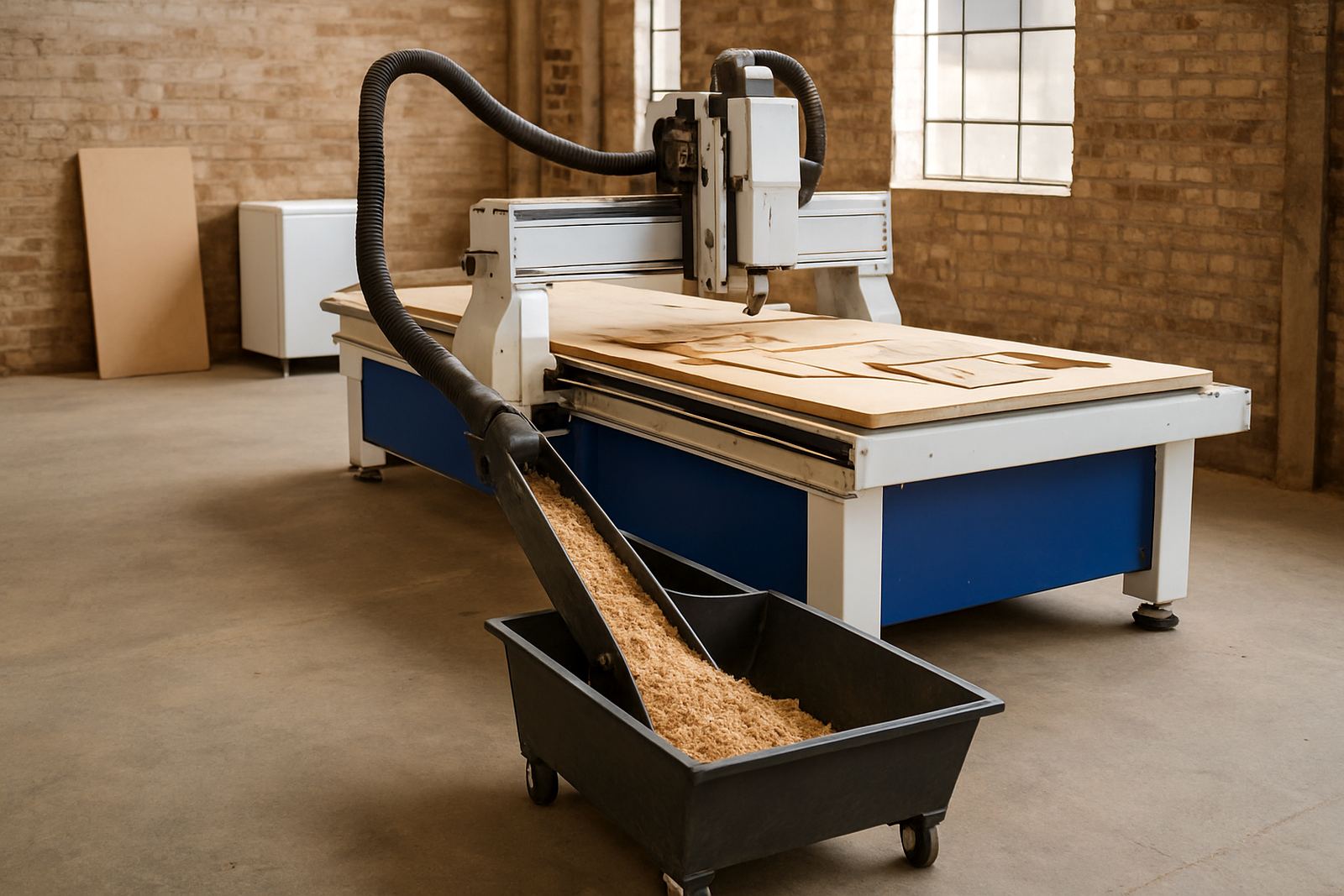
A chip conveyor pack moves waste away from the cutting zone so offcuts, chips and fines do not pile up around the table. On busy nesting runs, that makes it easier to keep parts moving and reduces the chance of chips being dragged back across finished surfaces. It is especially useful on long production shifts where an operator is loading, unloading and checking cut quality through the day.
The pack is a practical addition to a router setup rather than a stand-alone machine. It is usually considered where the cutting process creates a constant stream of material and the workshop wants neater handling than sweeping by hand every few minutes. For MDF, particle board, plastics and light aluminium work, a conveyor can save time and keep the area tidier, which helps in small premises and shared factory floors.
- Helps clear chips from the cutting area
- Supports higher volume nesting and repeat jobs
- Reduces manual clearing during production
- Improves housekeeping around the machine
Sizes and layout choices for local workshop space
Chip conveyor packs are normally selected to suit the router bed size and the way material moves through the shop. On smaller entry machines, the conveyor may be fitted to collect waste from a single working zone, while larger production routers often need a wider collection path and a stronger discharge arrangement. If your workshop has narrow aisles, a low profile discharge can make a big difference to day to day handling.
For South African sites, it is worth considering floor level changes, doorway widths and where the waste will end up. Some teams need a direct transfer into bins, while others work better with a short run to a skip point. Germiston workshops often ask about compact layouts, while bigger plants in Midrand or Pretoria East may want higher throughput and easier access for forklift movement. There is no one size fits all and the right option depends on the table, the spoil volume and how often the machine runs.
- Matched to router bed width and waste load
- Low profile options for tight factory space
- Discharge direction can suit your bin or skip point
- Better planning for aisle, forklift and pallet access
Where the conveyor pack suits best
This option suits fabricators who produce a lot of repeat parts and need predictable waste removal. Sign shops cutting board stock, furniture makers nesting panels, and plastics processors all benefit when chips are handled more neatly. It also makes sense where operators are still learning the machine, because the table area stays easier to read and check.
The conveyor pack is less about fancy extras and more about keeping production under control. On load-shedding recovery, for example, a cleaner table is quicker to inspect before restarting a job. In coastal areas like Durban North or Cape Town North, removing waste promptly can also help limit moisture holding fines against the machine frame and surrounding floor. That is not a cure for workshop humidity but it does help with routine upkeep.
- Wood, plastics and light metal cutting work
- Busy nesting and repeat production runs
- Workshops with limited cleaning labour
- Sites where restart checks need to be quick
Installation, power needs and workshop connections
Installation is planned around the machine and the conveyor arrangement, then checked against the workshop power supply and control cabinet layout. Most packs are fitted as part of a full machine setup so that travel clearances, discharge direction and interlocks are confirmed before handover. If the conveyor links with dust extraction or auxiliary waste handling, those points are verified at commissioning as well.
Power needs depend on the conveyor drive and the machine configuration. In some setups the conveyor draws from the router control system, while other layouts use a separate supply and control circuit. A stable electrical supply is important, especially where voltage dips are common and the site already carries spindle, vacuum and dust extraction loads. If the workshop has compressed air on site for clamps or related functions, pressure availability is checked but a chip conveyor itself normally does not rely on gas. During install, ask for the servcie team to confirm the access route, machine position and floor condition before delivery.
- Fitted during machine installation or retrofit
- Power arrangement depends on drive and control setup
- Check floor level, access and discharge point first
- Coordinate with vacuum and dust systems where needed
Care, cleaning and servicing intervals
Like any workshop system, a chip conveyor works best when it is inspected often and cleaned before build-up becomes hard and heavy. Fine dust, sticky resin from certain boards and broken offcuts can collect in the wrong places if the team leaves the conveyor too long between checks. A quick daily look and a proper weekly clean are usually better than waiting for a jam.
During preventive maintenance, the drive points, belt or chain condition, tension and alignment should be checked together with limit switches and guards. If the conveyor sits under a high chip load, more frequent attention may be needed. MultiCAM support can include preventive maintenance, controller backups, machine relocation and related workshop checks, so the conveyor stays in step with the router instead of becoming another loose end.
- Daily visual inspection for build-up and jams
- Weekly cleaning for fines, resin and loose offcuts
- Check drive parts, tension and alignment on service visits
- Include conveyor checks in routine maintenance plans
What to confirm before you order one
Before ordering a chip conveyor pack, it helps to confirm the router model, table size, waste type and expected daily production. The team should also know whether the machine is cutting nested boards, full sheets, sign panels or mixed jobs, because waste volume changes quickly from one workshop to the next. If you are running more than one shift, say so upfront so the conveyor can be sized for the real load.
You should also check available power, floor space, discharge direction and whether the waste needs to land in a bin, bag or skip. If the machine sits near a wall, roller door or column, the installer needs those measurements before delivery. A small detail can save a lot of trouble later, so send through photos, table dimensions and the machine serial if available. That gives the sales and technical team enough to advise properly and avoid a fitment that looks fine on paper but does not suit the shop.
- Router model, bed size and table layout
- Type of material and expected chip volume
- Power supply and discharge space
- Photos and measurements of the machine area
Key facts
| Product type | Chip conveyor pack for CNC router waste handling |
|---|---|
| Typical use | Wood, plastics and light aluminium cutting |
| Fitment | Machine matched, supplied for installation or retrofit |
| Power | Depends on conveyor drive and control arrangement |
| Workshop need | Suitable floor space, discharge point and access |
| Service support | Installation, commissioning and maintenance checks |