What an Offloading Roller Table Does in Daily Production
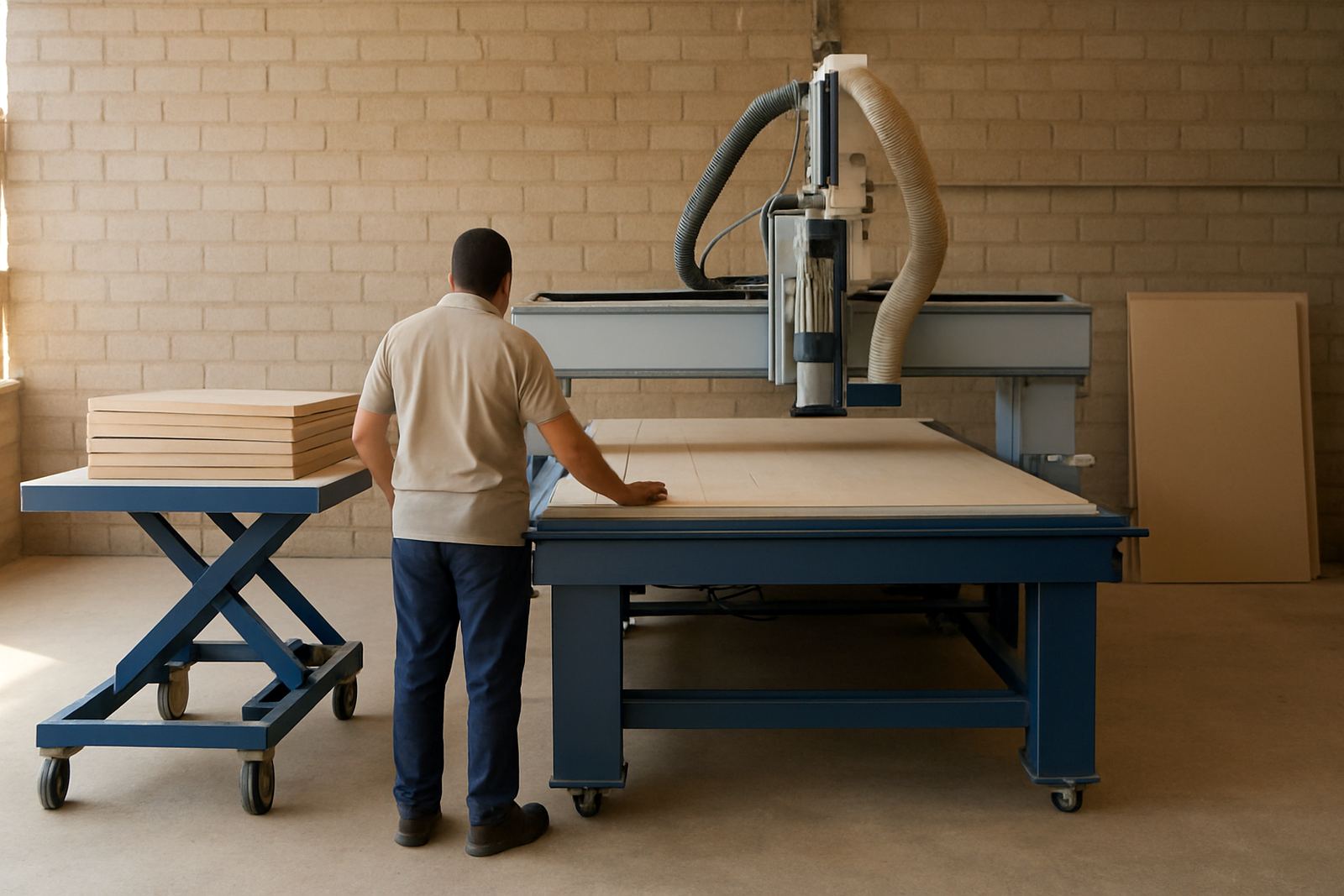
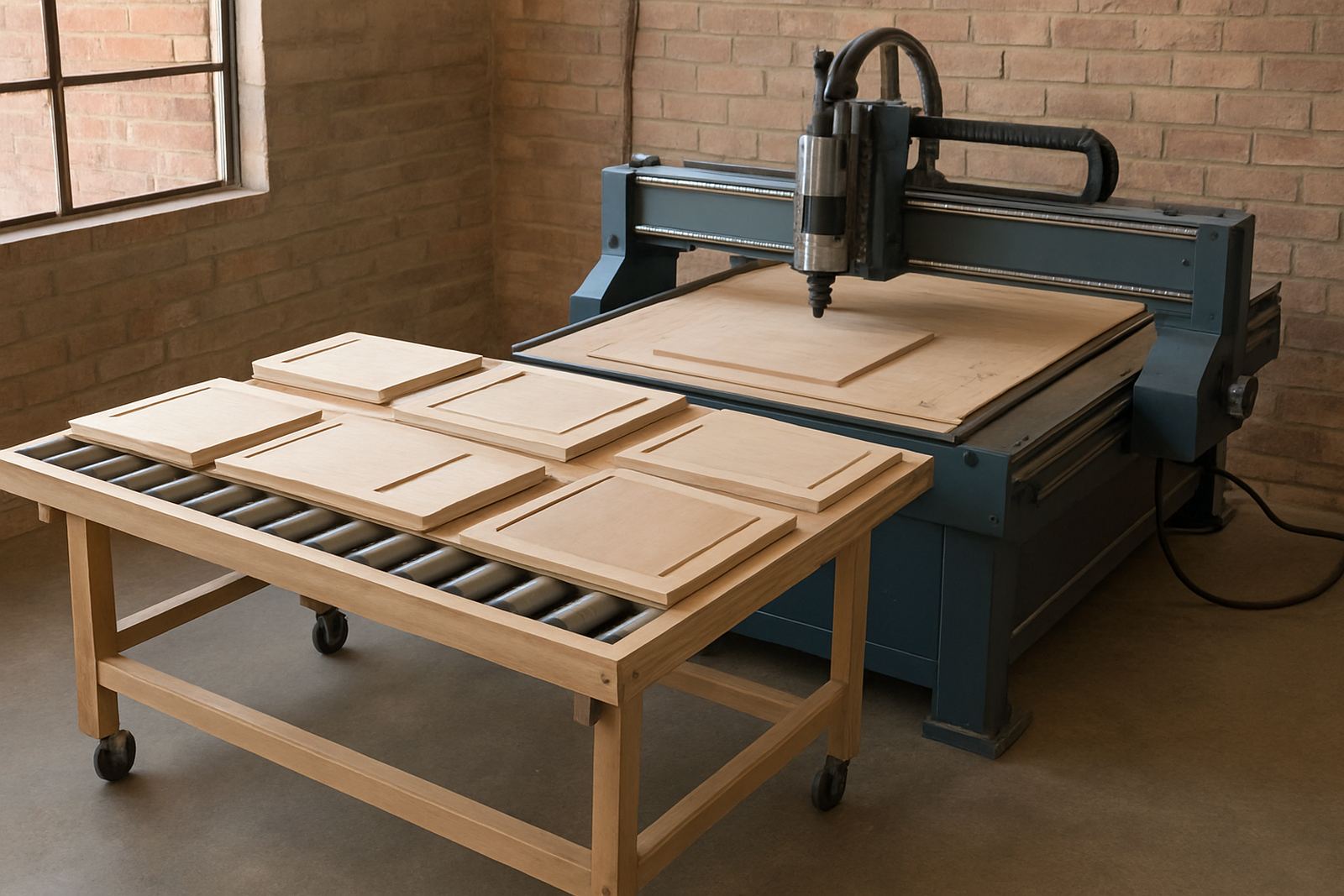
An offloading roller table is fitted at the exit side of a CNC router so cut sheets can be received, guided and moved away without dragging across the machine bed. It supports sheets, panels and nested parts as they come off the router, which makes sorting easier and reduces scratches on melamine, plywood, acrylic and aluminium composite board.
For Johannesburg and Germiston workshops, this matters when one operator is running several jobs or when boards need to move from cutting to edge banding, drilling or packing quickly. It also helps in shared spaces where floor area is tight and finished parts must not pile up around the machine.
On larger production lines the roller table can be paired with a transfer or staging area, so the cutting cycle stays moving and the operator does not have to lift heavy sheets by hand. That helps with consistency and keeps the workshop tidier, especially during load-shedding recovery when teams are trying to catch up on time-sensitive work.
Sizes and Layout Options for Local Workshops
MultiCAM offloading roller tables are typically matched to the router size and the direction of your workflow. Common lengths suit 4 x 8 foot, 5 x 10 foot and larger sheet sizes, with roller spacing chosen to support full panels as well as smaller cut parts. The table can be specified as a stand-alone offload section or as part of a wider machine layout with infeed and outfeed support.
- Sheet widths commonly matched to 1220 mm, 1500 mm and 1600 mm class routers
- Section lengths available to suit single-sheet handling or longer staging runs
- Height matched to the CNC bed for smooth part transfer
- Roller spacing selected for full boards and smaller offcuts
- Fixed or mobile support depending on workshop layout
For furniture makers in Gauteng, a longer table is useful where multiple cabinet parts come off in one nesting run. Sign shops often prefer a compact arrangement because boards are lighter and the priority is quick sorting, not long staging. A good fit depends on how your team packs, stacks and moves material through the shop, not just on the machine size alone.
Where It Suits Best and What It Improves
This accessory suits CNC routers used for cabinetry, shopfitting, display panels, plastic fabrication and light aluminium work. It is also useful where the same machine cuts both full sheets and smaller remnant parts, because the rollers make it easier to keep everything in order before the next operation starts.
Workshops in Durban and coastal areas often ask for cleaner part handling because humidity can soften packaging and make sheets more difficult to slide on a flat surface. In those spaces the roller table helps reduce friction and keeps parts moving without unnecessary lifting. In Pretoria East and Midrand, where fast job changeovers are common, it helps operators clear the bed quickly and keep production flowing.
- Reduces handling marks on finished panels
- Speeds up sorting after nested cutting
- Supports safer handling of large sheets
- Helps one operator manage the machine more efficiently
- Keeps the cutting area open for the next job
Installation, Space Planning and Power Considerations
An offloading roller table needs a level floor, enough run-out space and a clear path for boards leaving the machine. Before installation, measure the machine length, the operator side clearance and the direction in which finished work will travel. In Germiston and across South Africa, this is especially important in workshops with pillars, roller doors or narrow aisles because the table must fit the actual room, not only the drawing.
The table itself is usually a mechanical handling section and does not need heavy electrical supply, but it must be aligned with the CNC router so sheets transfer smoothly. If the layout includes powered conveyors or lift assist options, the electrical requirements will depend on the full setup. Air supply is not normally required for a basic roller table, although some integrated systems may share air with related workshop equipment.
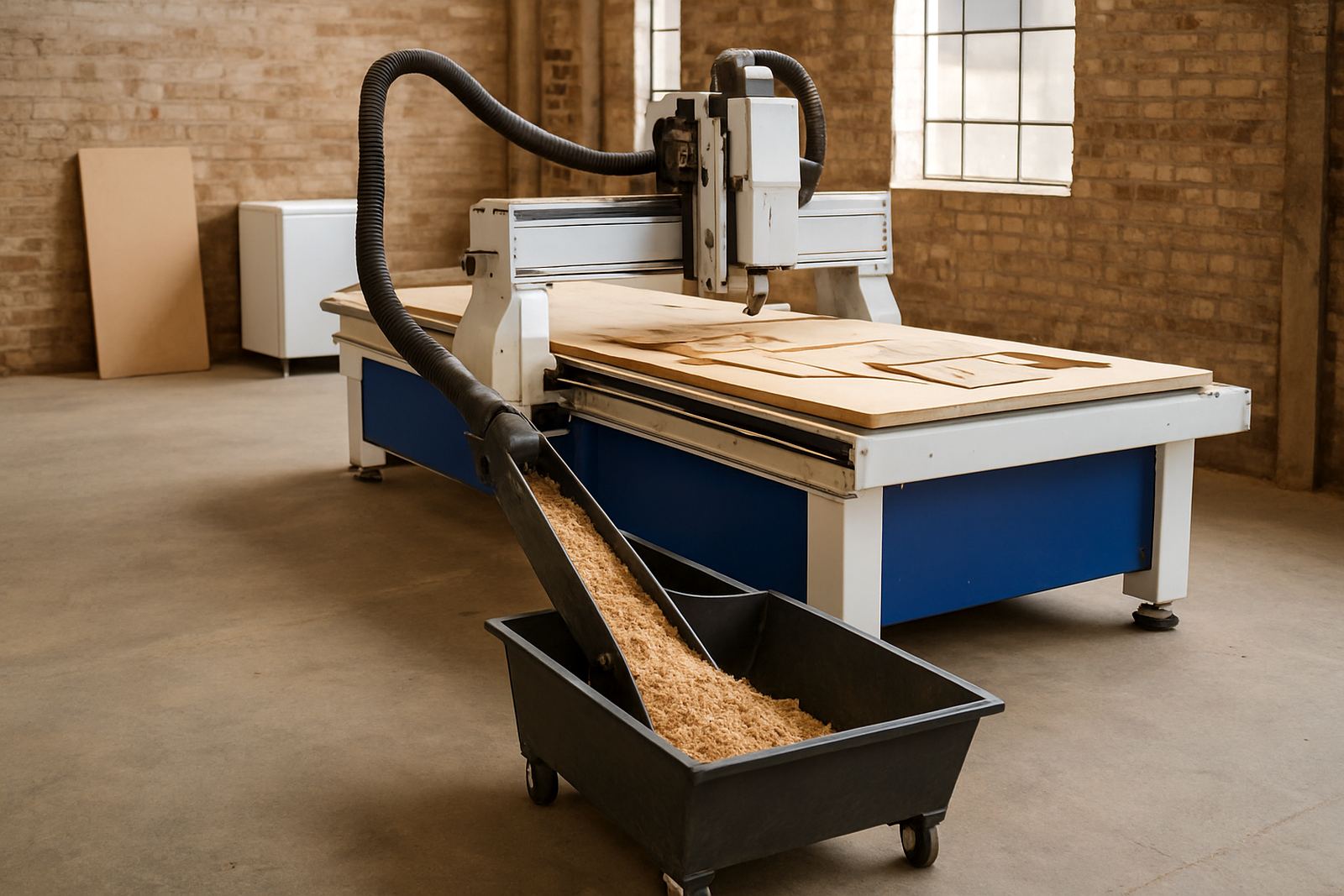
During installation the team should also check dust extraction routes, scrap bin access and the space needed for pallet trolleys or pack-out trolleys. A good layout cuts down on unnecessary steps, and that saves time every day.
Care, Cleaning and Servicing in a Busy Workshop
Rollers and side rails need basic cleaning to keep boards moving freely. Dust, glue residue and small offcuts can build up around the bearings or support surfaces, especially in MDF and board cutting environments. A simple weekly check is usually enough for lighter use, while production shops may need daily wipe-downs and a more frequent inspection of alignment points.
Check for bent rollers, worn bearings, loose fixings and any sections that sit out of level. If the table is used near a dust extraction outlet, make sure fine powder is not packing around the moving parts. In coastal cities corrosion protection matters too, so exposed metal should be kept clean and dry.
- Wipe rollers and frames at the end of each shift
- Inspect for loose fixings and uneven sections
- Keep the floor area clear of offcuts and packing straps
- Check for corrosion in humid or coastal conditions
- Include the table in routine maintenance visits
MultiCAM can include the offloading table in planned servicing with machine installation, preventive maintenance, machine relocation or operator training. That helps the whole cutting area stay predictable, which matters when deadlines are tight and there is little room for rework.
What to Confirm Before You Order
Before placing an order, confirm the machine model, sheet size, offload direction and the type of material you handle most often. It also helps to note whether your team wants a simple receiving table or a longer staging arrangement that can hold several parts at once. If the workshop handles heavier boards, say so upfront because the table layout and roller arrangement should suit the load.
- CNC router bed size and machine height
- Typical sheet size and panel weight
- Left or right side offloading direction
- Available floor space and aisle width
- Need for fixed, mobile or extended staging
- Whether the table must match dust extraction and packing flow
For South African fabricators, the right choice is the one that fits the room, the work mix and the number of operators on shift. MultiCAM can help assess the layout from Germiston, Johannesburg East, Midrand Service, Pretoria East, Durban North or Cape Town North, with installs across the country and practical advice from selection through to commissioning.
Key facts
| Product type | CNC router offloading roller table |
|---|---|
| Typical sheet sizes | 1220 mm, 1500 mm and 1600 mm class layouts |
| Use case | Sorting and receiving cut parts, panels and nested sheets |
| Material suitability | Wood, plastics, aluminium composite board and light soft metals |
| Installation needs | Level floor, matched machine height, clear offload space |
| Power / air needs | No standard power or gas for basic roller tables; options depend on system integration |