What a rotary axis does on a CNC router
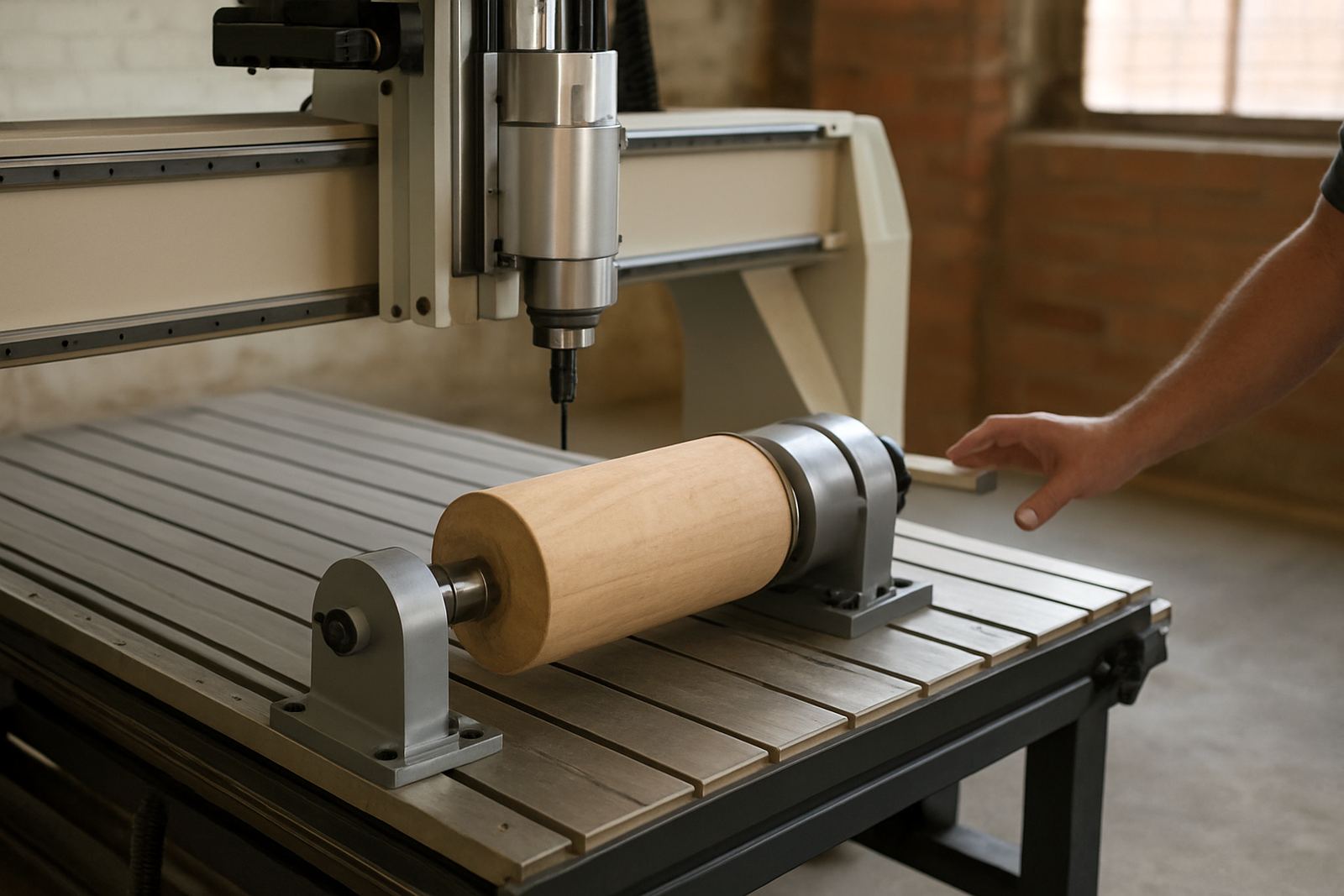
A rotary axis lets the machine turn a workpiece while the cutter moves along the other axes. That means you can carve flutes on a column, cut signage wraps on a cylinder, machine chair legs, or add repeat features around display items without changing over to manual tools.
For shops that already cut sheet material, a rotary unit opens a new range of work from one machine. It is useful where parts need to be indexed around a round face, and where a flat bed alone is not enough.
Common sizes and setup options
Rotary units are typically selected by the maximum diameter and length of the part you need to hold. The right choice depends on your router size, spindle clearance and how much weight the axis can carry without chatter.
- Small units for pens, small columns and compact display parts
- Mid-size units for chair legs, balusters and moderate diameter cylinders
- Long-bed options for extended profiles and furniture components
- Chuck or centre support options depending on the workpiece shape
- Tailstock support for longer parts that need extra stability
On heavier jobs, the holding method matters as much as the motor. A part that is secure at the ends but out of balance in the middle can still mark up the cut, so setup has to be practical not just theoretical.
Where a rotary axis suits local workshops
Rotary work suits sign shops, furniture makers, joinery teams and fabricators who need repeatable cylindrical work. In Johannesburg and Germiston workshops, it is often added to a router already used for MDF, plywood, acrylic and softer aluminium work. Coastal areas such as Durban and Cape Town also use these units, but dust control and corrosion care become more important in humid conditions.
It is a good fit where the team needs to move between flat sheet cutting and round part machining without waiting for outside machining. That saves transport time and keeps control in-house. For municipal or retail display work, the ability to turn and pattern the part can speed up production and reduce finishing work too.
- Columns, balusters and handrail components
- Cylindrical display items and retail stands
- Chair legs, table parts and small furniture components
- Decorative wraps, grooves and indexing cuts
Installation, power and workshop requirements
A rotary axis normally runs as an add-on to a compatible CNC router controller and drive system. It needs a stable mounting position, correct cable routing and a machine that has enough clearance for the chosen diameter. If your router uses a vacuum table, the rotary setup may need a separate support method because the round part will not sit on the vacuum area in the same way as sheet stock.
Power requirements depend on the drive system and controller interface, but the rotary itself is usually supported by the machine electronics rather than needing separate mains supply. No gas line is needed. What matters most is clean power, proper earthing and a setup that protects the drive from dust buildup and voltage dips during load-shedding. A backup plan for the controller and machine settings is wise if your workshop sees frequent interruptions.
- Check machine controller compatibility before ordering
- Confirm spindle clearance over the part diameter
- Allow space for tailstock movement and loading access
- Plan for dust extraction around the rotary bed area
Care, servicing and everyday reliability
Rotary units work best when they stay clean and aligned. Dust, resin and small chips can build up around bearings, clamps and drive parts, so regular cleaning is part of normal care. In workshops that run MDF or laminated board, fine dust can shorten the life of moving parts if extraction and cleaning are neglected.
MultiCAM supports preventive maintenance, spindle service, vacuum leak checks and controller backups, and the same practical approach applies to rotary systems. Check bearing play, drive tension and clamp condition at set intervals. If the unit starts to mark the work, lose position or show vibration, it needs attention before the job queue grows.
What to confirm before ordering a unit
Before buying, it helps to match the rotary to the type of work you actually run, not just the parts you want to try once. Measure the longest part, the largest diameter and the typical material weight. Then confirm how the part will be held and how much room the operator needs to load it safely.
It also helps to have your CAM process and toolpaths reviewed so the team can cut with confidence from day one. If you are moving an existing machine or upgrading a workshop cell, ask about installation and commissioning as part of the plan. That avoids surprises when the unit arrives and the first job is already booked.
- Maximum part diameter and length
- Workholding method and tailstock needs
- Controller and software compatibility
- Available floor space and operator access
- Dust extraction layout and power stability
- Training needed for setup, zeroing and indexing
Key facts
| Product type | CNC rotary axis unit for 4th-axis machining |
|---|---|
| Typical workpiece length | Short display parts up to extended furniture components, depending on model |
| Typical workpiece diameter | Small parts through to larger cylinders and columns, model dependent |
| Supported materials | Wood, MDF, plastics and soft metals where machine configuration allows |
| Integration | Fits compatible CNC router controllers and drive systems |
| Typical workshop use | Columns, balusters, chair legs, cylinders and turned display parts |