Why repetitive hole work slows a cabinet line
In many Johannesburg and Gauteng workshops, the cutting side gets most of the attention while drilling is left to hand tools or a small jig on the bench. That works for a one off job, but once the same carcass pattern is repeated across dozens of units the process becomes the bottleneck. Operators measure, clamp, mark and re-check, then still have to sort out the odd panel with a shifted line or a split edge.
A drill bank changes that rhythm. With the right spacing and a steady setup, the machine handles the same pattern the same way each time. That matters for cabinet shops making kitchen units, office storage, built-in cupboards and display carcasses where consistency is part of the product, not a nice extra.
For teams working under load-shedding and tight install dates, fewer manual steps also means less chance of losing pace halfway through a batch. When power comes back and the next shift starts, the work can continue from a known setting instead of a fresh round of marking out.
What a drill bank does better than hand drilling
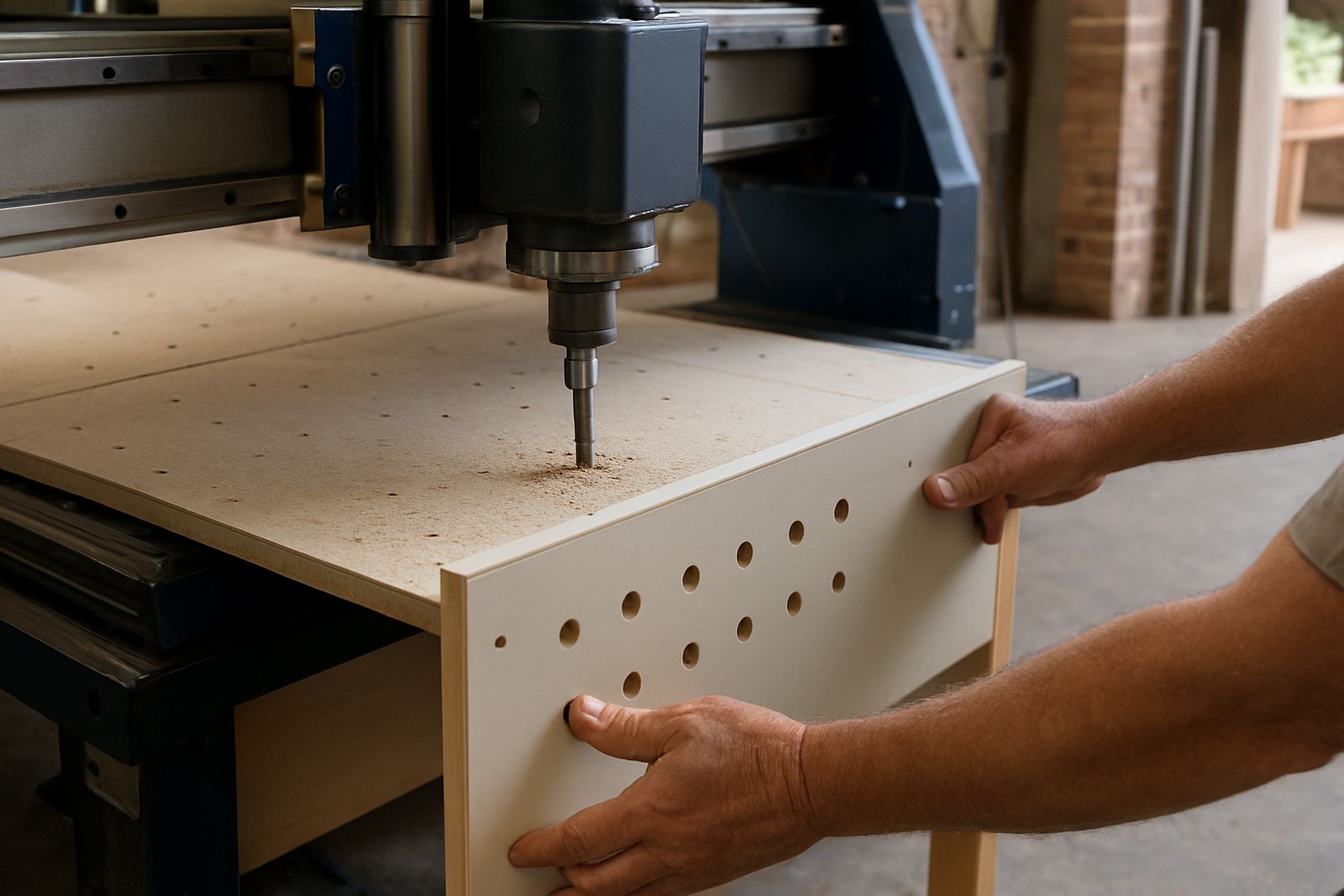
A drill bank is built for repeated hole patterns, not general purpose tinkering. It keeps centres, depth and alignment under control across a run of panels. That gives cabinetmakers a cleaner base for hinges, runners, shelf pins, connectors and assembly dowels.
It also helps with worker comfort and output. Instead of leaning over a panel all day with a drill and tape measure, the operator loads the component and lets the machine do the repeat work. The result is steadier pace, less fatigue and fewer small errors that grow into bigger problems later in the job.
- Accurate hole spacing across repeated panels
- Cleaner edge distances for chipboard, MDF and plywood
- Faster setup for common carcass sizes
- Less rework after dry fitting and assembly
- More predictable output from shift to shift
The setup details that matter before you buy
The right result depends on more than the CNC itself. Cabinet shops need to match the drill bank to the sizes they actually build, the tooling they use and the way panels move through the workshop. A unit that suits flat-pack runs may not suit a custom shop doing mixed batches and short notice changes.
Good advice should cover feed direction, stop positions, clamping, tool wear and how the machine sits with the rest of the line. In a Germiston or Midrand workshop space is often tight, so access for loading and offloading matters just as much as spindle count or drill head layout. If the operator has to wrestle each board into position, the time saving disappears.
- Panel sizes you cut most often
- Hole patterns for hinges, shelves and fittings
- Dust extraction and chip handling
- Floor space for infeed and outfeed
- Voltage stability and backup planning during outages
How drill banks support local cabinet production
A practical example is a cabinetmaker in Johannesburg East producing kitchen carcasses for a row of site installs in Pretoria. The team cuts panels on a router, then needs the same line of holes on every side panel and shelf. With manual drilling, one small misread of the tape measure can throw off a batch and delay the fitter on site. With a drill bank, the pattern is set once and repeated across the run, so the installer gets parts that line up the first time.
That sort of consistency matters in South Africa because the workshop is rarely working in perfect conditions. Coastal humidity in Durban can swell stock and affect handling, while dry winter air in Gauteng can change how boards move through the line. A drill bank does not remove those issues, but it does reduce one more source of variation.
It is also easier to train new staff on a fixed process than to expect everyone to measure and drill by eye. Clear steps, a known setup and proper checks make the workshop safer and more predictable.
Tooling, maintenance and the small habits that protect output
Drill banks perform best when the tooling is sharp, the machine is level and the dust system is pulling properly. Blunt bits burn the board, overheat the panel and leave ragged edges that need cleaning by hand. Poor dust removal also shortens tool life and makes it harder to see the work area clearly.
Routine checks are worth the time. Back up controller settings, inspect vacuum leaks, watch for loose stops and keep an eye on spindle service intervals where relevant. If the machine is moved between sites or rooms, a fresh commissioning check helps catch alignment issues before production starts again.
For workshops that run weekly or monthly batch work, a simple maintenance habit often saves more than a flashy machine feature. The aim is steady output, not surprises on a Friday afternoon.
Choosing a drill bank for a South African workshop
MultiCAM works with fabricators, sign shops and furniture makers from its Germiston base, with support across Johannesburg East, Midrand, Pretoria East, Durban North and Cape Town North. That local spread matters because the right drilling setup depends on the kind of work a shop does, the space it has and how quickly it needs parts turned around.
For some teams, the best answer is an entry-level unit that handles the common cupboard patterns cleanly. For others, a production cell with table options, dust management and a wider setup is the better fit. What counts is practical guidance on machine selection, tooling setup, installation and operator training so the shop can keep moving with fewer interruptions.
When the hole patterns are repeatable, the machine earns its place quickly. The payback is not only in speed, but in the quiet confidence that every panel should fit where it is meant to fit.
A better drilling process shows up in the finished cabinet
Clients usually notice the finish, the edges and the fit, but those results start much earlier in the workshop. A good drill bank helps the whole cabinet line run with less marking, less correction and less stress on the team. That is why the benefits show up in more than one place: fewer errors at assembly, fewer complaints on site and better use of labour across the week.
For cabinet shops that want a cleaner, faster pattern for repetitive work, the question is not whether drilling can be done by hand. The real question is whether hand drilling is still the best use of time once the same job repeats all month.
When a drill bank makes the most sense
It usually makes sense when a workshop:
- Builds the same carcass sizes again and again
- Has regular hinge, shelf or connector drilling
- Needs to train staff on a repeatable process
- Wants to cut rework after assembly
- Needs a more reliable flow through the workshop
That is where the machine stops being just another item on the floor and starts becoming part of the way the shop delivers work.