Start with the offload point, not the last step
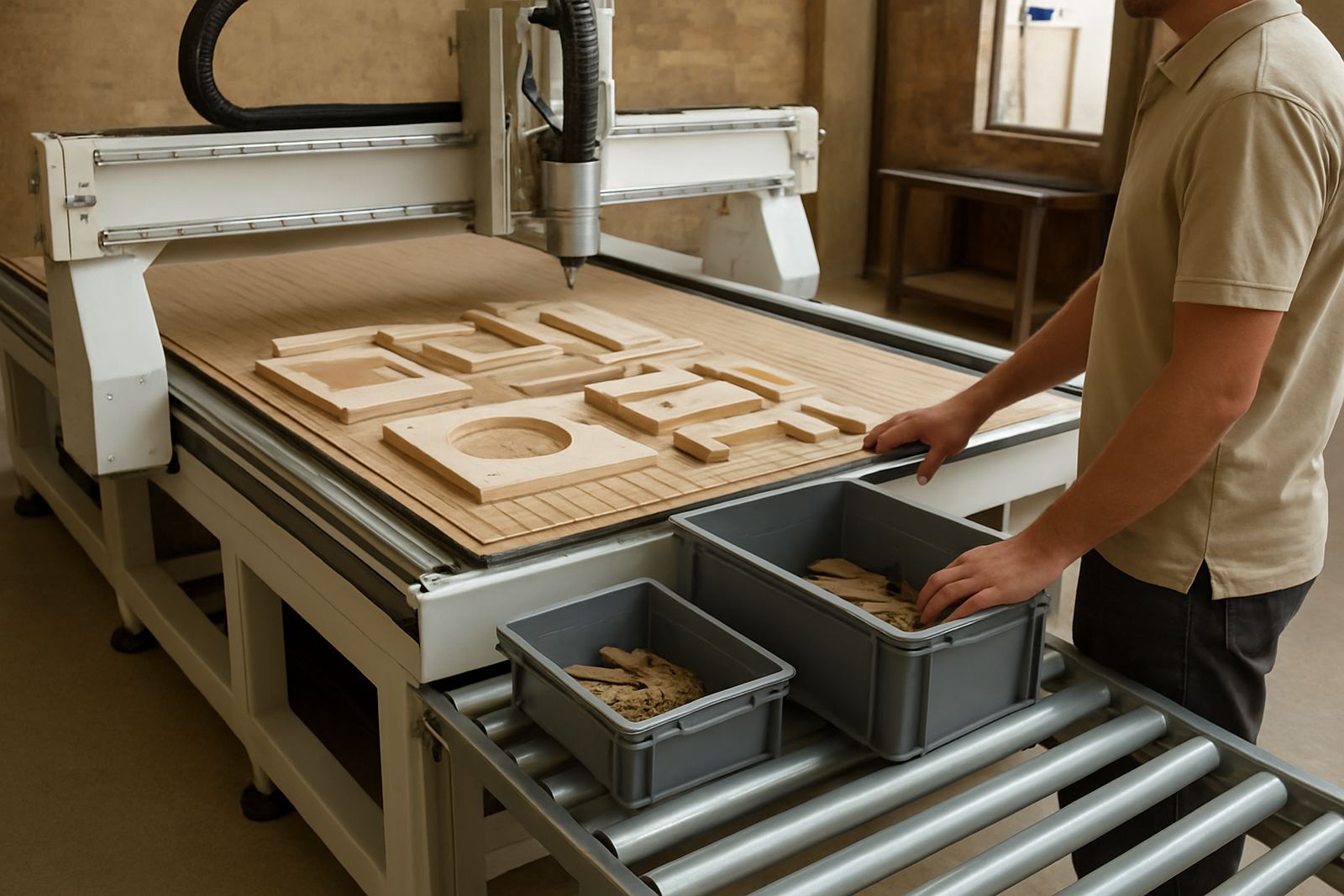
Most sorting problems begin before the first sheet is cut. If the offload point is too far from the machine, parts get stacked on the floor, labels fall off and the team starts guessing which panel belongs to which job. A better setup gives every job a clear landing area, a place for small offcuts and enough room for the operator to move without stepping over parts.
In Germiston workshops, where floor space is often tight and loaders are working around other machines, the offload zone should be planned with the same care as the cutting table. Think about where a pallet jack can turn, where a trolley will stand, and how many sheets may come off in a shift. If your router runs through the day, the offload area needs to keep pace with it, not wait for a once-off clean up.
Use labels that survive dust, handling and humid air
Label each part as soon as it leaves the table. Waiting until the end of the job usually means labels are written in a rush, or not at all. Use a simple format that includes the job number, part name, material, thickness and quantity. If the workshop is near the coast, where humid air can soften paper labels and markers can smudge, choose tags and pens that hold up better.
- Job number or customer name
- Part code or drawing reference
- Material type and thickness
- Quantity in the stack
- Direction notes for grain, finish or face side
Keep the system boring and repeatable. Fancy naming can slow people down. The best label is the one anyone on the floor can read at a glance, even when the shop is busy and there is dust in the air.
Sort by next process, not only by shape
Flat parts often look tidy when grouped by size, but that does not always help the workshop. A cabinet side that needs edge banding should not sit with laser-cut brackets or sign panels waiting for packing. Sort the parts by what happens next. Some may go straight to assembly, others to machining, some to sanding, and a few to hardware fitting.
This is where a separate holding area helps. If you can keep sheets, nested parts and finished components apart, the team spends less time asking where things are. It also cuts the chance of a finished face getting scratched by rough stock or a part being sent to the wrong station. Even a simple rack system can make a big difference when jobs are moving fast.
Build the offload zone around your team and machine flow
The best layout depends on who is working the shift. A two-person workshop does not need the same offload system as a production cell. If one person is removing parts and another is processing them, the path between machine, offload table and packing bench must stay clear. The route should not cross the forklift lane or block access to dust extraction, power isolation or controller panels.
For South African workshops running through load shedding or generator changeovers, a neat offload zone also helps when the rhythm of the day gets interrupted. When power returns, the operator can see what was complete, what still needs sorting and what can go back into the queue without confusion. That saves time and reduces mistakes after every stop-start.
- Keep the offload table close enough for hand transfer
- Allow space for a trolley or rack next to the machine
- Mark a clear area for finished parts and a separate area for scrap
- Leave access to emergency stops, hoses and vacuum lines
Use light, colour and simple floor marking to reduce mistakes
Good visibility matters more than many workshops expect. In low light, operators can mix up similar panels or miss a label that has fallen face-down. Floor marking tape, coloured tags or named bins can help the team separate jobs without wasting time. Colour coding works best when it stays simple: one colour for cutting, another for edging, another for dispatch. Too many colours become noise.
If your team works early mornings or late shifts, check that the offload area is lit well enough to read labels without moving parts around. Near windows or roller doors, sunlight can also fade markings during the day. A small change in lighting can prevent a lot of seperate handling later on.
A Germiston example: one nesting shift, fewer questions
A furniture maker in Germiston might run nested board parts from a CNC router, then send them to edging and assembly before the end of the day. Without planned offload space, the first stack gets put on a spare pallet, the next stack lands on a workbench and the labels end up in a cap. By lunchtime nobody is sure which panels belong to the kitchen set and which belong to the office unit.
With a marked offload bay, clear job tags and one rack for each next step, the same workshop can keep the flow steady. The operator removes parts, the offload helper checks the labels, and the edging team collects only what is ready. That simple change cuts backtracking and helps the machine keep feeding the floor instead of slowing it down.