Cabinet Production That Needed More Control
The client was a small-to-mid sized cabinetry workshop in Germiston serving homes, renovations and fitted storage work across Johannesburg East. Their manual process was slowing them down on repeat jobs, especially when a run of carcasses, doors and backs had to match from one week to the next. They needed tighter cutting accuracy, better nesting from standard board sizes and a cleaner way to keep offcuts under control.
The brief was practical. Cut panels faster, reduce tape measure errors, keep the team working from the same job files, and make sure the machine could handle board goods in a dusty workshop with summer heat and occasional load-shedding. They also wanted a setup that a normal production team could learn quickly, not something that needed constant intervention from one specialist.
Workshop Constraints We Had To Work Around
The available floor space was limited and the existing cutting area sat close to finishing and assembly zones, so dust control mattered from the start. The power supply also needed attention because voltage dips and interruptions are common in this part of Gauteng, which can upset controller settings and interrupt a long cut. We also had to work around a mixed material load that included melamine board, MDF, plywood and the odd soft metal insert panel for special jobs.
- Limited floor space for infeed and outfeed handling
- Dust collection had to be matched to the cutter and table size
- Stable power and controller backup were needed for local conditions
- The team needed simple operating steps for day-to-day board worke
Because the workshop did not want a long shutdown, the changeover had to happen in planned stages. That meant measuring the area properly, checking access for delivery and making sure the machine and extraction could be moved into position without disrupting the full production line.
What We Supplied And Set Up
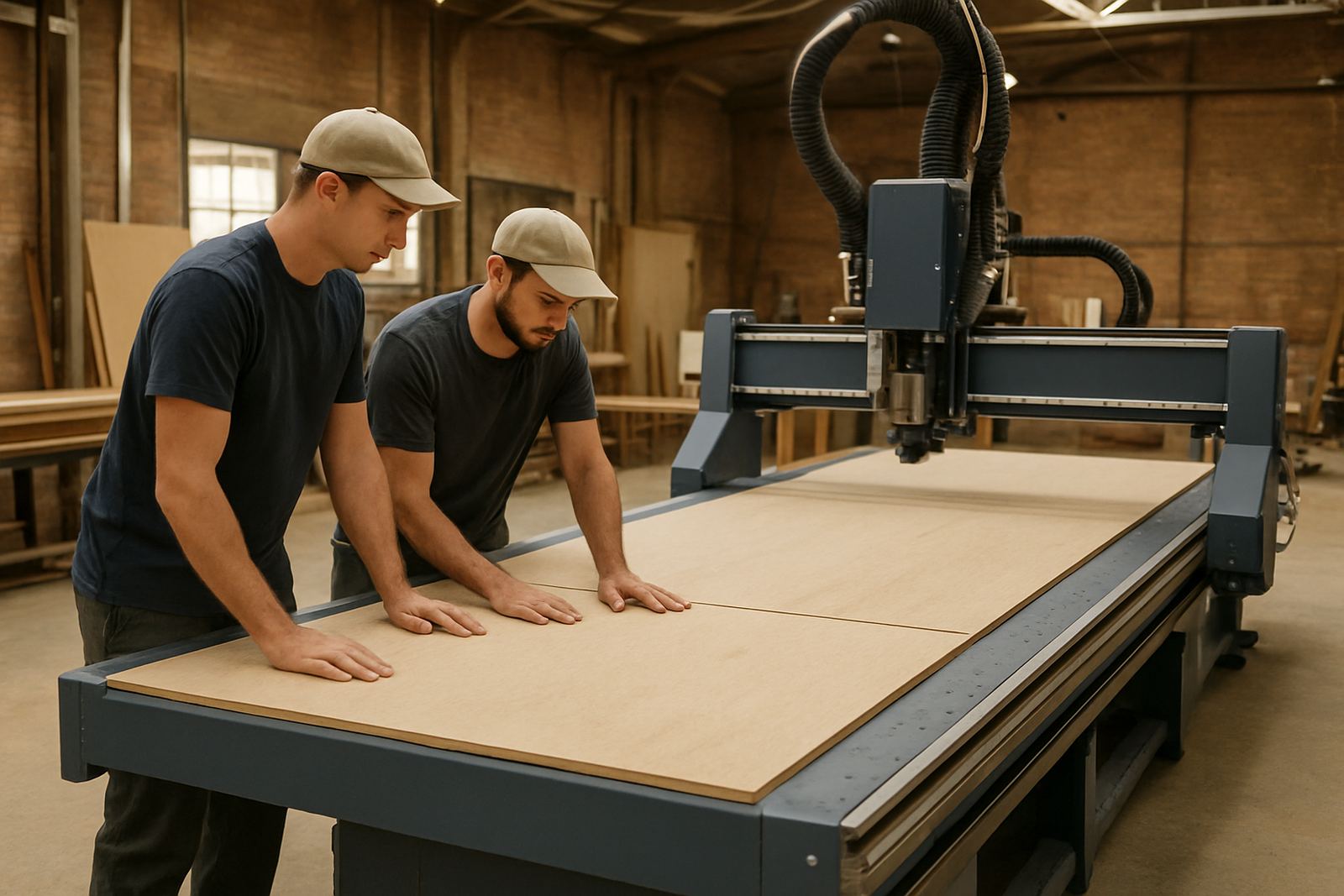
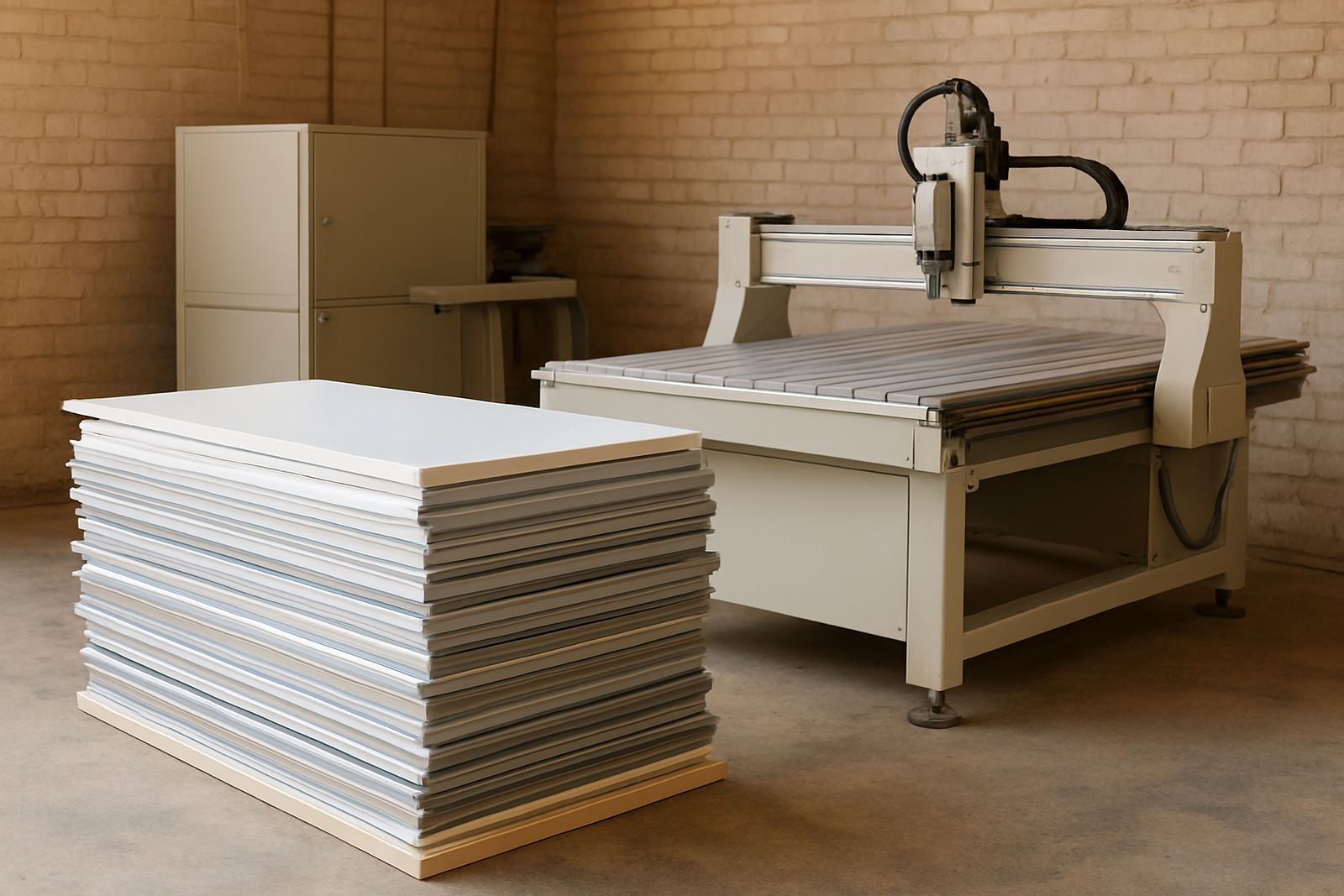
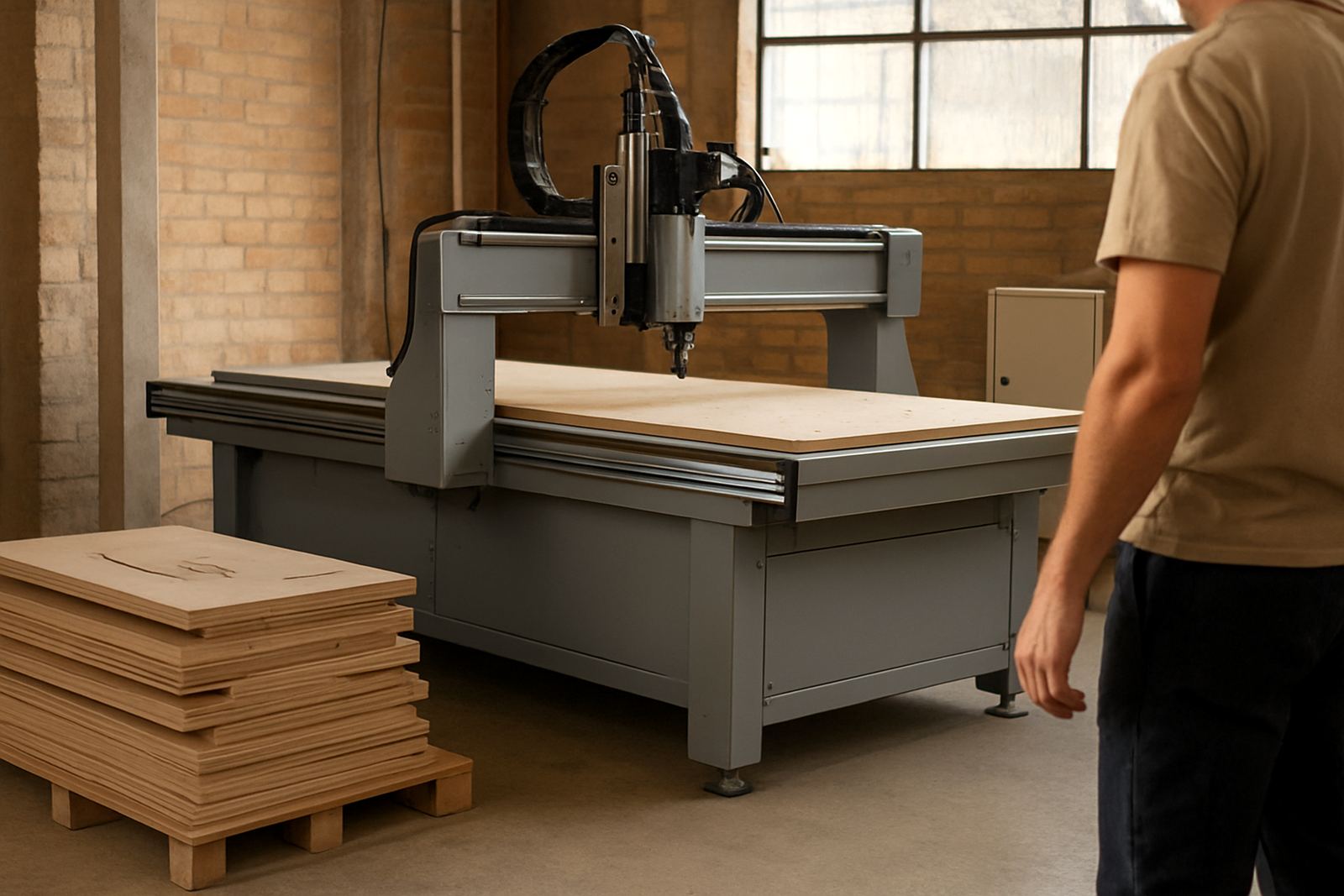
We supplied a CNC router package suited to nested cabinet work, with a table size that could take full sheets and a vacuum hold-down arrangement for board processing. The setup included tooling guidance for common cabinet materials, controller backups, and a dust extraction layout that could be balanced to keep chips moving away from the cutter path. The machine was selected for reliable daily use rather than flashy features.
Key setup points included spindle alignment, vacuum leak checks, safe tool length settings and a practical nesting workflow for parts that had to be cut in batches. We also set the team up with operator-friendly steps for loading sheets, checking zero points and keeping the machine ready for the next run. For a busy Germiston workshop, those small controls save time on every board.
- CNC router for nested sheet cutting
- Vacuum table setup matched to board sizes
- Dust extraction balancing and leak checks
- Controller backup and basic recovery steps
- Tooling setup for MDF, melamine and plywood
Installation, Commissioning And Training
The install ran over 2 weeks from final site check to production handover. In week one we completed the survey, checked access routes, confirmed power requirements and prepared the machine positioning plan. In week two the machine was placed, levelled, wired in and commissioned. After that we ran test cuts on standard cabinet parts, checked edge quality and worked through the first live nesting files with the team.
Training focused on the parts of the job that matter in a real workshop: safe loading, tool changes, tool wear checks, running a part file from start to finish, and recovering from a stop without losing the whole sheet. We also covered maintenance routines for dusty conditions and how to spot a vacuum leak before it costs a full board. The team picked it up quickly because the steps were plain and the process stayed the same from one job to the next.
Results For The Cabinet Shop
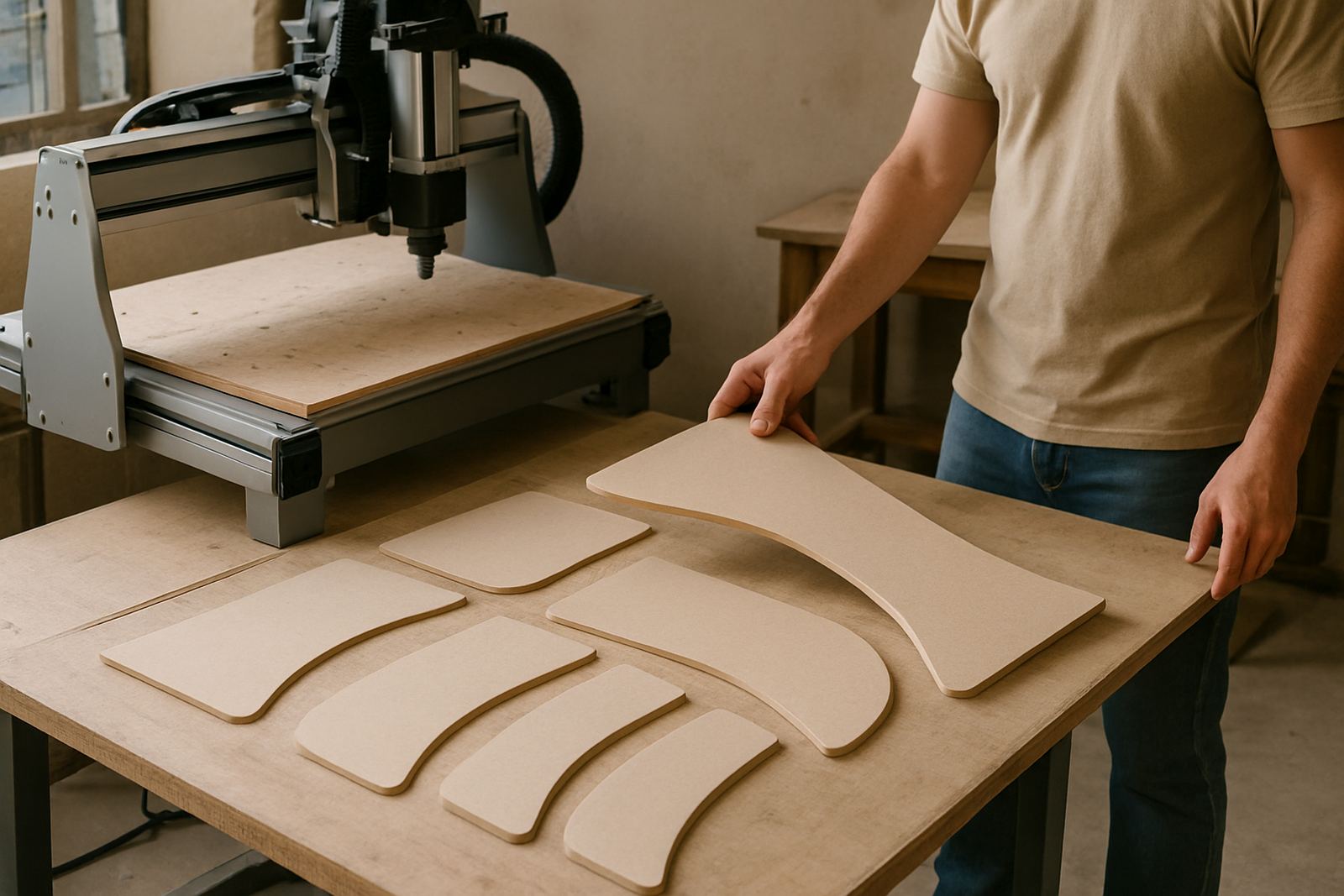
Once the router was in daily use, the workshop moved from manual marking and repeated trimming into proper nested board production. That cut down on measuring errors, improved part repeatability and gave the team a much cleaner flow from drawing to cut list to stacked parts. The change also made it easier to plan labour, because one operator could manage the machine while the rest of the team handled edging, drilling and assembly.
- Cleaner part flow from sheet to finished component
- Better repeatability on cabinet sides, tops and shelves
- Less offcut waste from manual cutting mistakes
- Shorter changeover between different board jobs
The client also noticed that their workshop felt easier to keep in order. Chips were collected more effectively, the machine area stayed clearer and the team spent less time correcting small errors. That matters when you are trying to keep up with local fitted furniture jobs and the deadline moves with the customer.
What We Would Carry Forward On A Similar Cabinetry Job
For a cabinet workshop in Germiston or anywhere else in South Africa, we would follow the same approach again. Start with the sheet sizes and product mix, check the power and extraction properly, and train the operator on the exact jobs the workshop cuts most often. That keeps the solution practical instead of over-specified.
We would also build in controller backups and a short maintenance routine from day one, especially in areas where load-shedding and dust both affect equipment life. The best result comes when the machine, tooling and workflow are set up as one system, not as separate parts. That is how a workshop gets steady output without chasing problems every week.
Key facts
| Project location | Germiston, Gauteng |
|---|---|
| Client type | Cabinetry workshop |
| Production change | Manual cutting to nested board production |
| Installed equipment | CNC router with vacuum hold-down table |
| Materials processed | Melamine board, MDF, plywood and soft metals |
| Timeline | 2 weeks from site survey to handover |