What the collet holder kit is used for
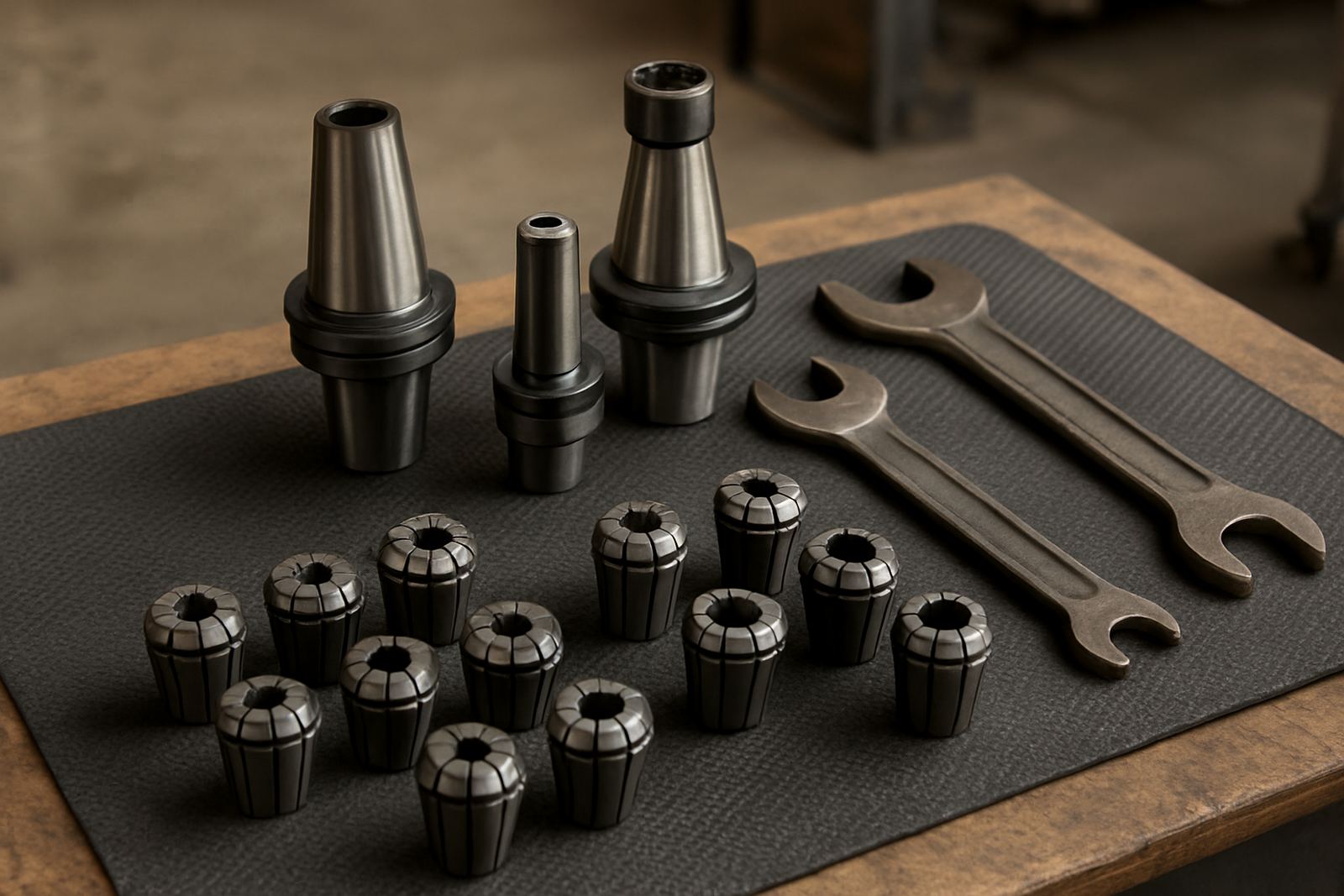
A collet holder kit is a practical workshop support item for storing, handling and organising collets, nuts and related tooling pieces so they stay clean between changeovers. On a CNC router, small bits of dust, resin and aluminium swarf can quickly affect grip and balance, so having a proper holder on hand helps operators keep the toolholding side of the machine in better condition.
The kit is not a cutting accessory in itself. It is there to support the day to day routine of changing cutters, checking toolholding and keeping the spindle area ready for the next run. That matters in South African shops where the same machine may switch from board cutting in the morning to acrylic, PVC or light aluminium later in the day. A tidy holder setup saves time and reduces the chance of mixing worn parts with clean ones.
- Keeps collets, nuts and toolholding parts grouped by size
- Helps reduce dirt build-up during changeovers
- Makes it easier to spot worn or damaged parts before fitting
- Supports quicker operator routine and less confusion on the shop floor
Size and option choices for different spindle setups
Collet holder kits are normally chosen around the spindle and tooling system on the machine, so the right kit depends on the cutter shank sizes a workshop uses most often. Some teams only need a small set for one standard spindle size, while others need a wider mix because they run different cutter diameters across nesting, signage and furniture work. The aim is simple: keep the right parts within reach without clutter.
For most production workshops, the practical options are based on common spindle nut and collet sizes. A kit can be set up for light duty entry routers, mid range production machines, or a more complete store for teams that do regular tool swaps. If your shop uses several cutter shank sizes, it helps to keep each size clearly separated and labelled so the operator can grab the correct part first time, not after a second look.
- Single size kits for one standard toolholding setup
- Mixed size kits for shops with varied cutter shanks
- Bench mounted holders for service areas or tool prep stations
- Wall mounted or cabinet stored options for tighter workshops
Where the kit suits everyday South African workshops
This kind of support kit suits sign shops, cabinet makers, plastics fabricators and light aluminium teams that run CNC routers daily. It is also useful in shared workshops where several operators use the same machine across shifts. In Germiston, Johannesburg East, Midrand and Pretoria East, where workshop space is often tight and dust control is a daily concern, a simple holder kit can make the tool area much easier to manage.
Coastal teams in Durban North and Cape Town North often deal with extra humidity, so organised storage matters even more. Leaving collets loose on a bench can lead to surface grime and poor handling, especially when the machine is standing idle overnight or over a long weekend. A holder keeps the parts grouped, cleaner and easier to inspect before the next job starts.
- CNC router workshops cutting MDF, plywood, melamine and board products
- Signmaking shops handling plastics, foams and sheet goods
- Furniture makers doing nested cutting and batch work
- Maintenance stores that keep spare toolholding parts ready for service calls
Installation, power needs and workshop fit
A collet holder kit does not need dedicated power or gas supply. It is a manual support item that fits into the workshop layout wherever the operators prep tooling. That makes it easy to add to an existing CNC setup without changing machine electrics, dust extraction or compressed air supply. In many shops, it is placed near the controller, tool cabinet or service bench so the operator can complete checks before loading the next file.
If you are fitting the kit as part of a larger CNC installation or machine relocation, the main point is workflow. The holder should sit somewhere safe, dry and within easy reach of the spindle area or tooling station. Keep it away from direct dust blast, solvent storage and areas where offcuts are stacked. A simple bench tray or cabinet setup is usually enough, though some workshops prefer a wall mounted arrangement to save space.
- No electrical connection required
- No gas connection required
- Best placed close to the CNC operator station or tooling bench
- Works well alongside dust extraction and normal workshop housekeeping
Care, servicing and daily handling
Good collet care starts with clean handling. Wipe each part before storing it, and do not mix dirty items with clean ones. A collet holder kit is useful because it gives each piece a set place, so operators are less likely to leave parts loose on a dusty table. That small habit can help protect tool grip, surface finish and spindle consistency over time.
We recommend checking the holder contents during routine maintenance, especially if the machine is used on long shifts or in workshops with fine dust. If a collet shows wear, cracking or visible scoring, take it out of service and replace it. The same applies to nuts and any related holding parts. On machines that run hard every day, the service team should include toolholding inspection in the normal preventive maintenance schedule, along with spindle checks, controller backups and dust system balancing.
- Wipe and dry parts before storing them
- Inspect for wear, scoring and distortion
- Keep the set covered when not in use
- Include toolholding checks in scheduled maintenance
What to check before you order
Before placing an order, confirm the spindle type, the cutter shank sizes you use most often and how many spare pieces you want to keep in the kit. If your workshop runs several shifts, or if one machine supports more than one production line, it often makes sense to order a larger set so the team is not waiting on one part being cleaned and returned to service. For some sites, the right choice is a compact kit for daily use and a second set in reserve.
It also helps to think about your storage method. If the workshop is busy and floor space is limited, a compact wall or cabinet arrangement may work best. If you have a dedicated tool room, a bench mounted holder can be more practical. Our Germiston team can help match the kit to your machine, your cutter mix and the way your operators work, which avoids buying a set that looks fine on paper but does not suit the shop.
- Confirm spindle and toolholding size
- List your common cutter shank diameters
- Decide how many spare collets and nuts you need
- Choose bench, wall or cabinet storage
Key facts
| Product type | Toolholding support kit for CNC router workshops |
|---|---|
| Use | Storage and handling of collets, nuts and related parts |
| Compatible work areas | Wood, plastics, soft metals and general sheet cutting shops |
| Power requirement | None |
| Gas requirement | None |
| Typical support | Organisation, cleanliness, faster changeovers and easier inspection |