Start with the job list, not the machine price
The best entry machine budget starts with the parts you need to cut in the first 6 to 12 months. A sign shop cutting acrylic letters has a very different requirement from a cabinet maker nesting melamine panels or a fabricator routing plastic components. Once the material mix, sheet size and daily volume are clear, the machine size and spindle choice become easier to compare.
Many first time buyers focus only on the headline machine cost, then get caught by extras that are essential for day to day use. Those extras are not nice to have, they are part of the working setup. If the machine is too small for your sheet sizes, or too light for the material you cut, the savings disappear in wasted labour and rework.
In Johannesburg and nearby industrial areas, we often see workshops buying for today and then asking the machine to do tomorrow’s work too. A slightly larger table, better dust handling and a proper control setup can save a lot of frustration later.
The real entry budget includes more than the router
A useful budget for an entry CNC router should separate the machine itself from the support items that make it productive. That way you can compare quotes properly and avoid missing costs.
- Machine price and table size
- Spindle power and drive system
- Tool holders, collets and starter tooling
- Vacuum or clamping method for holding parts
- Dust extraction connection and ducting
- Electrical feed, isolation and surge protection
- Operator training and first setup support
- Site preparation, floor space and access for delivery
In South Africa, power quality also matters. Some sites need extra protection against voltage dips or dirty supply, especially where load shedding, generator switchover or older wiring is part of the daily routine. That protection should be in the budget from the start.
Tooling and consumables can move the numbers quickly
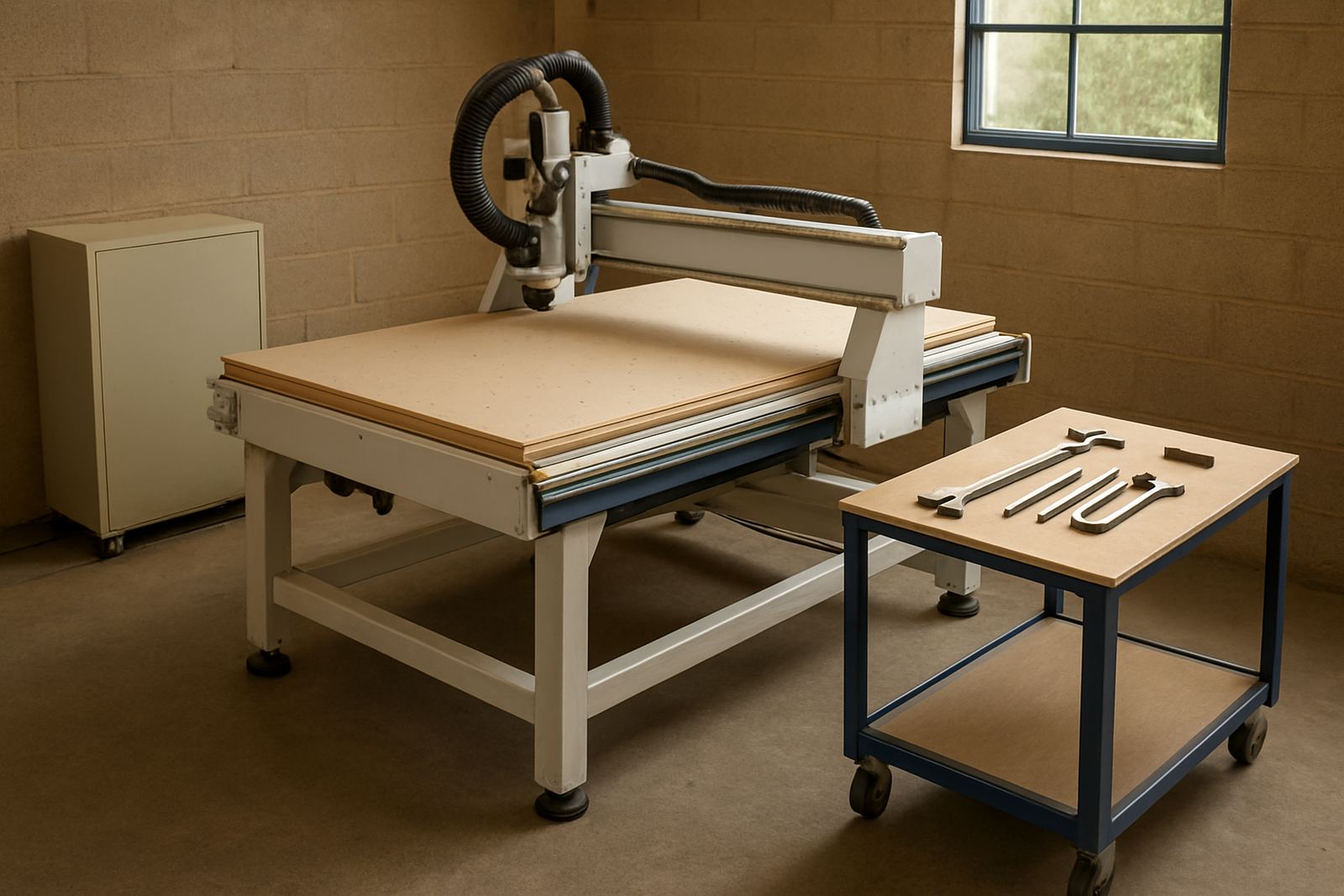
Tooling is one of the easiest costs to underestimate. A router is only as useful as the cutters in the spindle, and the wrong tool for the material can burn edges, chatter, or leave poor edge quality that needs hand finishing. For entry budgets, it is better to buy a sensible starter set than to plan on one or two cheap cutters doing every job.
Soft metals, plastics, MDF and plywood each need different cutter types and speeds. A workshop cutting a mix of materials should budget for tool changes and some trial runs, because the first few weeks are about learning feeds, speeds and hold down methods. That learning period is normal, and it should be planned for.
- Starter cutter set matched to the main material
- Spare collets and a basic maintenance kit
- Workholding items for small parts and offcuts
- Replacement tooling for production wear
Dust handling protects the machine and the finish
Dust extraction is not just about keeping the floor clean. In a router workshop, dust affects cut quality, spindle life, visibility and operator safety. On MDF and board work, poor dust control can clog cutters and build up fine particles inside moving parts. In coastal areas, that dust can mix with humidity and form sticky residue that is difficult to clear.
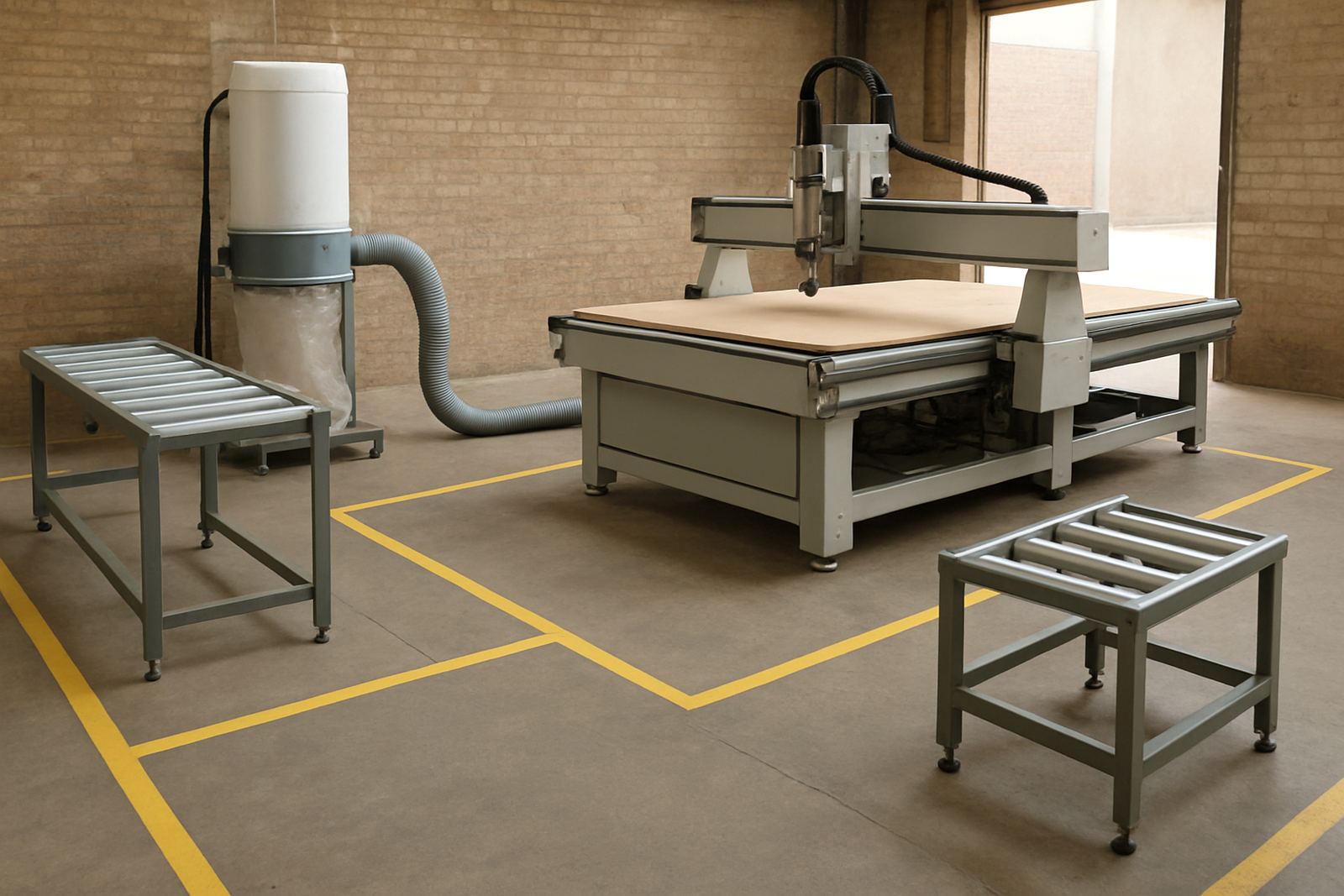
An entry budget should include the extraction unit, hose runs, hood fittings and enough airflow for the type of work being done. A machine used for full sheet nesting needs different dust handling from a smaller sign routing setup. It is also worth checking where the dust will be discharged or collected, because some premises have rules about noise, outside venting or waste handling.
If the machine will be installed in a shared industrial park or near offices, dust management becomes even more important. A noisy or undersized system can cause complaints and interrupt production.
Site preparation is where many first budgets slip
The machine may be compact, but the site still needs space around it for loading sheets, moving finished parts and servicing the unit. Delivery access matters too. In Germiston or other older industrial areas, roller doors, tight passageways and uneven floors can affect where the machine goes and how it is installed.
Before purchase, check these basics:
- Floor level and strength under the machine footprint
- Door height and access route for delivery
- Electrical supply position and breaker capacity
- Space for material infeed and outfeed
- Dust extraction location and hose run length
- Lighting and operator movement around the table
These are practical items, but they often decide whether the machine starts on time or sits waiting for a site fix. A few thousand Rand on preparation can save a lot more in installation delays and rushed changes.
Training is part of the first year cost, not an optional extra
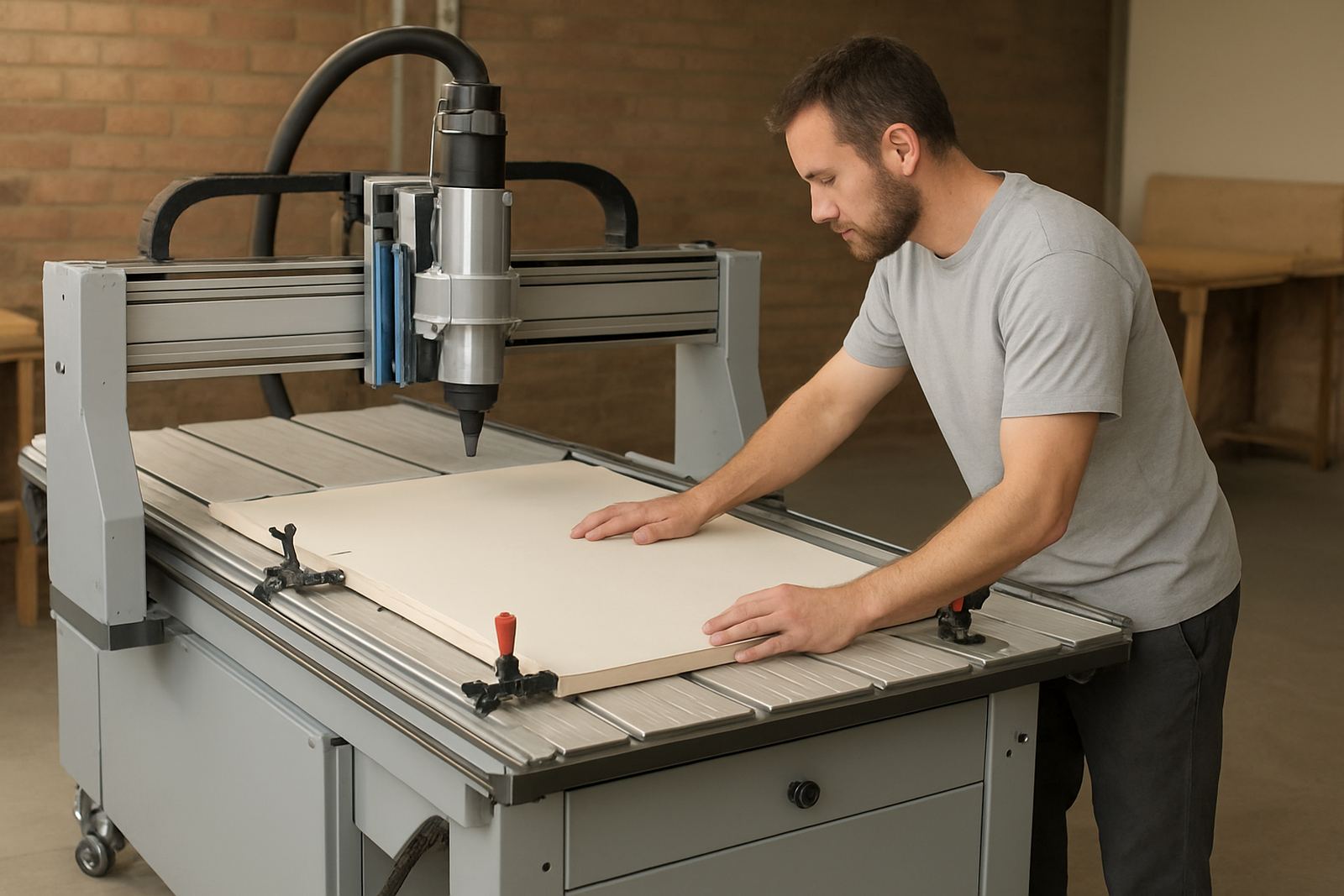
Even a straightforward entry router needs an operator who understands setup, nesting basics, tool changes and safe clamping. Good training shortens the learning curve and reduces scrap. It also helps the team build confidence with the controller, file handling and daily checks.
For a small workshop, the first month often includes more setup questions than production questions. That is why operator training should be costed alongside the machine. It is easier to start correctly than to fix bad habits later. We also recommend simple backup routines for controller settings and job files so a power interruption or user error does not mean starting over.
Local support matters here. A workshop in Johannesburg East may need a quick visit for commissioning, while a site in Cape Town North or Durban North may need a tighter plan for installation, handover and follow up. The budget should allow for that reality.
A Germiston example: what a sensible first budget looks like
A small cabinetry shop near Germiston wanted an entry router for melamine panels, edging trims and the odd acrylic panel. The owner first compared only machine prices, then added the missing items and saw the full picture. Tooling, extraction, power protection, operator handover and a simple site rework changed the budget by a meaningful margin.
Once those items were included, the shop could plan properly instead of making piecemeal purchases later. The machine ran better because the dust was managed, the tools matched the material and the operator knew the basic checks. That is the difference between owning a router and actually producing with it.
For an entry machine, the goal is not the lowest number on paper. It is a setup that cuts cleanly, fits the workshop and keeps working through load shedding, busy weeks and changing jobs.