Why sample cuts matter before you spend
A quote can look right on paper, but materials behave differently once the spindle starts turning. A sample pack gives you a practical answer to questions that drawing files cannot settle, such as chip lift, edge quality, hold-down needs and how the tool reacts to thickness changes across a sheet.
For fabricators in Johannesburg, Germiston and beyond, this is especially useful when jobs move between imported board, local timber stock and recycled offcuts. One supplier may promise a clean edge on 18 mm board, but the finish can change once you run real parts at production feed rates. A test cut lets you see that early and avoid a pile of rework later.
- Check cut quality on the exact materials you plan to use
- Compare tooling options before buying multiples of the wrong cutter
- Confirm nesting efficiency on full sheet sizes
- See whether vacuum hold-down is enough for smaller parts
What to include in a useful sample pack
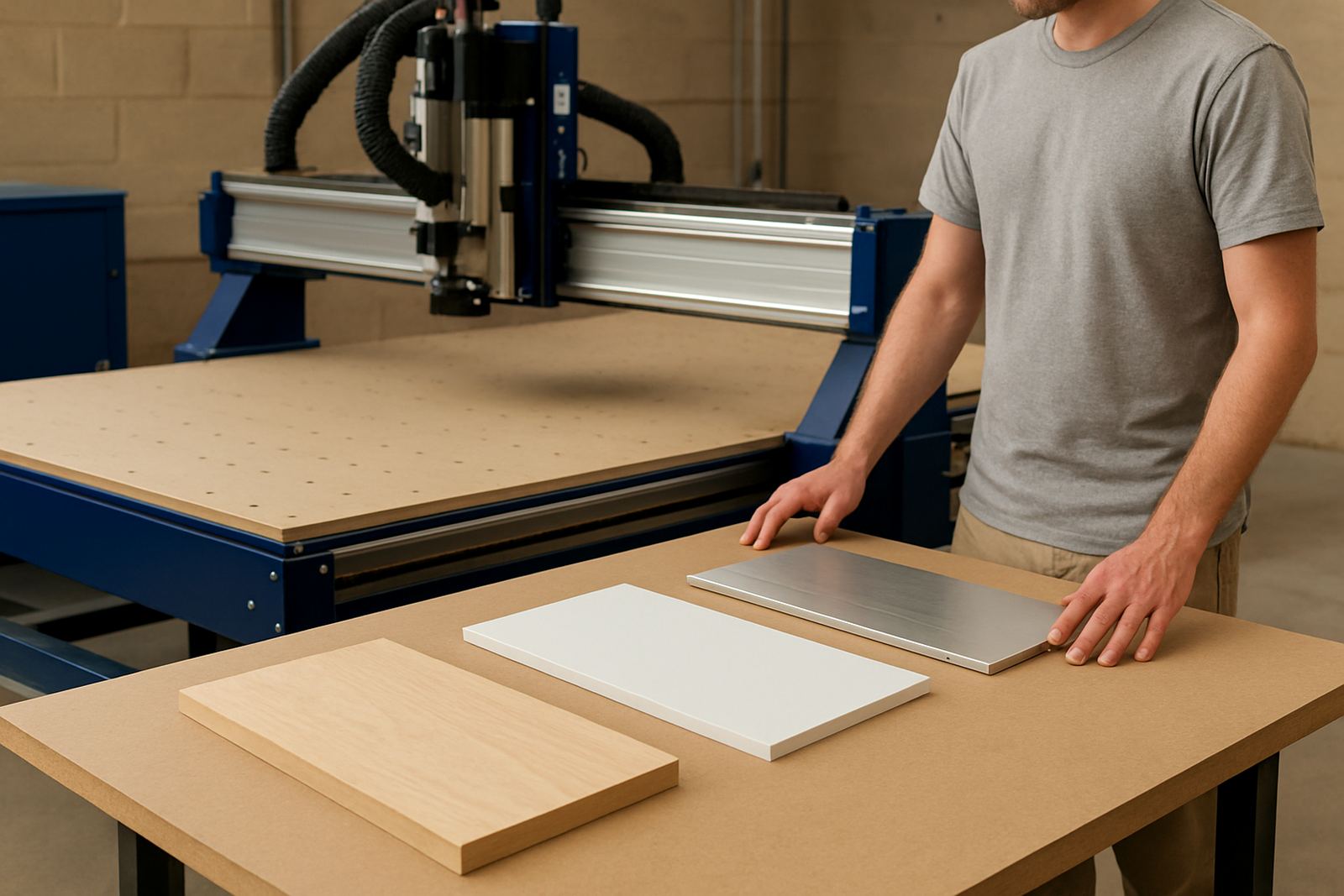
A good sample pack should reflect your actual workshop mix, not only the neatest material on the shelf. If you cut melamine, solid timber, acrylic, PVC foam board or aluminium composite, each one needs different feeds, spindle speeds and dust control. Sending a proper mix of samples saves time and gives a clearer view of what the machine can do.
When MultiCAM helps a workshop prepare for machine selection, the sample pack usually includes the thicknesses and finishes that matter most to day to day work. That might be clean-edge panel board for furniture, thicker plastic sheet for signage or a soft metal offcut for inserts and jigs. The aim is to test the real workload, not an ideal one.
- Sheet sizes you use most often, not only small offcuts
- Typical thicknesses and any laminated faces
- Problem materials that often chip, melt or fuzz
- Any parts with tight internal corners, holes or profile cuts
How to read the test results like a workshop manager
The first pass should tell you more than just whether the part came out. Look at edge finish, corner sharpness, tool marks, dust buildup and whether the machine held the sheet flat across the full bed. If the sample looks fine but takes too long, the machine may still be a poor fit for your output target.
It also helps to compare the sample against your production priorities. A sign shop may accept a slightly slower cycle if the acrylic edge is clear and consistent. A cabinet maker may care more about nesting yield and repeatable hole placement. The best result is the one that fits your daily work, not the prettiest part on the table.
- Edge finish: smooth, crisp or prone to chipping
- Cycle time: fast enough for your order volume
- Hold-down: secure across the full sheet
- Tool wear: whether the cutter still looks fresh after a few runs
A Germiston example with real workshop pressure
A small joinery workshop in Germiston may be running from a mixed floor space with limited power stability and shared dust extraction. In that setting, a sample cut is not just about the part. It helps check how the router behaves after a short stop, how well the vacuum system recovers and whether the operator can repeat the setup without re-learning the job each time.
That matters in Gauteng where load-shedding, dust and heat can all affect a workday. If the sample shows that a certain cutter needs extra dust clearance or that a sheet shifts on a small vacuum zone, the team can correct that before they place a full order. A 15 minute test can save a whole afternoon of scrap and frustration, and that is money most workshops would rather keep.
Practical checks before final machine and tooling decisions
Once the sample pack has been cut, the next step is to use it as a buying guide. That means matching machine size, table style, tooling and operator habits to the parts you need to produce. A small entry router may suit a shop starting with sign panels and light joinery, while a larger production setup may be better for nested sheet goods and repeat runs.
At MultiCAM, the useful part is not only the cut itself but the conversation around it. The sample often reveals whether the workshop needs stronger vacuum zoning, different spoilboard practice, better dust extraction or a tooling change that improves finish without pushing the spindle too hard.
- Match machine bed size to your common sheet sizes
- Choose tooling that suits the hardest material in the pack
- Check whether your extraction can cope with fine dust
- Plan backup settings so the machine can be restored quickly after a fault
What South African workshops should ask for next
After a useful sample run, the workshop should ask for setup notes that can be followed by the team on the floor. That includes feeds and speeds, hold-down advice, cutter life expectations and any maintenance points that may affect daily output. Clear notes help the operator, the supervisor and the service team all speak the same language.
For teams working across Johannesburg East, Midrand, Pretoria East or the coast, the conditions are not the same. Humidity, dust levels and power interruptions can all change how a machine is set up and maintained. A sample pack will not solve everything, but it gives you a sound base for deciding what belongs in the workshop and what should be left out.
If you want a calmer buying process, start with real test cuts and use the results to guide the next decision. That is the practical way to choose a CNC machine that fits the work, the staff and the space.