The brief from a growing display workshop
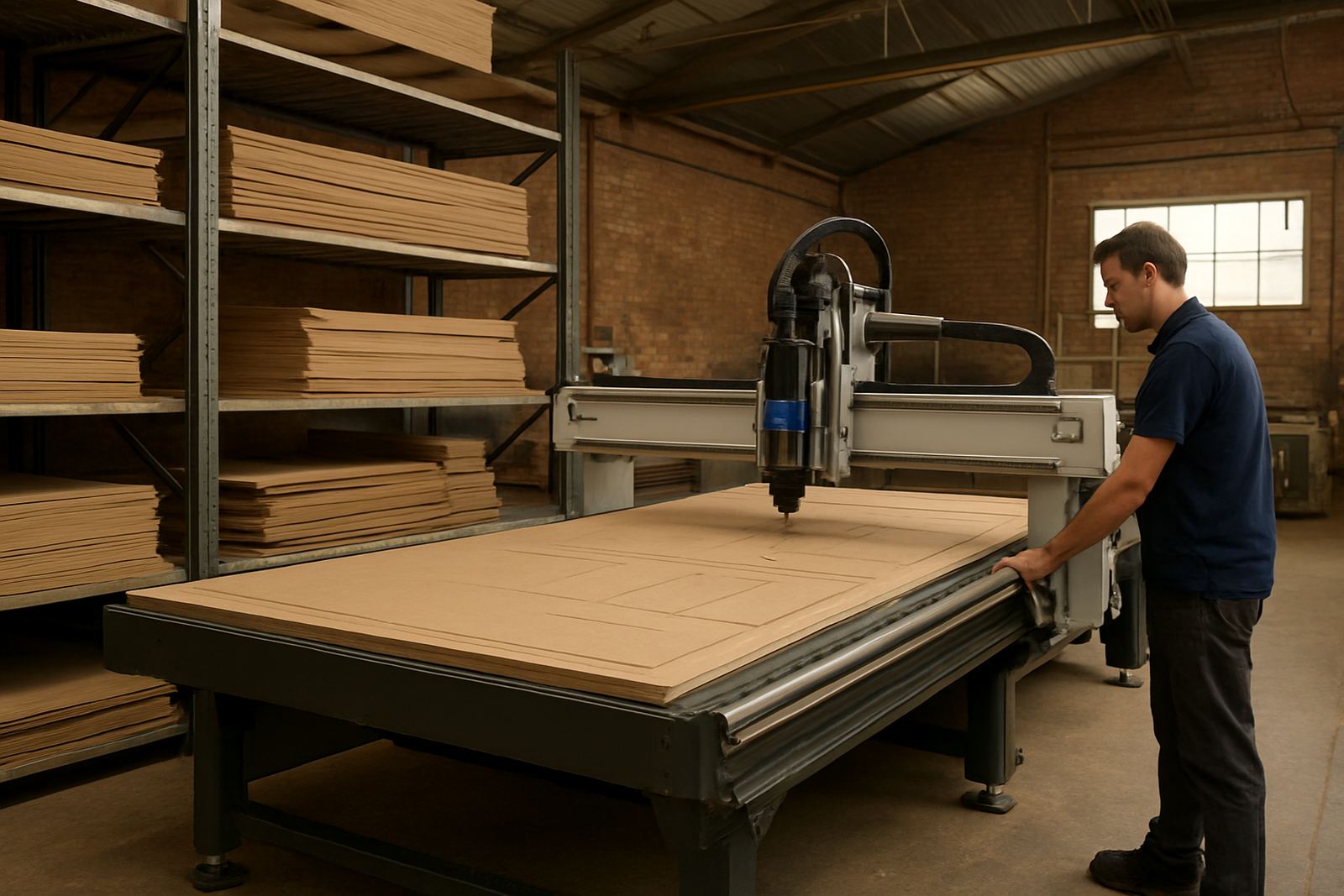
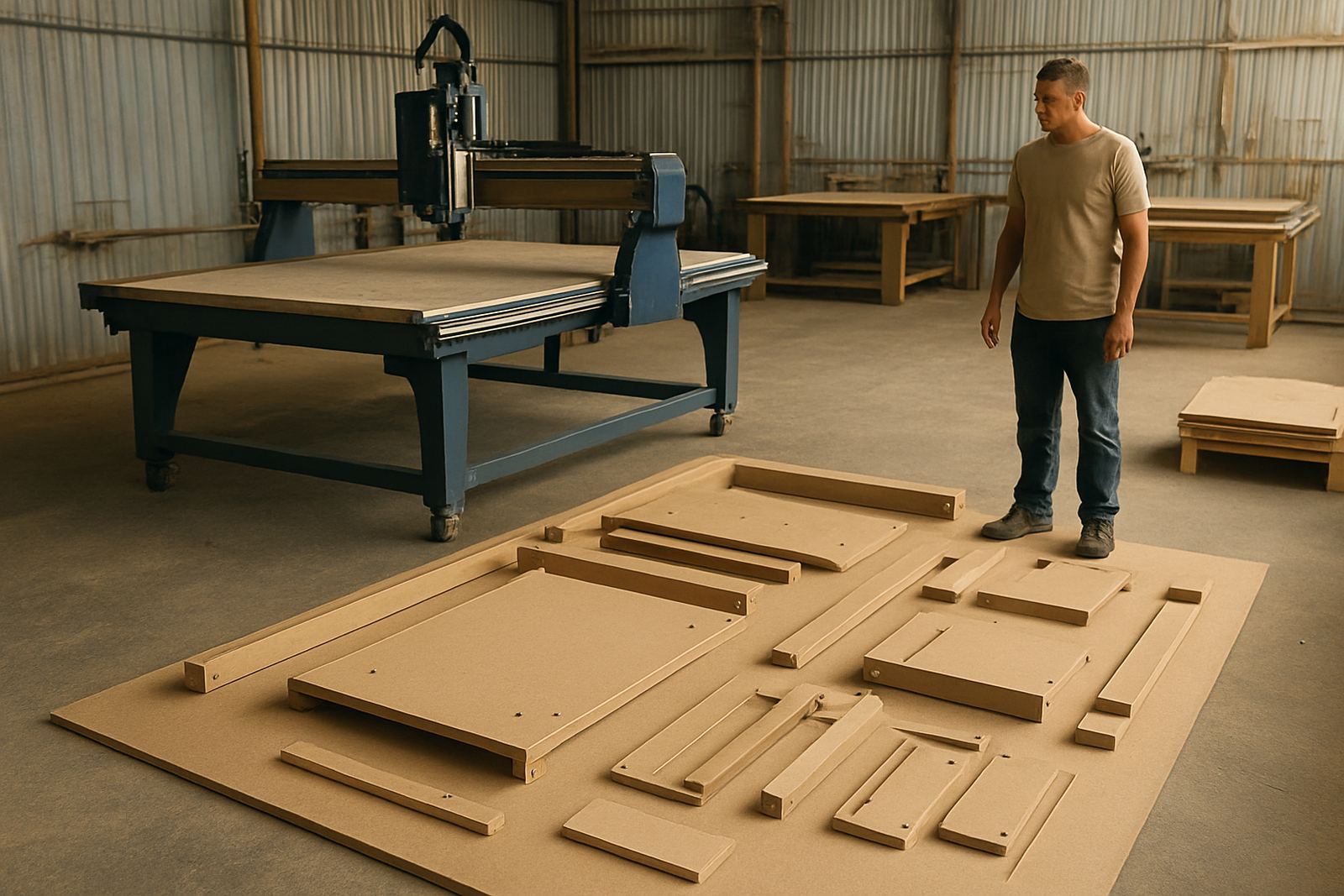
The client was a display and shopfitting workshop in Nelspruit serving retailers, mall tenants and promotional fit-outs across Mpumalanga. Their team was already doing cabinet parts, plinths, shelf panels and point-of-sale items, but the old mix of manual cutting and outsourced nesting was slowing them down and making jobs harder to price.
They wanted a CNC router setup that could suit day-to-day workshop work, not a machine that only looked good on a spec sheet. The brief called for reliable sheet cutting, clean edge quality on melamine and MDF, support for acrylic and signboard material, plus a setup that local operators could learn without a long stop-start training cycle.
What was holding the floor back
The main issue was inconsistency. When cut parts came from different methods, the assembly team spent too much time trimming, checking square and sorting mismatched panels. On humid days the workshop also had swelling around stored sheet material, while dust build-up made the old cutting area harder to keep accurate.
- Too much manual marking and rework on sheet goods
- Variable edge quality on nested parts
- Dust control that needed a proper balance point
- No easy backup process for toolpaths and jobs
- Operators needed a clearer setup routine for repeat work
There were also practical site limits. The workshop space had to keep moving, deliveries still needed access, and the team could not afford a long shutdown just to get the new production flow in place.
The MultiCAM setup supplied for the job
We supplied and commissioned a CNC router suited to nested panel work, together with the workshop systems needed to keep it steady in daily use. The setup was selected for wood-based panels, plastics and light soft-metal work, with attention to vacuum hold-down, dust extraction, tooling choice and power stability.
- 1 nested-sheet CNC router with operator-friendly control interface
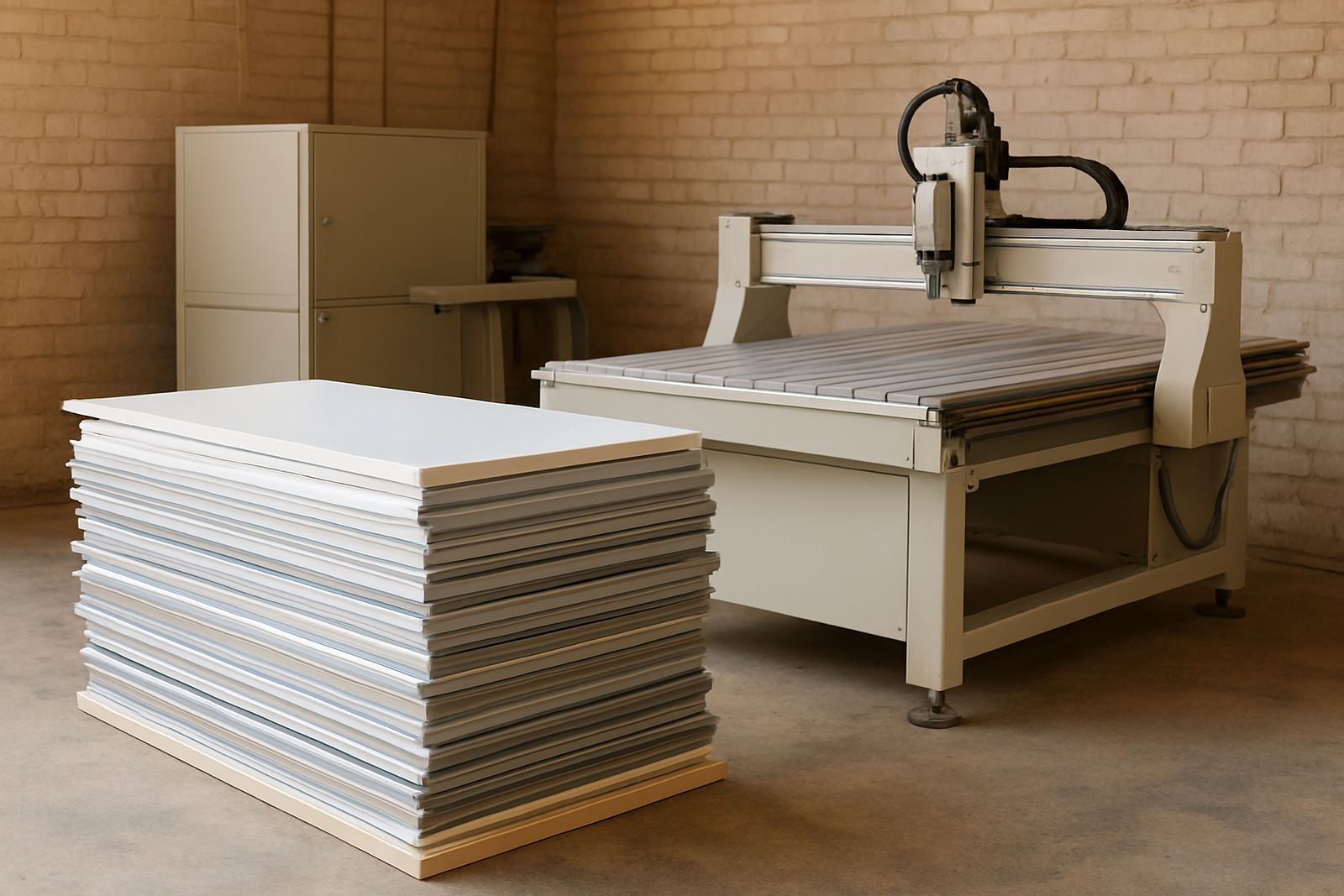
- Vacuum table arrangement for flat holding on full sheets
- Dust system balancing to suit the cutting area and ducting layout
- Practical starter tooling set for sheet goods and sign material
- Controller backup routine and job storage structure
- On-site operator training for safe loading, tool change checks and basic fault response
We also checked the workshop flow around loading and offloading, because a machine only helps if the rest of the room can keep up. The idea was to keep cut parts moving straight to edging, assembly and finishing without extra handling.
Installation and commissioning in real workshop conditions
The install was done over three weeks from first site check to sign-off. Week one covered measurements, power and dust routing, and final placement inside the workshop. Week two covered machine installation, alignment, vacuum leak checks and controller setup. Week three was used for test cuts, operator training and job proving on the client’s own material.
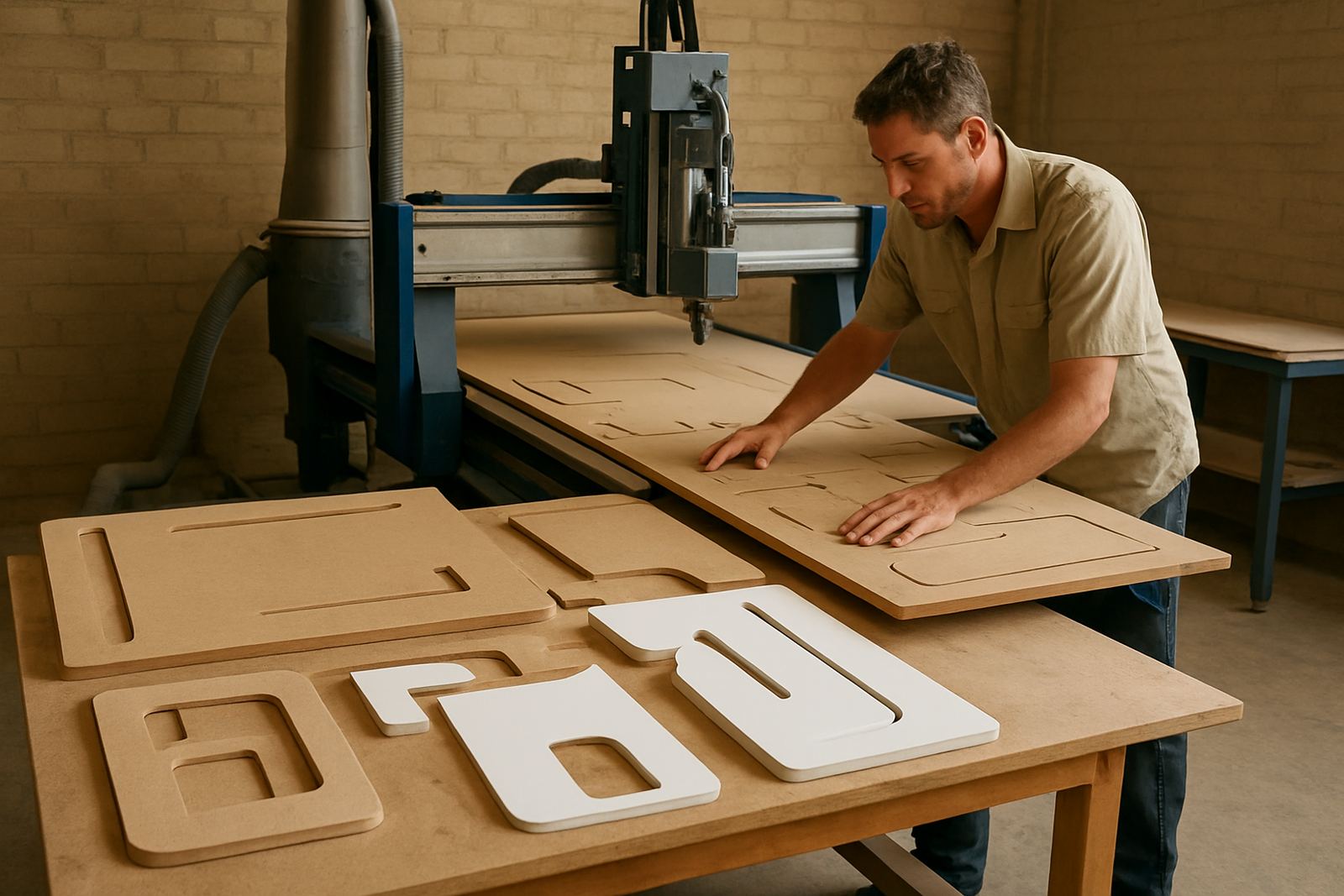
That testing mattered because retail work needs parts that fit first time. We ran sample nests for cabinet panels, shelf components, flat signage blanks and branded display parts, then adjusted tooling and feeds until the finish was clean enough for direct use or light edge finishing.
Load-shedding was part of the reality, so controller backups and a sensible shutdown routine were built into the handover. The team also wanted a way to keep dust extraction under control during long nesting runs, especially when cutting MDF and other fine-chip material.
Results after the first production cycle
Once the machine was in daily use, the workshop could take on more retail display work without relying so heavily on outside cutting. Nested production gave them better material yield, quicker turnaround and a more predictable workflow between design, cutting and assembly. The team also reported fewer fitting surprises because the part sizes were coming off the machine more consistently.
- Better sheet usage and less offcut waste
- Cleaner repeat parts for cabinet and display assembly
- Faster turnaround on retail fit-out jobs
- Less hand trimming before final install
- More confidence quoting work that depends on exact panel sizes
For a busy Nelspruit workshop, that meant they could say yes to more work without immediately adding another cutting crew. It also gave them a more practical base for future growth, whether that meant more sign components or larger runs of display furniture.
What we would carry forward on a similar foam-cutting project
If we were starting the same kind of project again, we would still begin with the workshop flow before machine placement. In a place like Nelspruit, where humidity, dust and power interruptions can all affect production, the surrounding systems matter as much as the router itself. Get the dust balance right, store tooling properly and keep backup files in order, and the machine holds its rhythm much better.
We would also keep the training practical and short, then follow up once the team had run a few real jobs. Operators learn fastest when they are loading their own material and cutting their own parts. That approach works better than sending people away with notes and hoping the first week goes smoothly.
This project showed how a display workshop can move into nested production without losing the hands-on character that made it successful in the first place. The machine did not replace the team, it gave them a cleaner way to work.
Key facts
| Project location | Nelspruit, Mpumalanga |
|---|---|
| Client type | Display and shopfitting workshop |
| Supply scope | CNC router, vacuum table, dust balancing, tooling setup |
| Materials cut | MDF, melamine, plastics and soft metals |
| Install timeline | 3 weeks from site check to handover |
| Support provided | Installation, commissioning, operator training and controller backups |