What commissioning covers on your CNC router
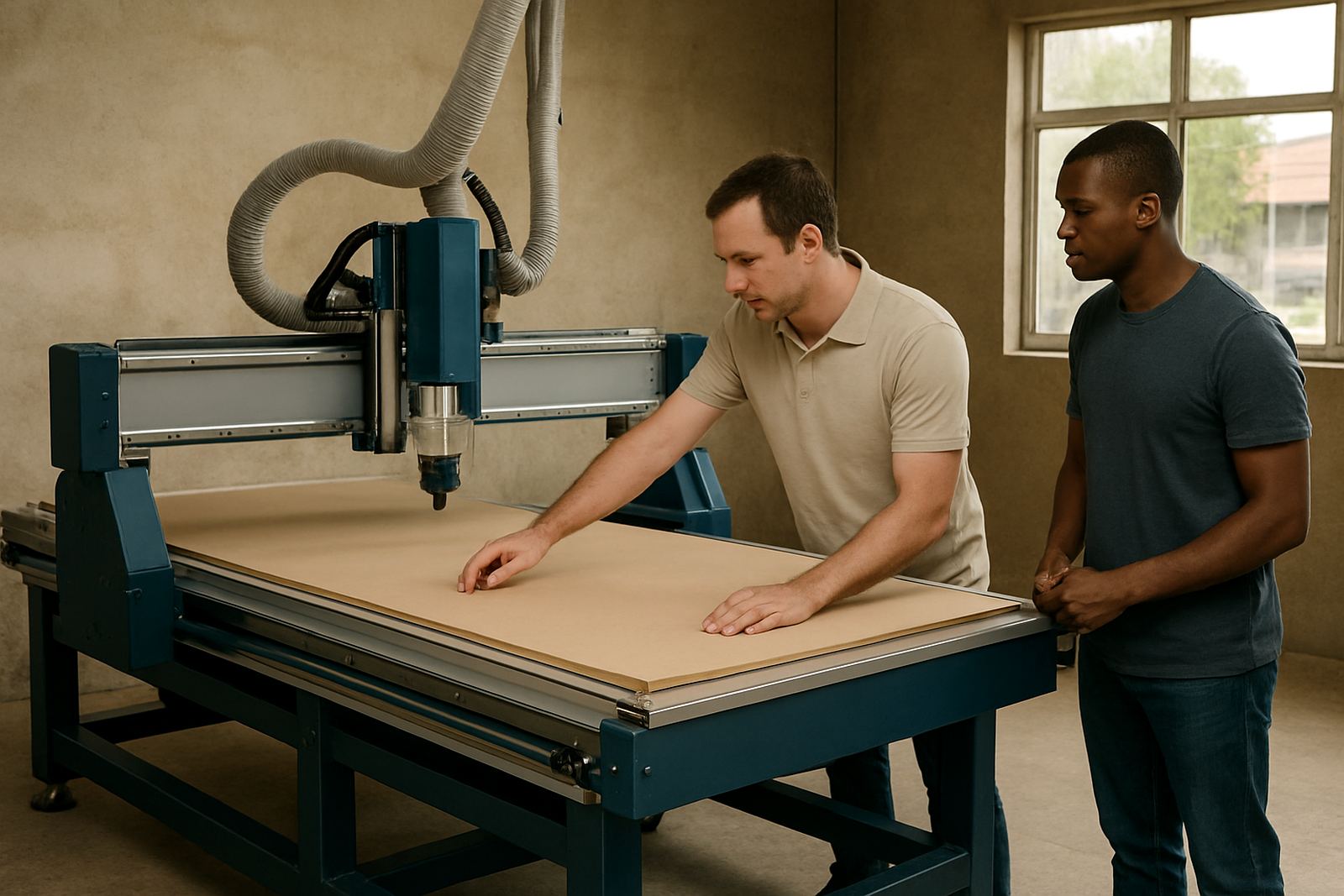
Commissioning is the last practical stage before a machine goes into day to day production. Our team checks that the router, vacuum table, spindle, controller and dust extraction all work together as they should, then we run test cuts on suitable material and confirm the settings against the job in front of you.
For South African workshops this matters because power quality, dust load, coastal humidity and floor conditions can all affect first runs. A machine may be installed correctly and still need careful setup of feeds, speeds, tool offsets, vacuum zones and software limits before it is ready for volume work.
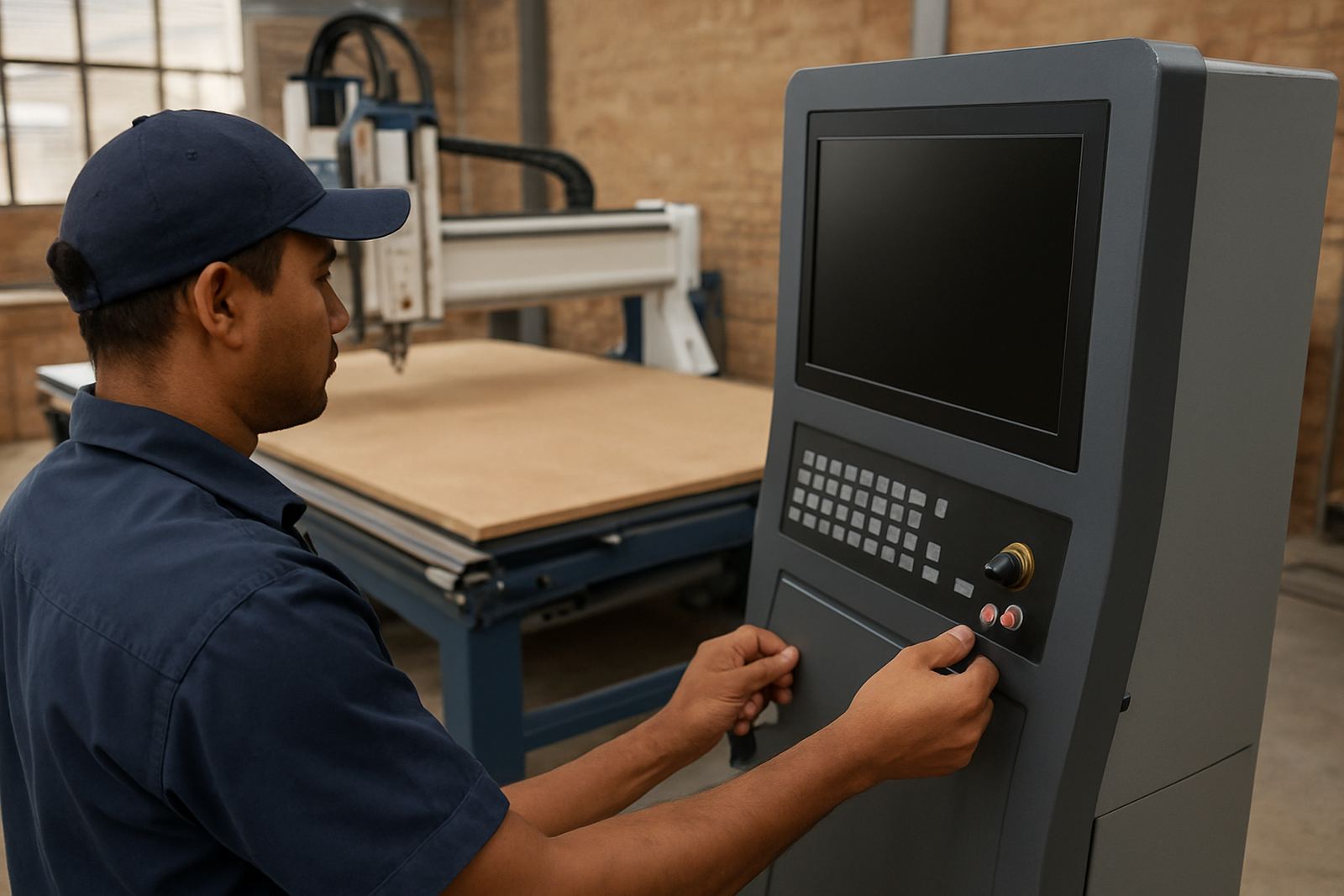
- Power on checks, alarms and safety interlocks
- Axis movement, homing and repeat accuracy verification
- Spindle run test, tool clamping and tool change checks
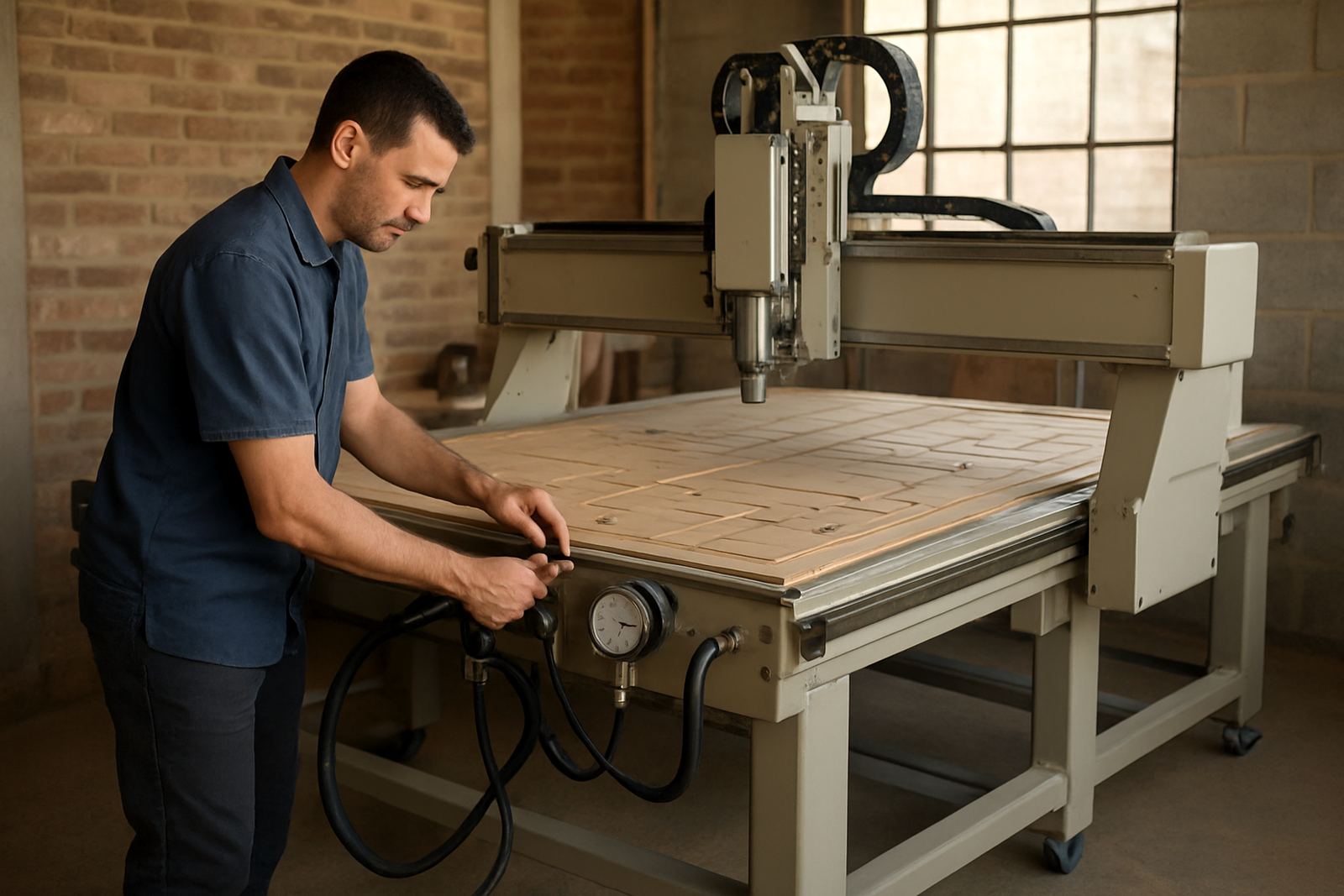
- Vacuum hold down testing and leak spot checks
- Controller setup, file transfer and cutting path review
First cuts, sample parts and verification
We do not leave commissioning at a screen full of numbers. The process includes first cuts on board, plastic or soft metal material that suits the machine and the job type, then a check of edge finish, depth, corner quality and part size. If the cut is off, we correct the cause and run again until the result is stable.
This stage is where many hidden problems show up, like a weak vacuum zone, a tool that is not suited to the material, a G code file that needs adjustment or a table that is not level enough for fine nesting. Getting that sorted early saves scrap and gives operators confidence on day one.
- Cut depth and width checks against drawing dimensions
- Toolpath review for nesting, pockets, profiling and drilling
- Edge finish checks for chipping, melt or tear out
- Feed rate and spindle speed tuning for the material type
Step by step commissioning process
We follow a clear sequence so the handover stays practical and nothing important gets missed. The exact timing depends on machine size, site access and how much tooling or software work is needed. A single machine in a clean workshop is quicker than a full cell with extraction, compressor and multiple clamps.
- Site walk through and machine condition check
- Electrical and compressed air verification
- Controller setup, limits and homing confirmation
- Vacuum and dust system balancing
- Tool setup, offsets and sample cutting
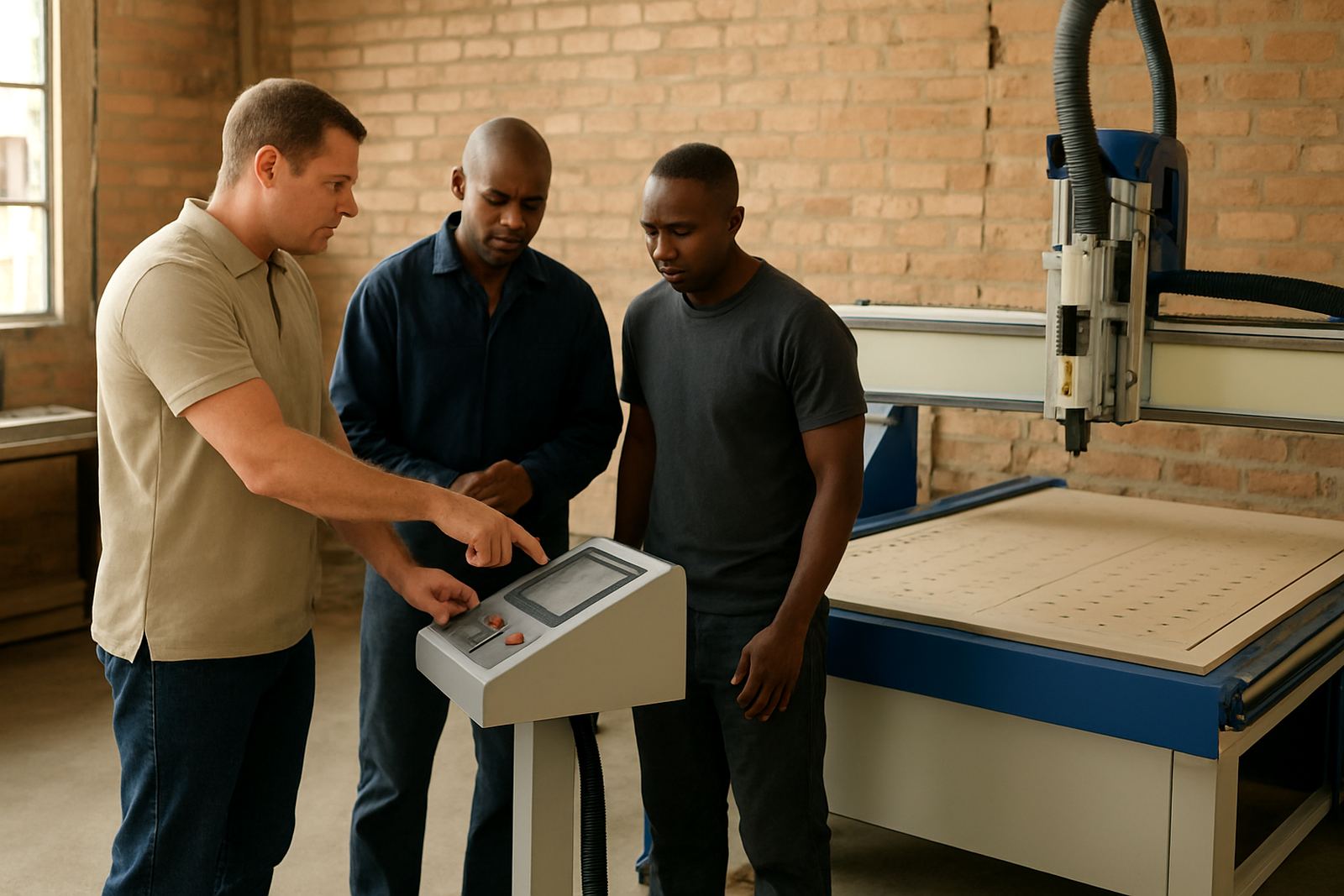
- Operator handover and basic fault response guidance
Where needed, we also confirm back up files for the controller, import settings and standard tool libraries so the workshop has a starting point for future jobs. Marius Johannes van der Merwe and the technical team keep the focus on what the operator needs at the machine, not theory.
Typical turnaround and site planning
Most commissioning jobs are completed within one working day for a single router, but more detailed setups can take longer. Bigger production cells, machines with multiple tool holders, or sites still waiting on dust extraction and vacuum balancing can run into a second visit. We plan around workshop hours where possible so your crew does not lose more time than necessary.
If your site is in Germiston, Johannesburg East, Midrand, Pretoria East, Durban North or Cape Town North, we can usually align commissioning with installation follow on work. For out of town sites, we confirm access, floor loading, power supply and material availability before the visit so there are fewer delays on the day.
- Single router basic commissioning: often same day
- More complex cells: allow 1 to 2 days
- Rush calls depend on travel and spares availability
- Start only after install, levelling and utility checks are done
Pricing approach and what changes the cost
Commissioning is priced according to the machine type, travel, time on site and any extra setup work required. A straightforward first start on a standard router is different from a machine that needs vacuum leak checks, controller recovery, tooling corrections or a relocation handover after transport.
We quote clearly before the visit so you know whether the job is a once off commissioning call or part of a larger installation package. If the machine is not ready for testing because power, extraction or table setup is incomplete, we will say so rather than forcing a poor result.
Typical cost drivers include table size, number of zones, spindle type, tool holders, software setup and whether the machine needs dust system balancing or operator training at the same time. That keeps the pricing fair and tied to the actual work done.
Maintenance intervals after commissioning
Commissioning is the start, not the finish. After the first week of production, we recommend checking hold down, dust flow, tool wear and axis accuracy again, because new setups often settle once the machine starts running full shifts. On sites with heavy use, a short follow up inspection can catch issues before they become scrap.
- Daily: clean rails, check air supply and clear dust build up
- Weekly: inspect vacuum zones, tool condition and homing repeatability
- Monthly: review spindle noise, cable wear and fastener tightness
- Quarterly: confirm controller backups, limits and basic accuracy
In humid or dusty areas, or where load shedding affects start and stop routines, more frequent checks can be worthwhile. Farieda Adams in service coordination can line up the next visit with preventive maintenance or spindle service if needed.
Who handles commissioning and support
Commissioning at MultiCAM is handled by people who know the machine side and the workshop side. Stefan Naude looks after technical issues, Lesedi Ntanzi supports application setup and cut quality, Mpho Mtshali handles installation and on site fitment, while Chantel Naidoo keeps parts and tooling aligned with what the machine actually needs. Lerato Nkosi supports sales queries when the commissioning job is tied to a new machine order.
From our Germiston base, we support Johannesburg, the East Rand and wider South Africa with practical setup, calm fault finding and straight answers. If your router has been installed but is not yet giving reliable first parts, commissioning is the point where we sort that out.
Key facts
| Service type | CNC router commissioning for workshop and production use |
|---|---|
| Typical machine size range | Entry routers through to production cell machines |
| Main checks | Power, homing, safety, vacuum, spindle, tooling and first cuts |
| Common materials | Wood, plastics and soft metals |
| Usual turnaround | Same day for basic single machine setups, longer for complex sites |
| Support areas | Germiston, Johannesburg East, Midrand, Pretoria East, Durban North and Cape Town North |