
What a vacuum leak check covers
A proper leak check looks at the full hold-down path, not only the pump. We inspect the table surface, hoses, valves, seals, manifolds, blanking strips, spoilboards and zone controls so the machine can keep pressure where it matters. On nested work, even a small air leak can lift corners, cause chatter or leave tabs doing more work than they should.
We work on CNC routers used by sign shops, cabinet makers and plastics fabricators across Gauteng and beyond. The goal is practical, to find where air is being lost, confirm the cause and get the hold-down back into a usable range for your material mix.
- Zone-by-zone pressure checks
- Hose and fitting inspection
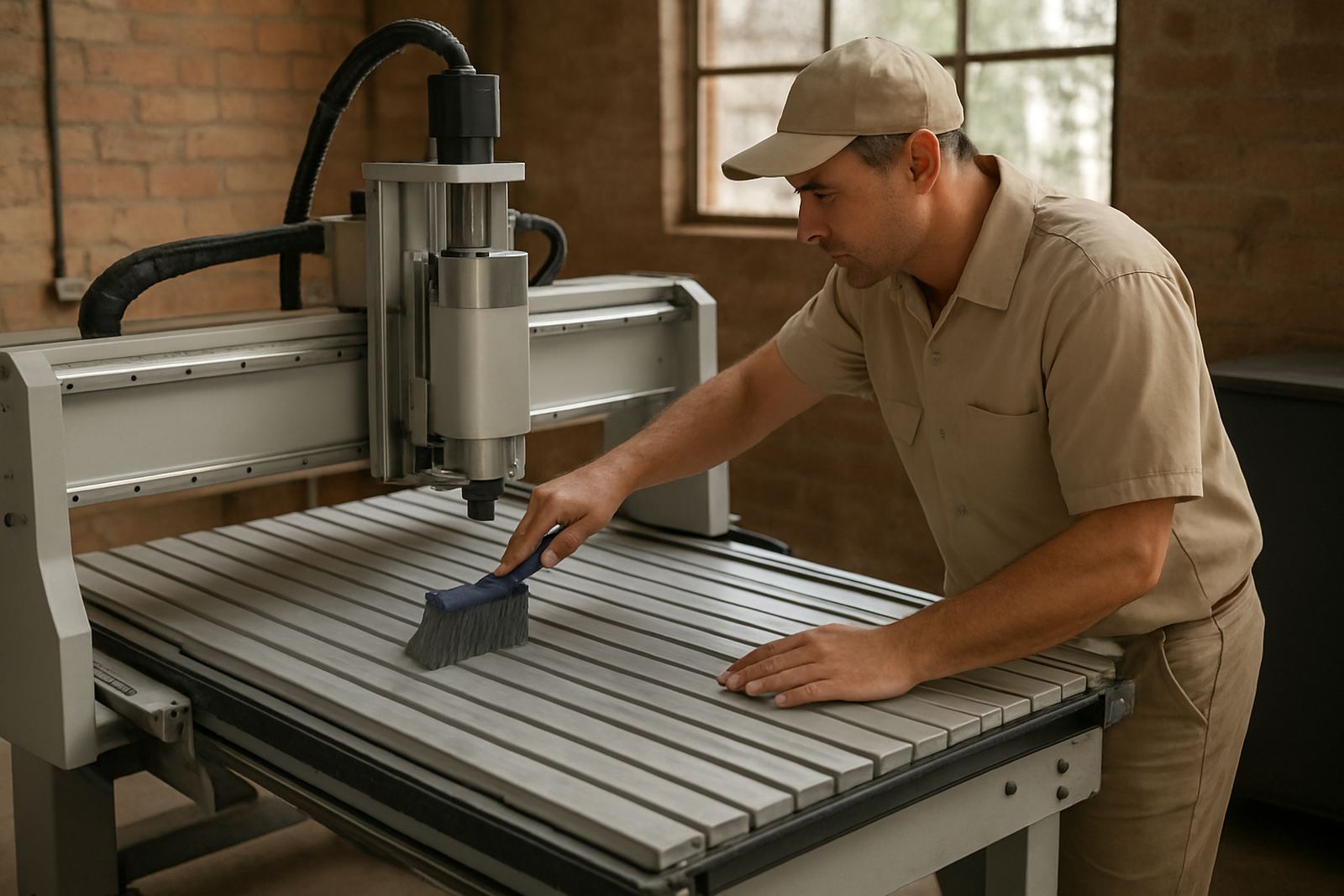
- Table surface and spoilboard assessment
- Vacuum line leak tracing
- Valve and gasket condition checks
How we test the system on site
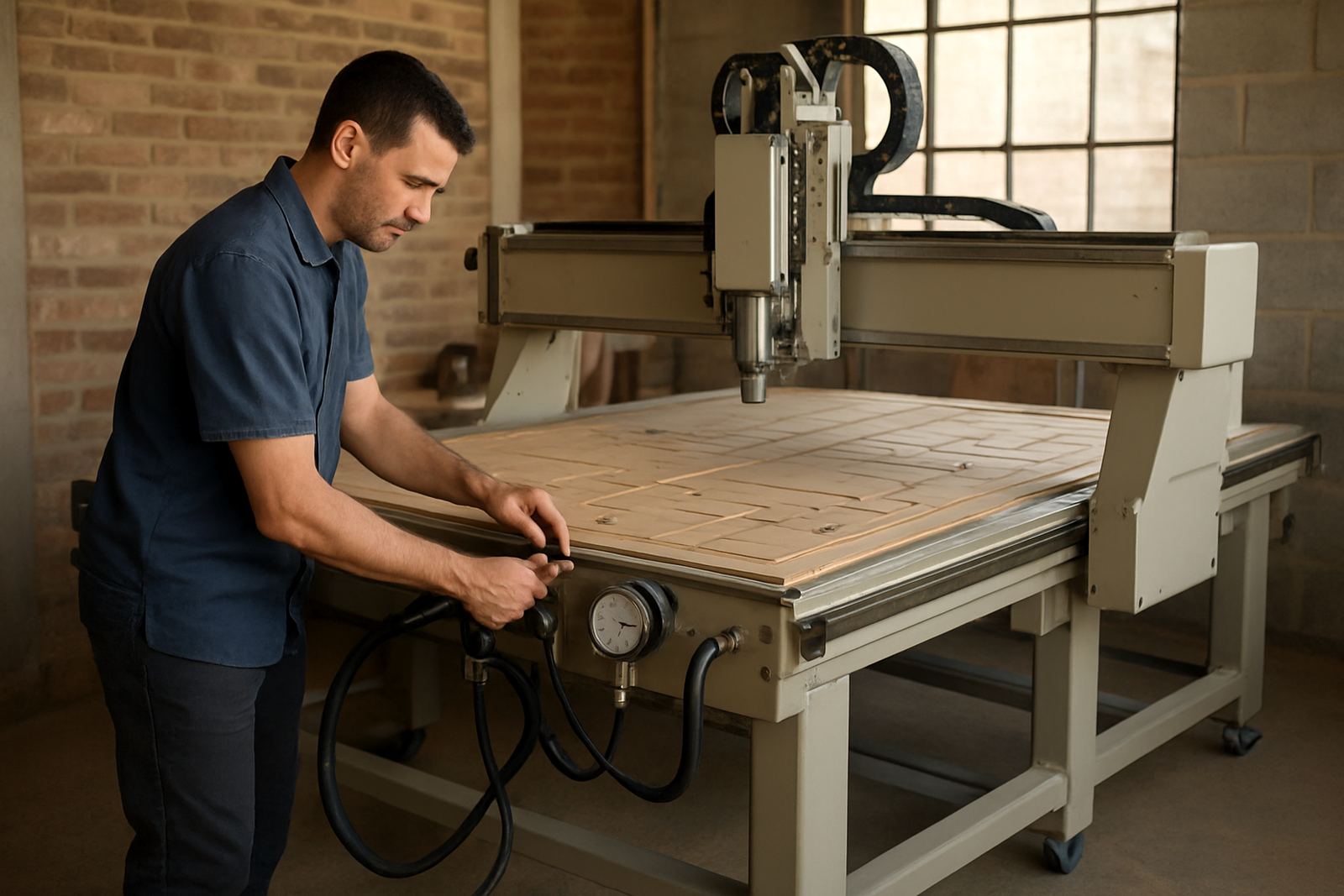
We start with a visual check while the machine is idle, then test each vacuum zone under load. Readings are taken across the bed, because a pump can look fine at the gauge and still lose hold-down at the far end of the table. Where needed, we isolate sections, block ports and listen for air movement around joints, seals and cracked fittings.
For machines running in dusty workshops or coastal humidity, we pay close attention to dirt build-up and perished seals. Germiston and Johannesburg east workshops often see fine MDF dust in the valve block, while Durban and Cape Town sites can have softer seal wear from moisture and temperature changes.
- Gauge and flow readings taken per zone
- Leak tracing at fittings, valves and manifolds
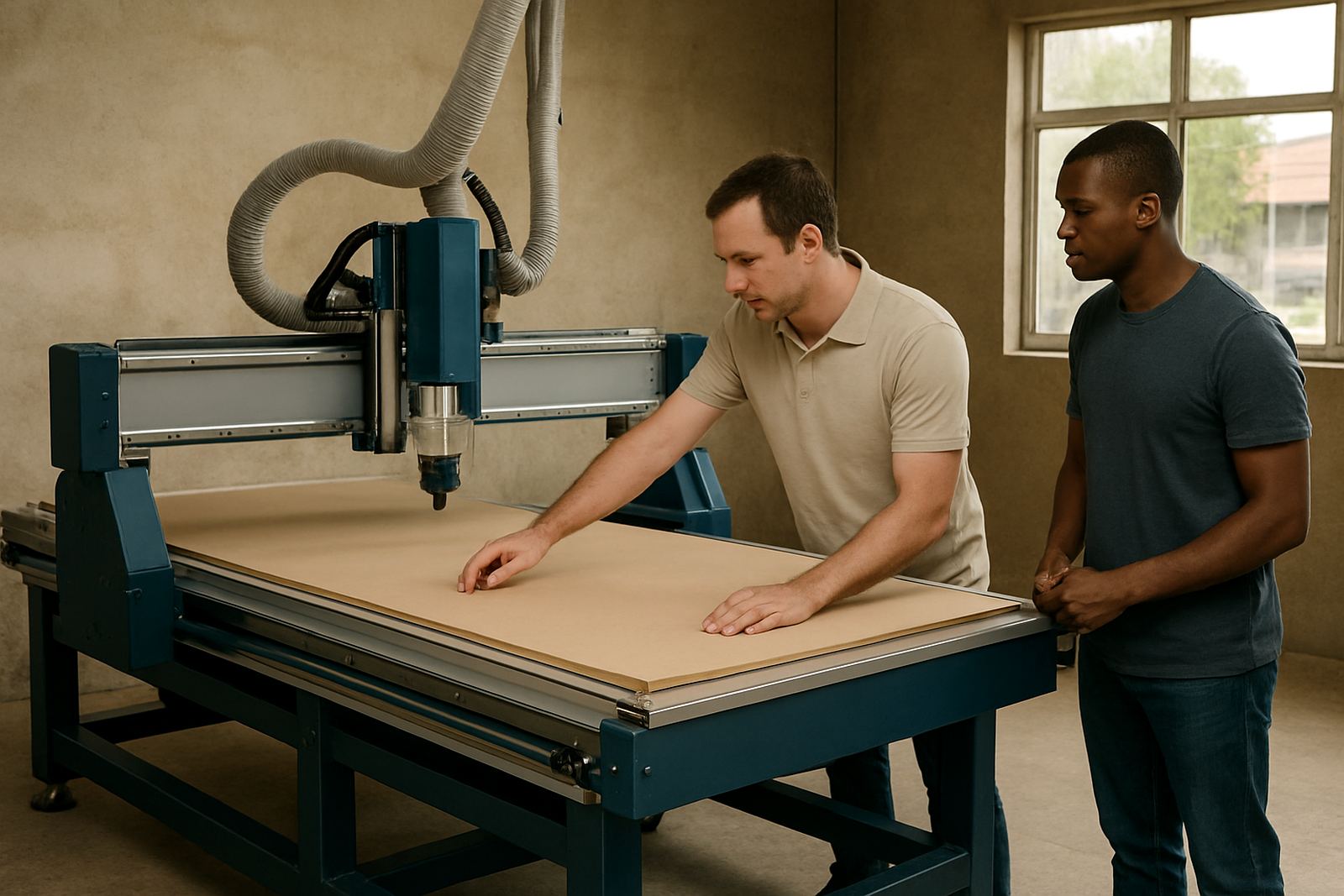
- Surface contact check for warped spoilboards
- Vacuum pump condition review if pressure is weak throughout
Signs your router needs a leak check
Many teams first notice the problem when a small part shifts during profiling or a nested sheet starts to creep on the bed. Other signs include longer pump run times, loud hissing, poor hold on one side of the table and tape or packers being added just to keep a job down. That is usually a short-term fix and not a proper cure.
If your operators are increasing clamps, slowing feeds or re-cutting moved parts, the vacuum system needs attention. The sooner it is checked, the less chance of scrap, broken tooling and lost production time.
- Small parts lifting at the corners
- Sheet movement during internal cuts
- Uneven suction between zones
- Extra noise from leaking hoses or valves
- Longer setup time before each run
Typical repair actions after testing
Once the weak points are identified, we advise on the simplest fix first. That may mean replacing cracked hose, resealing a fitting, cleaning a valve block, changing worn gaskets or sorting a damaged spoilboard. If the pump is undersized for the current work mix, we flag that too and explain what is realistic for the machine.
We do not push unnecessary parts. The aim is to restore dependable hold-down for the actual work your team runs, whether that is full sheets, narrow strips or light aluminium components. In some cases the best result comes from a mix of minor repairs and better zoning practice.
- Seal and gasket replacement
- Vacuum hose and clamp renewal
- Valve cleaning and re-setting
- Spoilboard surfacing or replacement
- Vacuum zoning adjustments
Turnaround and pricing approach
Most leak checks can be done during a planned service visit, subject to access and machine condition. Straightforward testing and fault finding is usually completed in a single visit, while repair work depends on the parts needed and whether the issue is local to the table or tied to the pump system.
Pricing is based on the size of the machine, the number of vacuum zones, travel distance and the time needed to trace the fault. We quote in a practical way, so you know the cost of inspection, labour and any parts before work goes ahead. For multi-machine workshops, we can schedule checks to reduce downtime across the shop floor.
Recommended maintenance intervals
For busy production routers, a vacuum system should be checked at regular intervals rather than only after a failure. As a guide, monthly visual checks are sensible, with a fuller leak assessment every 6 to 12 months depending on dust levels, machine hours and how often the bed is reconfigured. Workshops cutting high volumes of MDF or running through load-shedding recoveries may need closer attention.
Simple operator habits help a lot. Keep the bed clean, cap unused zones, watch for damaged blanking strips and report hissing early. A small leak ignored for weeks can turn into poor part quality and unnecessary pump wear.
- Monthly operator inspection
- 6 to 12 monthly full leak test
- After any pump, valve or bed change
- After machine relocation or layout changes
Vacuum system specs we commonly work with
We service compact entry machines through to larger production routers used for sheet nesting and repeat part cutting. The exact setup varies, but these are the common ranges we deal with on South African shop floors. If your machine uses special zoning or a hybrid table, we will map the system before starting any test.
Good hold-down is not only about pump size. Hose length, table sealing, material porosity and the number of active zones all affect performance. That is why the same machine can hold 18 mm board well one day and struggle the next if the bed is dirty or a seal has split.
- Table sizes commonly checked: 1.2 x 2.4 m, 1.5 x 3.0 m, 2.1 x 3.1 m
- Typical zone counts: 2 to 8 zones
- Common materials: MDF, plywood, HPL, acrylic, PVC foam board, soft aluminium
- Vacuum readings reviewed: pressure, leakage rate and recovery time
Key facts
| Service | Vacuum Leak Checks |
|---|---|
| Area | Germiston base with installs and service across South Africa |
| Main use | Restore hold-down on nested sheets and small parts |
| Common machine sizes | 1.2 x 2.4 m to 2.1 x 3.1 m tables |
| Typical turnaround | Often same visit for fault finding, repair time depends on parts |
| Maintenance interval | Visual checks monthly, full leak test every 6 to 12 months |