What operator training covers on a working CNC floor
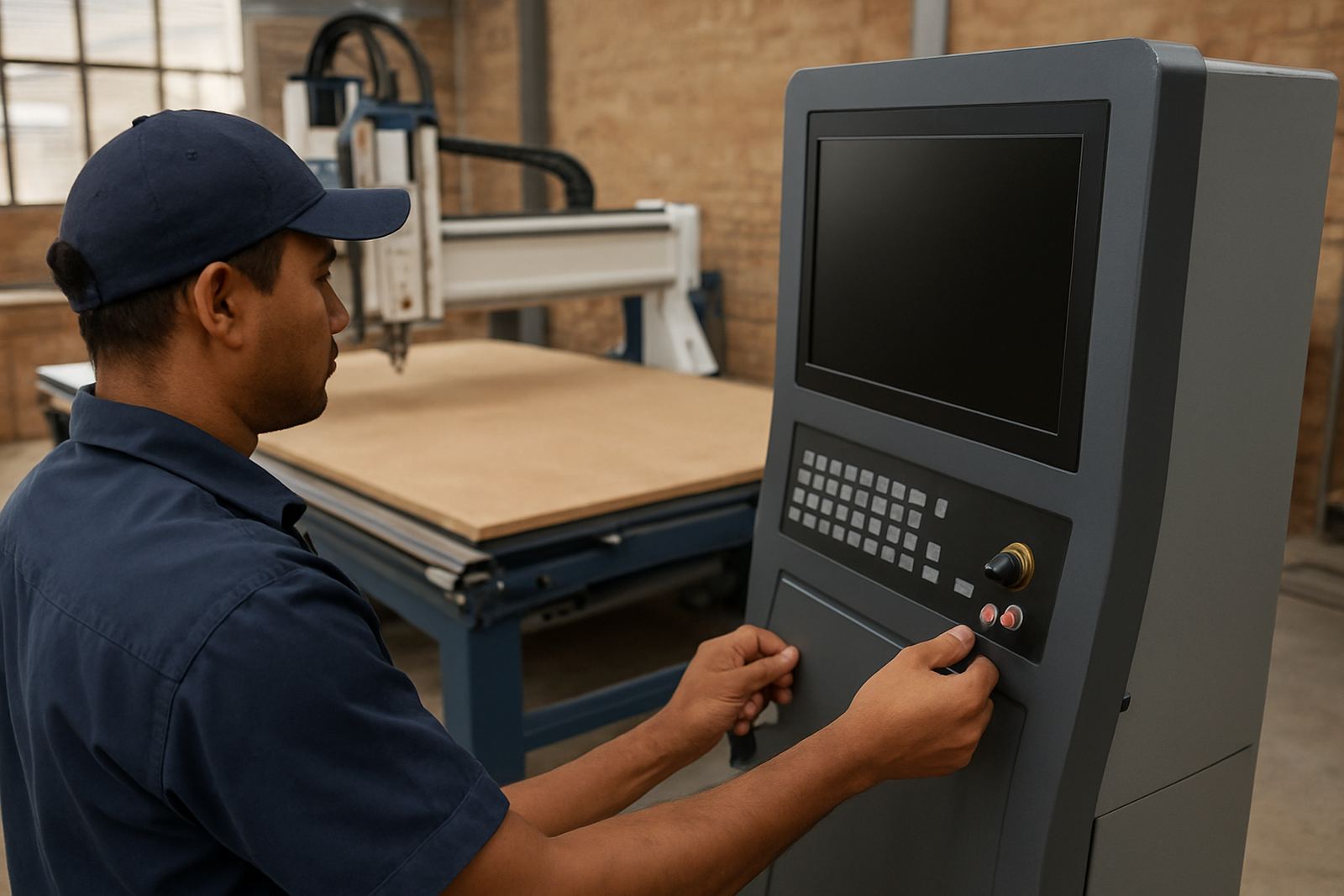
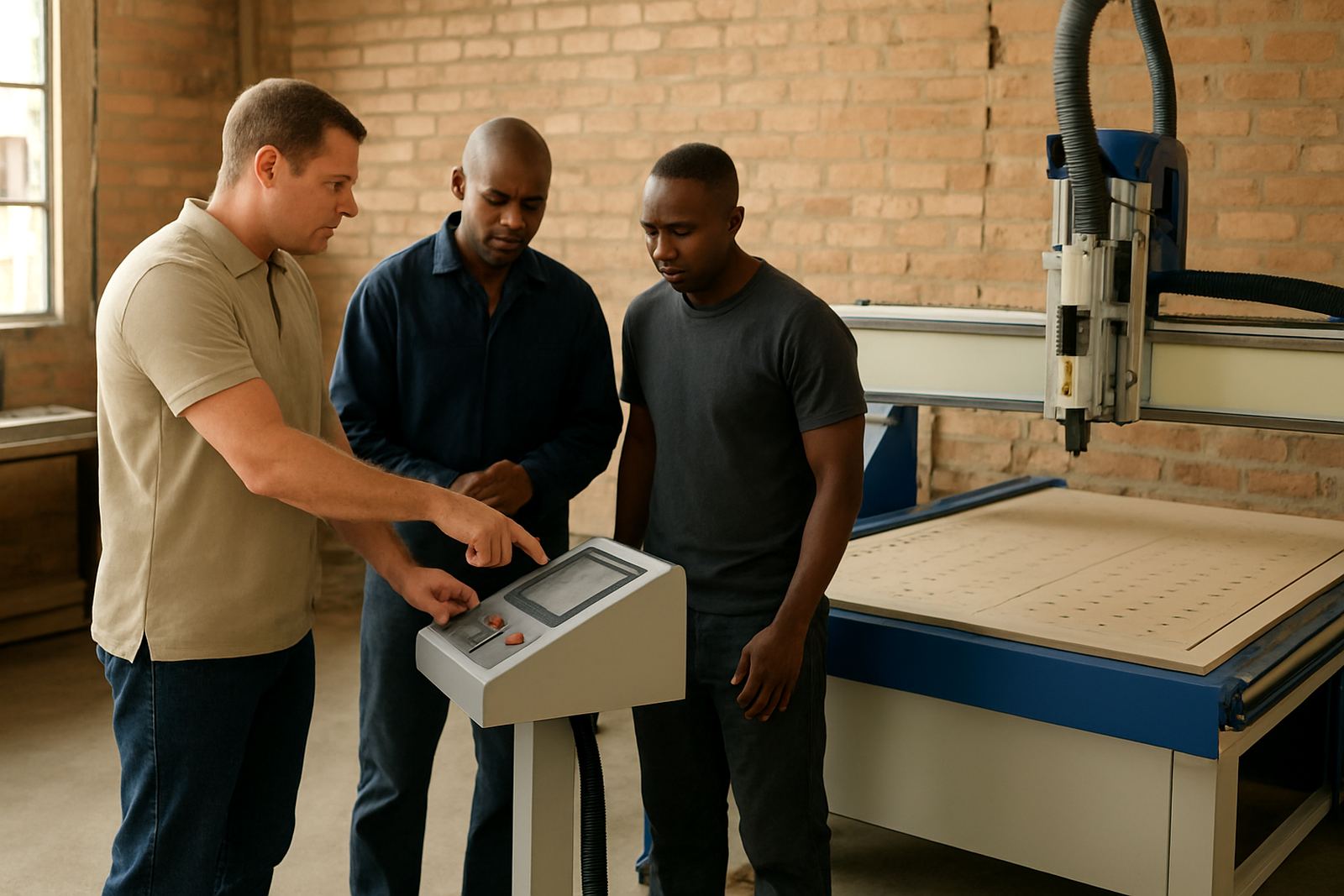
Our operator training is built around the way South African workshops actually run. We focus on the daily tasks that affect output, from switching on the machine and checking air supply to loading sheets, zeroing correctly and watching the first cut. The aim is not theory for its own sake, but repeatable habits that help operators make good parts on wood, plastics and soft metals.
Training can be done on a single router or across a small production cell, depending on your setup. We also cover practical points like dust extraction checks, workholding, spoilboard care and what to do when power cuts, low voltage or a rushed changeover interrupt the day. That is especially useful in Johannesburg workshops where load-shedding or unstable supply can upset a shift if the team does not know the restart routine.
- Safe startup and shutdown procedure
- Material loading and alignment
- Basic G-code awareness and controller navigation
- Zero setting, tool changes and tool length checks
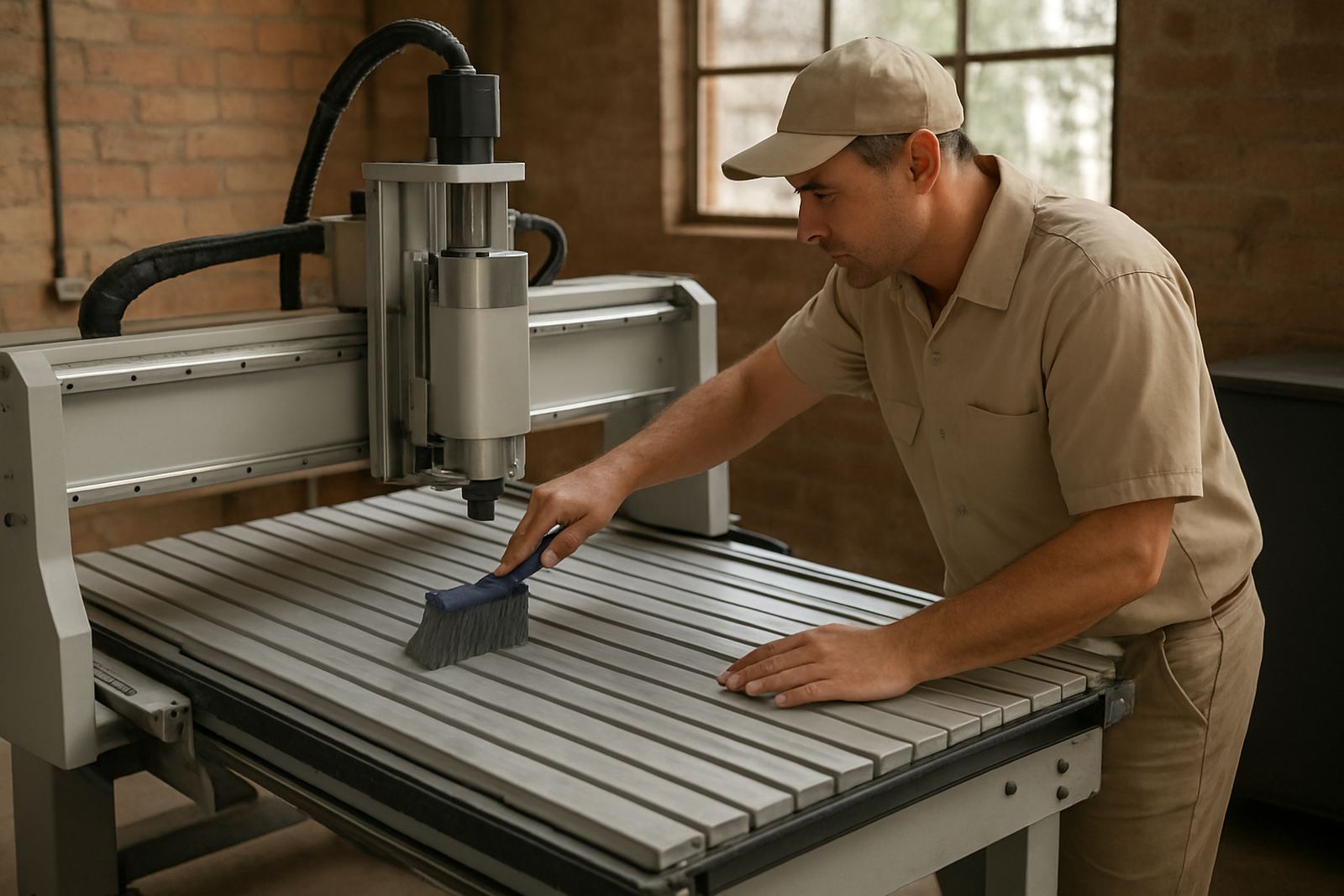
- Routine cleaning and inspection points
- What to record in a daily machine log
Training content for startup, loading and first parts
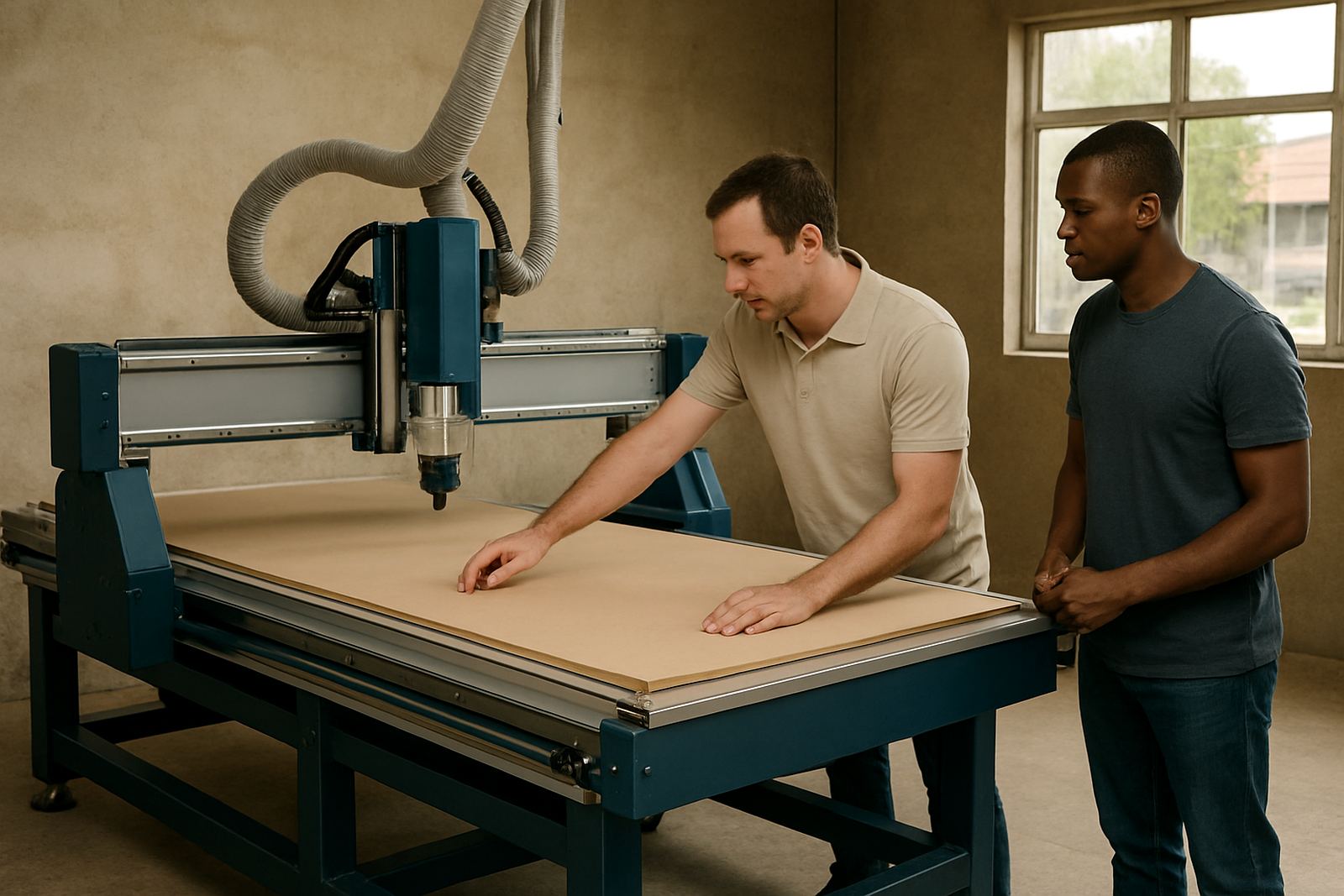
We start with the basics and keep the process practical. Operators learn how to inspect the table, vacuum zones, clamps and hoses before production starts. They are shown how to position sheets, confirm correct hold-down and check that the programme matches the material thickness and tooling in use. If your team handles MDF, plywood, acrylic, foam board or aluminium composite, the loading method and feed expectations are explained clearly.
The first part run is important. We teach operators how to watch for edge lift, chatter, poor chip evacuation and signs that a tool is not suited to the material. Simple checks at the beginning of a shift can prevent scrap later. For many teams, that means fewer calls to the office, fewer broken cutters and a cleaner handover between shifts.
- Sheet squaring and datum setting
- Vacuum zone selection for different panel sizes
- Tool change checks and cutter condition spotting
- How to verify depth, path and finish on the first part
- Where to stop and call the technical team
Routine care and operator checks that protect uptime
Good operators do more than press start. They know what to look for each day so a machine stays productive. We train teams to check spindle noise, dust build-up, hose leaks, air pressure, spoilboard wear and any unusual vibration before it becomes a breakdown. Where a workshop runs long hours, these small checks make a real difference to uptime.
We also explain basic care around the gantry, rails, cable carriers and vacuum pump area where fitted. The team learns what can be cleaned safely, what should be left for a technician and how to keep the machine area tidy enough for accurate work. In coastal areas like Durban North and Cape Town North, humidity can affect timber, bearings and panels, so the way material is stored and acclimatised forms part of the training too.
For most sites, a daily five minute inspection and a weekly deeper clean are enough to keep the operator routine under control. If a workshop is running heavy nesting or long production shifts, we may suggest more frequent checks on filters, seals and hoses.
How we run the training session on site
Training is usually done at your Germiston base, Johannesburg East, Midrand, Pretoria East, Durban North or Cape Town North site, depending on where the machine is installed. Before the session, we confirm the machine type, controller, material mix and the operator skill level so the lesson matches the actual workshop. That saves time and avoids generic advice that does not fit your setup.
The session normally follows a simple order:
- Walkaround inspection and safety briefing
- Controller basics and machine startup
- Loading material and setting reference points
- Running sample parts and checking results
- Cleaning, shutdown and daily record keeping
- Questions on real jobs the team is cutting now
If needed, we can also include a supervisor so the person who signs off production knows the same steps as the operators. That helps when staff change or when a second shift needs to follow the same process without confusion.
Turnaround, booking and what affects pricing
Training can often be scheduled within a practical lead time, depending on installer and applications availability. For single machine training, the visit is usually completed in one day. More advanced sessions for nested production, soft metal work or multiple operators may need extra time. If a machine has just been relocated or recommissioned, it is often sensible to pair training with commissioning checks so the team starts on the right footing.
Pricing depends on the number of operators, travel, machine type, the length of the session and whether tooling setup or controller backup work is included. We quote transparently, with clear separation between training time, travel and any added service work. That makes it easier for a workshop manager to compare costs against the value of reduced scrap, less tool damage and fewer stoppages.
Where a client wants to train new staff every few months, we can discuss a repeat training plan rather than treating each visit as a stand alone event.
Maintenance intervals that keep operators effective
Operator training works best when it matches a maintenance rhythm. We teach teams what to do daily, weekly and monthly so they know when a job belongs to the operator and when it should be logged for service. A clear routine keeps a CNC router accurate and gives the service team better information if something changes.
Typical intervals we discuss are:
- Daily: clean table surfaces, check air and dust extraction, inspect tooling, confirm safe startup and shutdown
- Weekly: check vacuum performance, look for hose wear, inspect cable paths and review cut quality
- Monthly: review spindle condition, controller backups, spoilboard wear and machine alignment notes
- After power events: confirm homing, programme integrity and any alarm history before production resumes
These intervals are adjusted to suit the actual workload. A light sign shop with short runs will have different needs to a furniture shop nesting all day. We make that difference clear so the training is useful in practice, not just on paper.
Support across Germiston and South Africa
Our training support is backed by the same team that handles machine installation, commissioning, preventive maintenance, spindle service, vacuum leak checks, controller backups, machine relocation, tooling setup and dust system balancing. That means the advice given in training matches the way the machine is actually supported afterwards. If an operator later sees a fault or a repeat cut issue, we already know the machine history and the normal workflow.
MultiCAM works from Germiston and supports sites across South Africa, including Johannesburg East, Midrand, Pretoria East, Durban North and Cape Town North. If your workshop runs with limited floor space, mixed materials or irregular power supply, we can shape the training around those conditions. The result is a team that knows how to start, run and care for the machine without second guessing every step.
For practical CNC use, good training pays for itself quickly. Less scrap, fewer callouts and better part quality are usually the first signs that the operators have the routine under control.
Key facts
| Training format | On site operator session at your workshop or machine location |
|---|---|
| Typical duration | One day for a single machine, longer for multiple operators or advanced workflows |
| Machine types covered | CNC routers, nesting systems and related workshop machines |
| Materials covered | Timber, MDF, plywood, plastics, foam board and soft metals |
| Group size | Single operator, small team or full shift handover |
| Output | Safe startup, loading, routine checks, shutdown and daily record method |