What machine installation includes
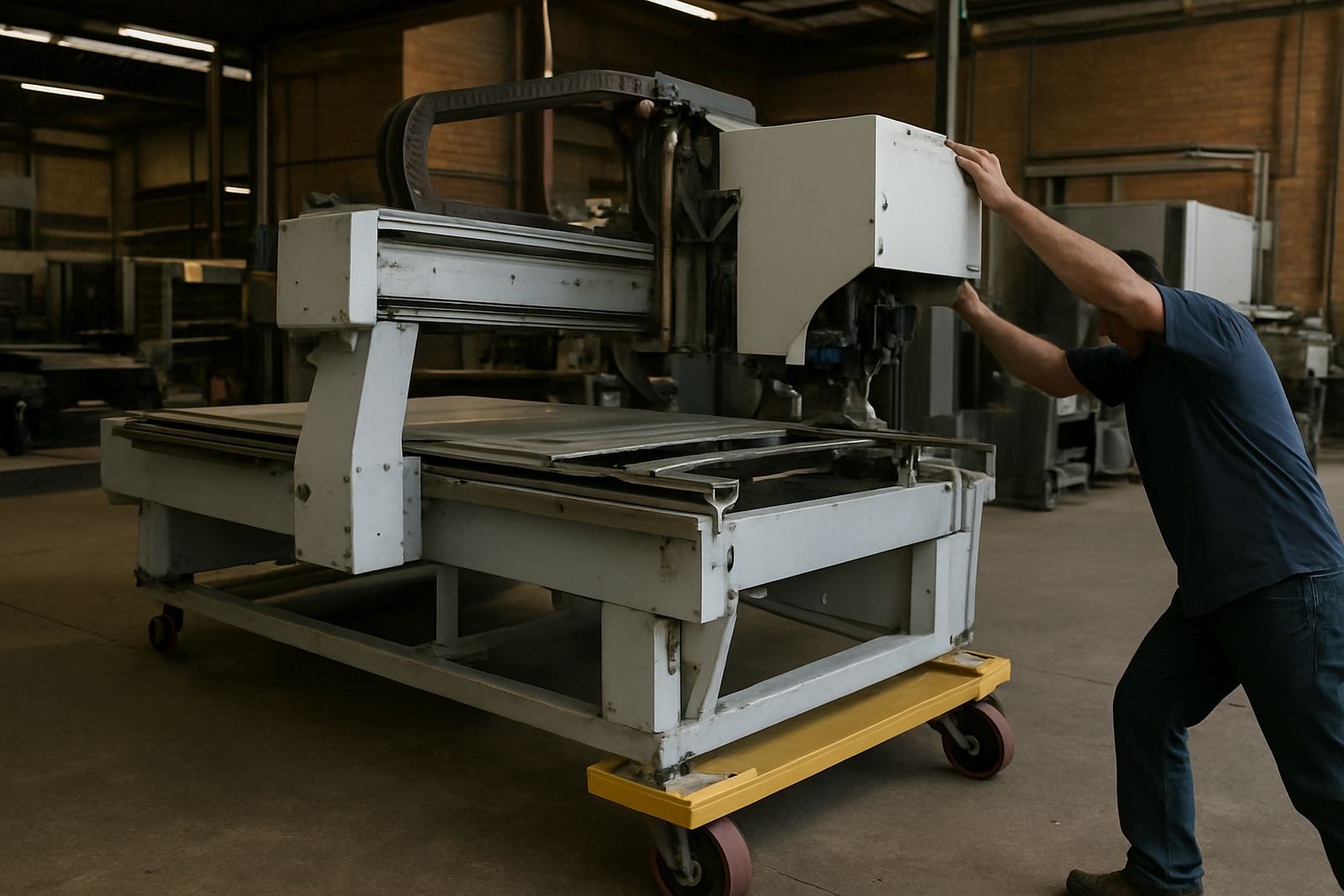
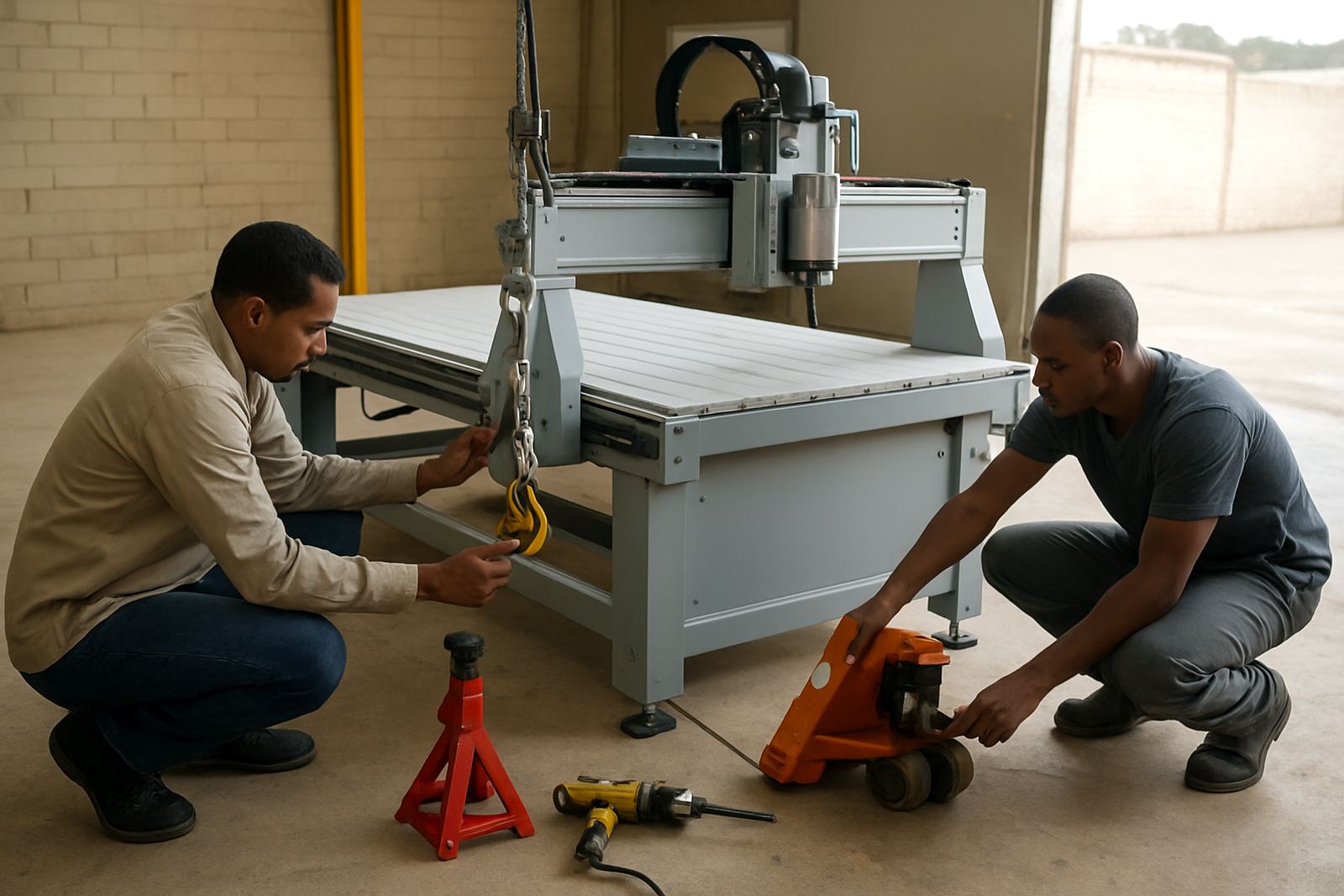
Our machine installation service covers the full start-up sequence for a CNC router or related workshop system. We coordinate the delivery plan, move the machine into position, check floor conditions, and set the machine on a stable base so the team can begin with proper alignment and safe access around the table.
For many workshops in Johannesburg, Germiston and further afield, the real challenge is not only getting the machine inside, but getting it where it can run every day without vibration, cable strain or dust issues. We work through the practical basics first, then confirm the machine is ready for production use.
- Delivery offload planning and on-site positioning
- Base machine levelling and final alignment
- Axis travel checks and home position confirmation
- Spindle start-up checks and basic cut testing
- Dust extraction connection checks where applicable
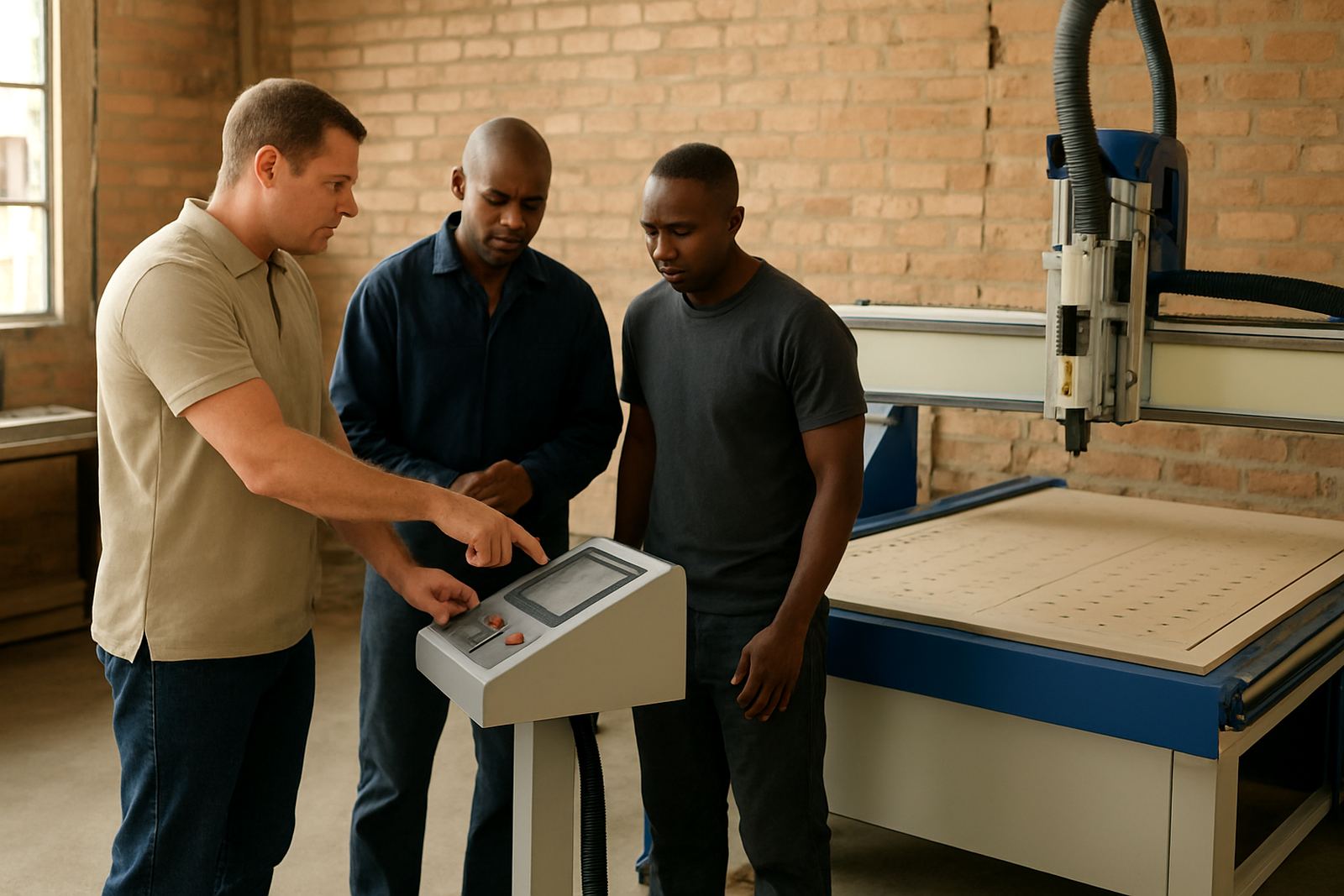
- Operator handover with safe use guidance
Site checks before the machine arrives
A proper install begins before the truck arrives. We check access widths, turning space, floor condition, power supply and the route into the workshop so the machine can be moved without damage. In older buildings around Gauteng, floor slabs may not be perfectly even, and coastal sites can bring humidity that affects stored tooling and cabinet fittings. Those details matter.
We also confirm the machine footprint, service clearance, electrical point location and dust system position. If a workshop has load shedding, we can plan the install around the generator or backup supply the customer is using. That avoids rushed testing and helps the controller, vacuum system and extraction equipment settle into normal use.
- Power availability and earthing checks
- Floor flatness and loading point review
- Dust extraction and vacuum line positioning
- Ambient conditions, especially humidity and heat
- Access for forks, pallet jacks or lifting gear
Step by step installation process
Once the machine is on site, we position it carefully and work through the mechanical and control setup in a fixed order. The aim is to remove guesswork. A machine that is level, wired correctly and tested with the right material behaves more predictably, especially on long nesting runs or repeated sign panels.
Our installation sequence is practical and methodical. We do not leave a workshop with loose questions about cable routes, air supply, software communication or tool clearance. Where the machine includes a vacuum table, dust hood or automatic tool change functions, those items are verified in sequence so the first production job starts from known settings.
- Positioning and final machine placement
- Levelling, anchoring and base checks
- Electrical connection review and power-up
- Control system start-up and communication checks
- Spindle, tool holder and safety verification
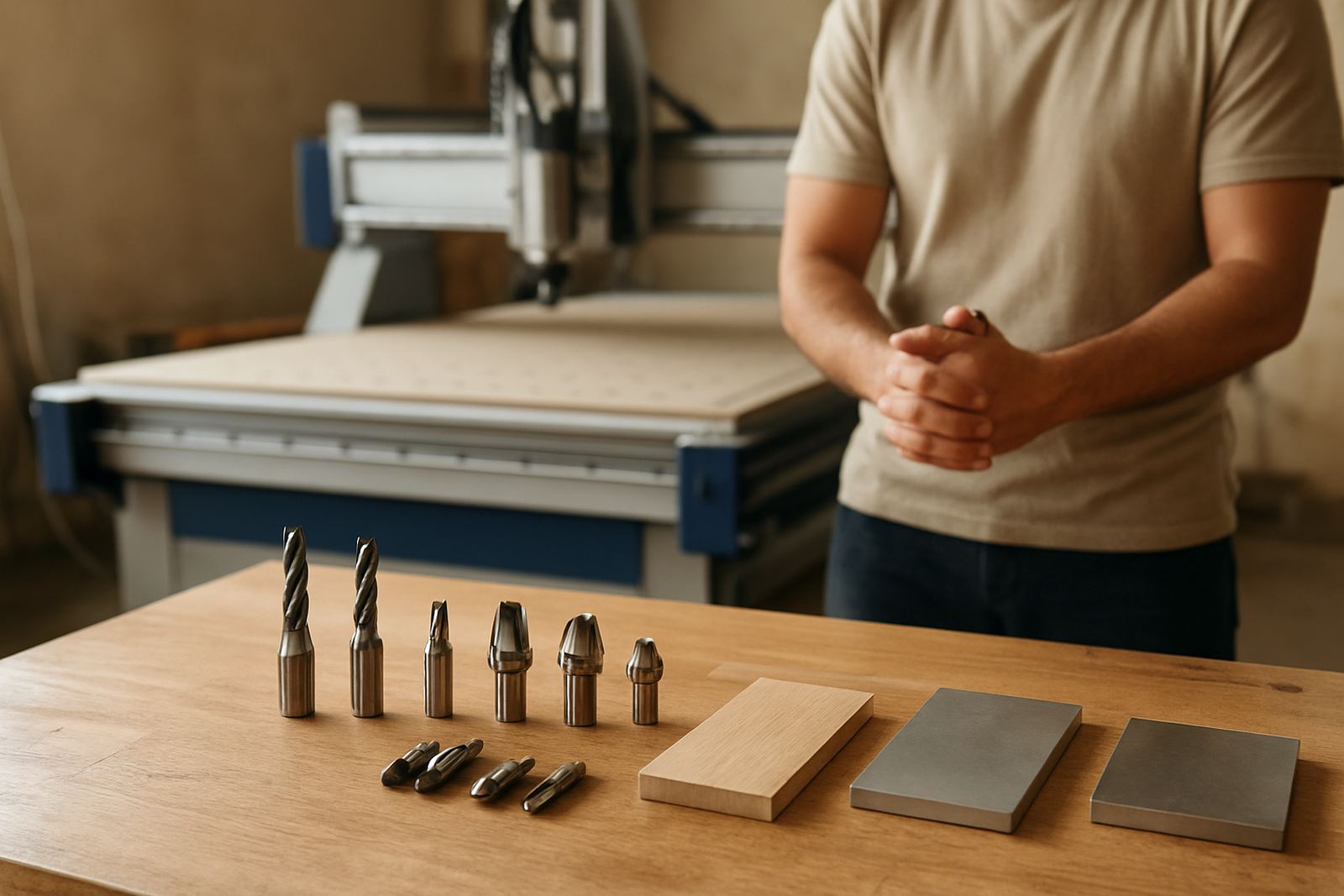
- Test cuts on approved material
Turnaround times and planning
Turnaround depends on the machine size, site readiness and whether additional services are needed, such as relocation, dust system balancing or vacuum leak checks. A straight-forward installation on a ready workshop floor can often be completed within a day or two, while larger production cells take longer because more systems must be brought online and checked properly.
We encourage clients to schedule installation with enough lead time for floor prep, electrical work and dust extraction adjustments. If a workshop has a narrow production window, we can plan the handover to fit around that. The goal is to keep interruptions short and avoid a machine sitting idle while small site issues are still being sorted out.
Typical timing is confirmed after the machine spec and site photos are reviewed. That way the customer knows what to expect before the team arrives, and the install runs with fewer surprises.
Pricing approach for installation work
Installation pricing is based on the machine type, travel distance, site access, and the amount of setup required on the day. A small entry router with simple access is priced differently from a larger production unit that needs more positioning care, vacuum checks or extended operator training.
We quote clearly so the customer can see what is included and what is optional. If a site needs extra lifting help, repeat visits or special timing around factory shutdowns, that is discussed upfront. For many South African workshops, especially those working under tight project deadlines, clear pricing helps with planning and avoids last minute cost shocks.
- Machine size and configuration
- Site access and offload requirements
- Distance from Germiston base or service branch
- Extra setup items such as tooling or vacuum checks
- After-hours or scheduled shutdown work if needed
Maintenance intervals after installation
Good installation work should make later maintenance easier. Once the machine is running, we normally recommend a first check after the initial bedding-in period, then regular service intervals based on daily operating hours and the type of material being cut. Workshops running MDF, melamine, acrylic or soft metals will see different dust loads and wear patterns.
As a practical guide, many shops benefit from a short follow-up within the first few weeks, then preventative maintenance at set intervals through the year. That can include spindle service, controller backups, dust system balancing and vacuum leak checks. If the workshop runs through peak season or after load shedding interruptions, a faster check-up can save time later.
We also remind operators to keep tooling clean, record alarms and back up the controller settings before any major job change. A little routine care goes a long way, especially in busy workshops where one missed setting can hold up a whole run.
Key facts
| Typical machine types | CNC routers, nesting tables, production cells and related workshop systems |
|---|---|
| Installation scope | Delivery, positioning, levelling, setup, testing and operator handover |
| Service area | Germiston, Johannesburg East, Midrand, Pretoria East, Durban North, Cape Town North and nationwide |
| Footprint guidance | Installed machines commonly require clear floor space from 2.5 m to 6 m+, depending on model |
| Power and utilities | Site-specific electrical supply, earthing, dust extraction and vacuum system checks |
| Turnaround | Often 1 to 2 days for straightforward installs, longer for larger or multi-system sites |