Careful relocation for CNC routers and workshop systems
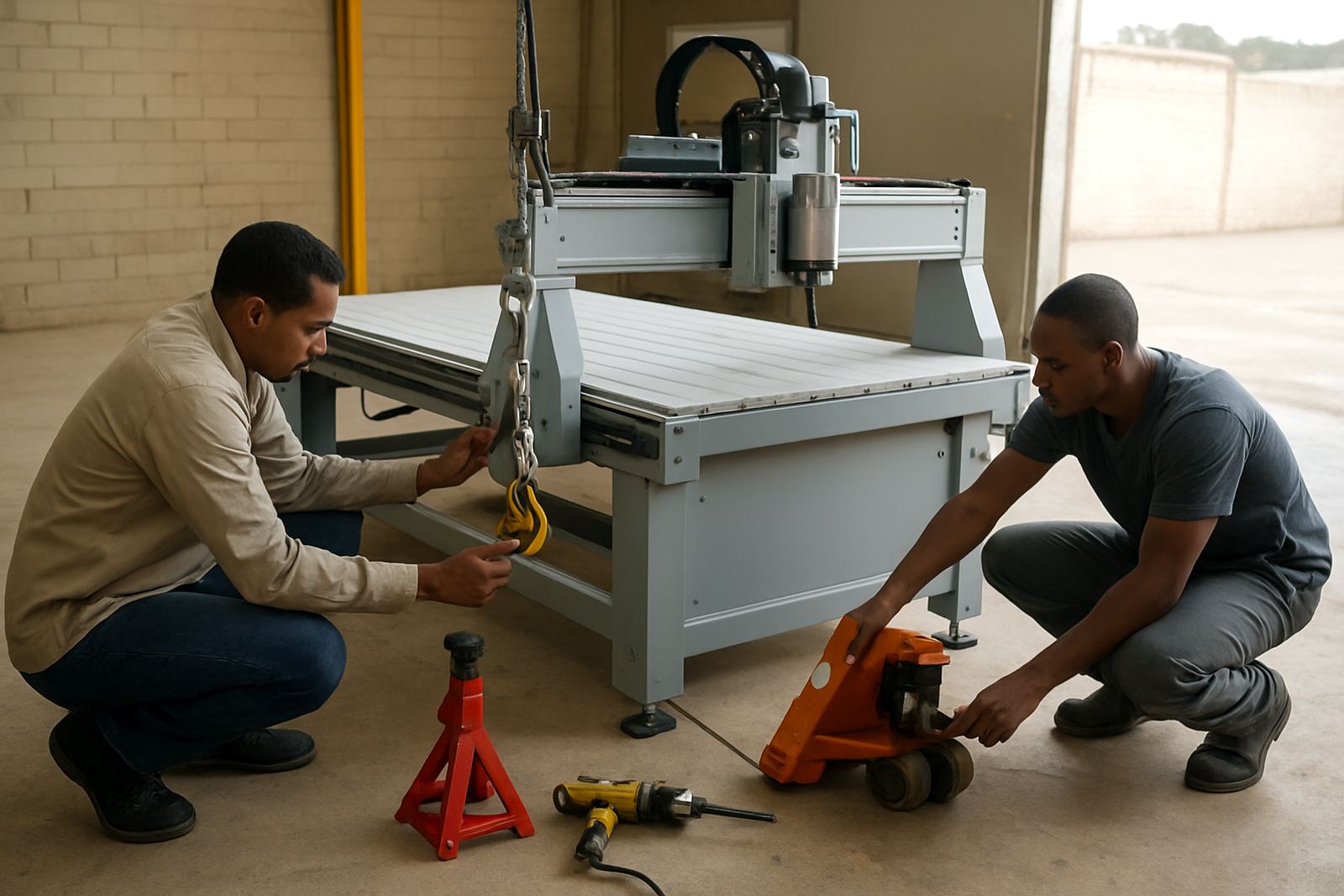
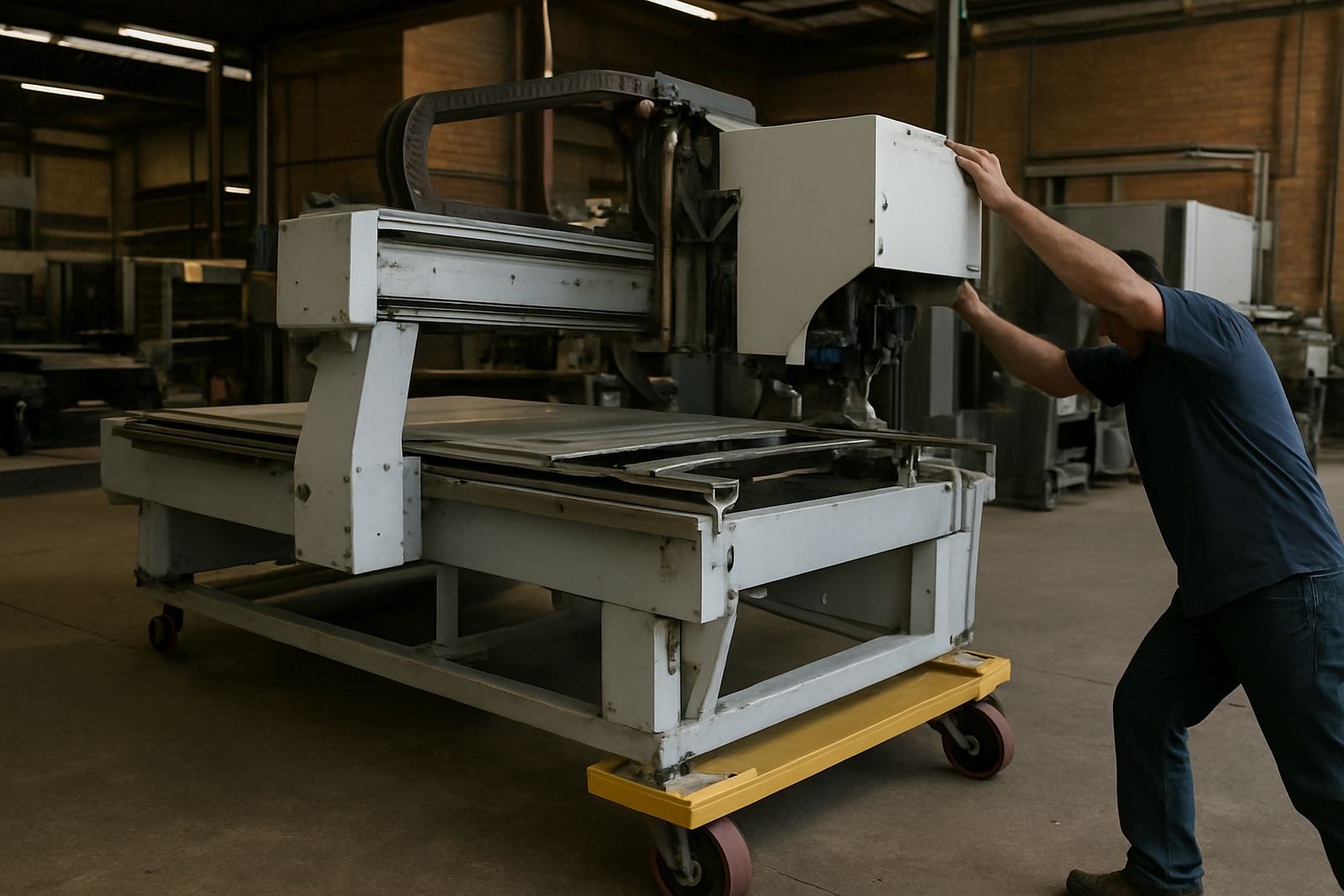
MultiCAM relocates CNC routers, vacuum tables, dust extraction lines and related workshop systems for fabricators, sign shops and furniture makers moving within Gauteng or to other parts of South Africa. The goal is simple: protect the machine, preserve settings where possible, and get the table back into service with the least amount of lost production.
Our team works from the Germiston base and supports moves from Johannesburg East, Midrand, Pretoria East, Durban North and Cape Town North as well. We plan around workshop layouts, floor levels, dock access, lift capacity and municipal requirements, because a move that looks easy on paper can still become a problem when the machine has to pass through a narrow roller door or be levelled on a concrete slab that is not quite square.
This service suits entry level routers as well as larger production cells. Whether the machine is a compact 3 axis router or a bigger nesting setup with vacuum zones, we treat the move as a controlled mechanical task not a rushed transport run.
What is included in the relocation service
Relocation support covers the practical work needed to shut the machine down properly, move it safely and bring it back into production at the new site. The exact scope depends on the machine size, tooling fitted and whether the dust system and controller cabinet are moving too.
- Safe shutdown and disconnection of power, air, dust and network links
- Labelling of cables, hoses and accessories for correct reassembly
- Removal of loose tooling, collets, spoilboard items and consumables
- Protective packing of sensitive components such as the spindle, controller and pendant
- Machine loading, transit support and offloading at the new site
- Re-installation, levelling, basic alignment and functional checks
- Controller backup review and parameter verification where required
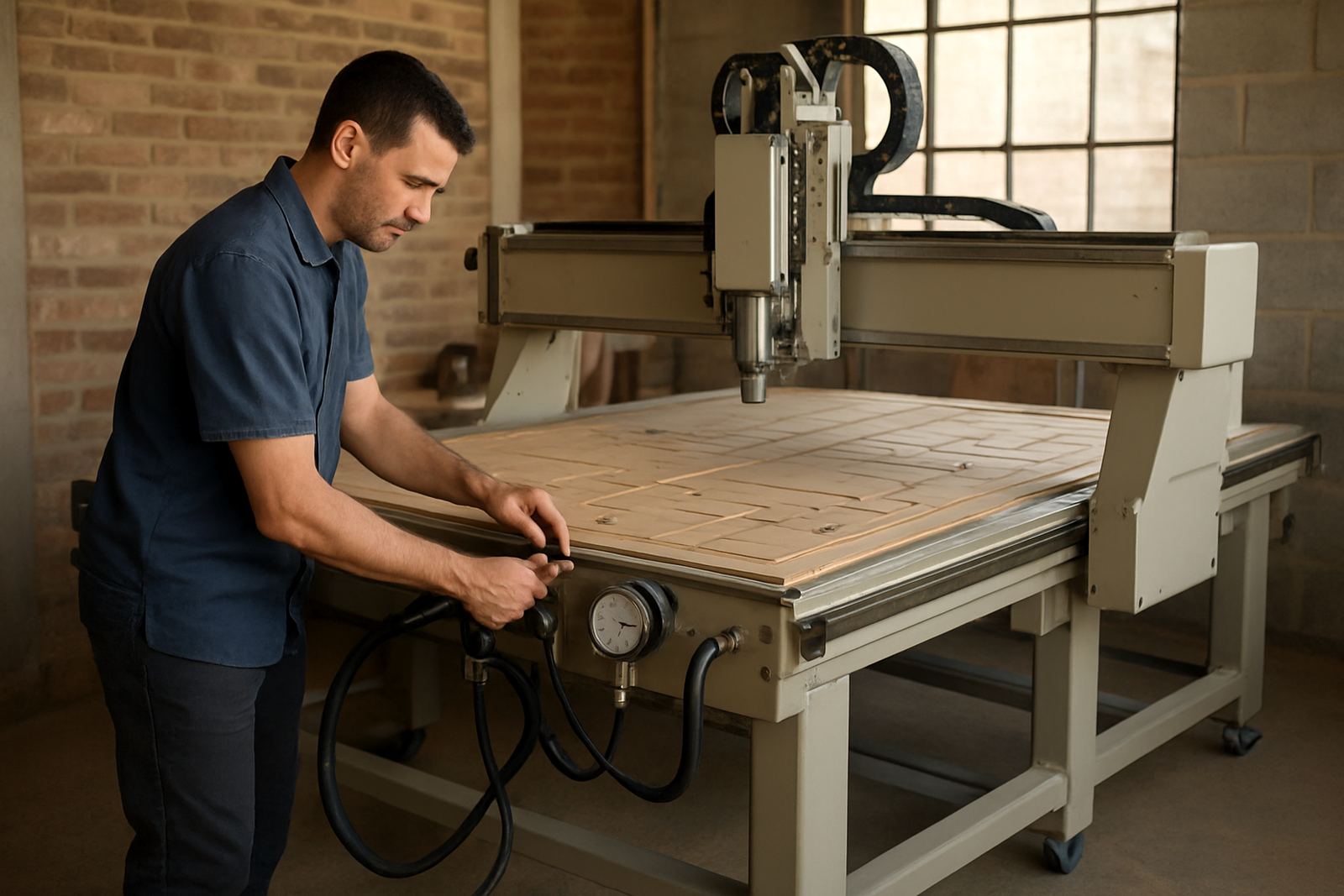
- Vacuum, dust and air leak checks after set-up
We also advise on what should travel with the machine and what should stay behind. In some workshops the dust system, compressor and stabilised power supply need separate attention, especially where load shedding or fluctuating supply has already caused nuisance faults.
How the move is planned from first call to first cut
Every move starts with a site conversation. We need to know the machine model, table size, weight, access route, whether there is a forklift or crane on site, and what the new workshop floor can handle. From there we map the sequence so the machine is not hurried at the wrong point.
- Site check and machine assessment
- Move plan with access, lifting and transport notes
- Shutdown, backup and disconnection
- Transport to the new site
- Re-installation and levelling
- Commissioning, test cuts and operator handover
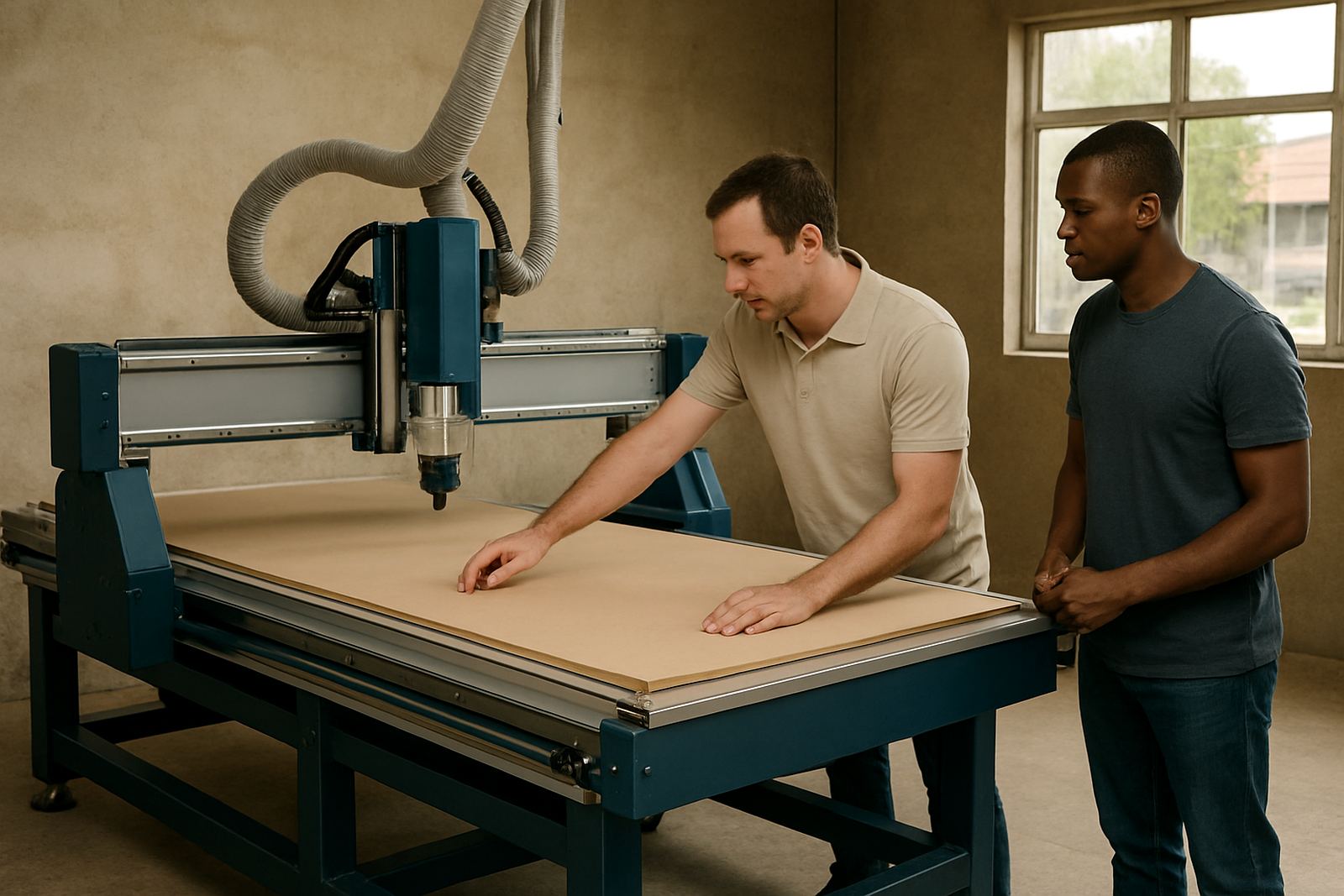
For machines that use nesting sheets, vacuum zones or automatic tool changers, we check that the table is flat, the gantry moves freely and the controller has kept its settings. Small changes in level or cabling can affect cut quality, so we test before handing back. If the machine was idle for a while during the move, we may also check bearings, spindle runout and dust build-up before full production resumes.
Turnaround times and when to book the move
Turnaround depends on the size of the machine and the distance involved. A local move inside Gauteng may be completed in a day or two once access is ready, while a cross province relocation can take longer because transport, loading windows and re-installation all have to line up. Complex production cells need more time than a single router on a simple stand.
We recommend booking before the workshop changeover is finalised. That gives time to schedule the move, arrange lifting gear and confirm that the destination site is ready with correct power, floor space and dust extraction. If a slab needs curing, a breaker upgrade is still in progress or a new lease has access restrictions, it is better to know early.
Where possible, plan relocations outside the busiest production cycle. A machine that is moved on a Friday and expected to run flat out on Monday often exposes hidden issues, especially if the old site had different voltage conditions or the new workshop is in a coastal area with higher humidity.
Pricing that matches the machine and the site conditions
Relocation pricing is based on the actual task rather than a flat one-size-fits-all rate. We look at machine mass, dismantling effort, number of cabinets, transport distance, lifting requirements and whether recommissioning includes tooling setup or dust system balancing. If the route requires a crane, low-bed, escort vehicle or special offloading equipment, that is built into the quotation.
Budget for a machine move in three parts: disconnection and preparation, transport and lifting, and recommissioning at the new site. Some clients only need a machine moved across Johannesburg East. Others need the router, dust unit and accessories moved from one city to another and set up for production again. The price will reflect that scope clearly, with no guesswork.
We keep the quote practical and itemised where needed, because workshop managers often need to compare the move against downtime costs, new floor work and any electrical changes required under local municipal rules. If a spare day of production is cheaper than an avoidable machine fault, the numbers tend to make sense quickly.
After the move: checks, maintenance and operator handover
Once the machine is in place, we do not just switch it on and walk away. Recommissioning includes basic motion checks, spindle verification, homing tests and a trial cut. We also review backup files, check controller settings and confirm that the operator knows any changes introduced during the move. A clean restart matters, but the real test is whether the machine can produce the same part twice without surprises.
We advise a short maintenance interval after relocation, usually within the first 1 to 2 weeks of production. That follow-up is useful for checking bolt torque, cable routing, vacuum seals and any settling that may occur after the first few operating hours. In workshops near the coast or in dusty inland areas, a post-move inspection is even more worthwhile.
- Check fasteners after 20 to 40 operating hours
- Inspect spindle temperature and noise under load
- Recheck vacuum performance and hose seals
- Confirm axis smoothness after the first production run
- Back up controller files once the machine is stable again
When the move is handled properly, the machine should return to normal work with no drama. That is the point of the service: fewer surprises, cleaner handover and a workshop that can keep cutting.
Key facts
| Typical machine sizes | Entry routers through large format nesting systems |
|---|---|
| Working area support | Common table sizes from 1300 x 2500 mm to 2100 x 4000 mm |
| Power checks | Single phase and three phase setups reviewed on site |
| Relocation scope | Disconnection, transport, levelling and recommissioning |
| Service areas | Germiston, Johannesburg East, Midrand, Pretoria East, Durban North, Cape Town North |
| Support contact | Our contact form |